Granite vs Quartz Worktops
Granite is a natural stone cut directly from quarries, offering unique patterning but requiring annual sealing. Quartz is engineered from crushed stone and resin, making it non-porous and lower maintenance. Both are durable premium options; your choice depends on budget, aesthetics, and upkeep tolerance.

What Is Granite?
Granite is a natural igneous rock quarried from the earth, then cut into slabs and polished for use as kitchen worktops. Because it forms under intense geological pressure over millions of years, every slab has a completely unique pattern of minerals — no two granite worktops are identical. It is extremely hard and heat-resistant, though its natural pores mean it must be sealed on installation and resealed periodically to prevent staining. Professional templating and installation is strongly recommended due to the weight and precision cutting required. For guidance on fitting stone worktops, see our Reseal Kitchen Worktop Joins guide for ongoing maintenance once installed.
What Is Quartz?
Quartz worktops are an engineered stone product made from approximately 90–95% crushed natural quartz crystals bound together with polymer resins and pigments. Unlike granite, the manufacturing process produces a non-porous surface that requires no sealing and resists bacteria, stains, and moisture. The engineered nature of quartz also means the appearance is far more consistent and predictable across a slab, which suits homeowners who want a uniform look. Quartz is slightly more vulnerable to prolonged direct heat than granite, so trivets are advised. If you chip the surface over time, our Fix a Chipped Kitchen Worktop guide covers repair options for both stone types.
Side-by-Side Comparison
| Factor | Granite | Quartz |
|---|---|---|
| Cost per m² | £200–£450 supplied and fitted | £300–£700 supplied and fitted |
| Durability | Extremely hard; resistant to scratches and heat | Very hard; scratch-resistant but vulnerable to sustained heat |
| Appearance | Unique natural patterning; variation between slabs | Consistent, uniform finish; wide colour range |
| Install Difficulty | Professional only — heavy slabs, precise cuts required | Professional recommended — lighter but still specialist work |
| Maintenance | Annual sealing required; clean with pH-neutral products | No sealing needed; wipe clean with mild detergent |
| Lifespan | 25+ years with proper maintenance | 25+ years; warranty typically 10–15 years from fabricators |
Granite — Pros and Cons
- Pros
- Each slab is genuinely unique — no two kitchens look the same
- Exceptionally hard surface handles hot pans directly (with care)
- Generally lower entry cost than comparable quartz
- Long-proven track record in UK kitchens over many decades
- Can add perceived value to a property at resale
- Cons
- Porous surface requires annual sealing to prevent staining
- Heavy — existing cabinets must be structurally sound to support it
- Colour and pattern variation between slabs can be tricky to match if replacements are needed
- Limited resistance to acidic substances (citrus, vinegar) if unsealed
Quartz — Pros and Cons
- Pros
- Non-porous — no sealing required, inherently hygienic surface
- Consistent appearance makes it easier to plan a kitchen design around
- Wide colour and finish range, including options that mimic marble
- Lower long-term maintenance effort compared with granite
- Good resistance to staining from everyday kitchen spills
- Cons
- Higher cost per m² at the premium end of the market
- Sustained direct heat (hot pans left without a trivet) can damage resin binders and cause discolouration
- UV exposure over time can cause fading — not ideal for south-facing conservatory kitchens
- Less eco-friendly than natural stone due to resin content and manufacturing process
Which Is Better For…?
- Busy family kitchens with young children: Quartz wins. Its non-porous surface resists juice, sauce, and food stains without needing resealing, and it’s easier to keep hygienic with a quick wipe-down.
- Homeowners who cook frequently with high heat: Granite is the safer choice. It tolerates direct contact with hot pans far better than quartz, which can suffer resin damage from sustained heat exposure.
- Period or traditional-style UK homes: Granite suits these properties well. The natural variation and earthy tones complement Victorian, Edwardian, and cottage aesthetics more convincingly than uniform engineered stone. Pairing with a new splashback can complete the look — see our Install a Kitchen Splashback guide.
- Contemporary or minimalist kitchens: Quartz is the better fit. Its clean, consistent finish and broad colour palette — including matt and concrete-effect options — work well with handleless cabinets and modern design schemes.
- Homeowners on a tighter budget: Granite generally offers the lower entry price. However, factor in the ongoing cost of sealant products and professional resealing every one to two years when comparing whole-life cost. You can also explore our broader Kitchen Guide for alternative worktop materials if stone is outside your budget.
UK Cost Comparison
In the UK market, granite worktops are typically priced between £200 and £450 per m² supplied and fitted, depending on the stone’s origin, thickness (20mm or 30mm), and edge profile chosen. More exotic granite varieties — such as Blue Bahia or Volga Blue — can exceed this range. Quartz worktops generally start at around £300 per m² fitted and can reach £700 per m² or more for premium ranges with complex edge finishes or integrated sink cut-outs. Both materials carry additional costs for templating (usually £150–£250), upstand fitting, and any sink or hob cut-outs. Granite also carries the ongoing expense of sealant (roughly £10–£25 per application annually) or a professional resealing service. Always obtain at least three quotes from reputable stone fabricators, and check reviews via Checkatrade before committing. If your kitchen renovation also involves new joinery, our Reface Kitchen Cabinet Doors guide can help keep overall costs down.
Frequently Asked Questions
Does granite need to be sealed, and how often?
Yes. Granite is a porous natural stone and should be sealed on installation, then resealed every 12 to 24 months depending on use and the specific stone. A simple water droplet test — if water beads, the seal is intact; if it soaks in, reseal — helps you judge when it’s needed.
Can I cut directly on a granite or quartz worktop?
Technically both surfaces can withstand cutting, but it will dull your knives quickly and may leave fine scratch marks on quartz over time. Always use a chopping board to protect both the worktop and your blades.
Is quartz safe to use as an outdoor kitchen worktop?
No. Quartz is not recommended for outdoor use in the UK. Prolonged UV exposure causes the resin binders to yellow and degrade. Granite is a better choice for any outdoor or exposed kitchen application.
Which worktop adds more value to a UK home — granite or quartz?
Both premium stone worktops are viewed positively by buyers and estate agents, but neither guarantees a specific uplift in sale price. Which? advises that kitchen quality broadly affects buyer perception, but the worktop material alone is unlikely to be the deciding factor in a sale.
Can granite or quartz worktops be repaired if chipped?
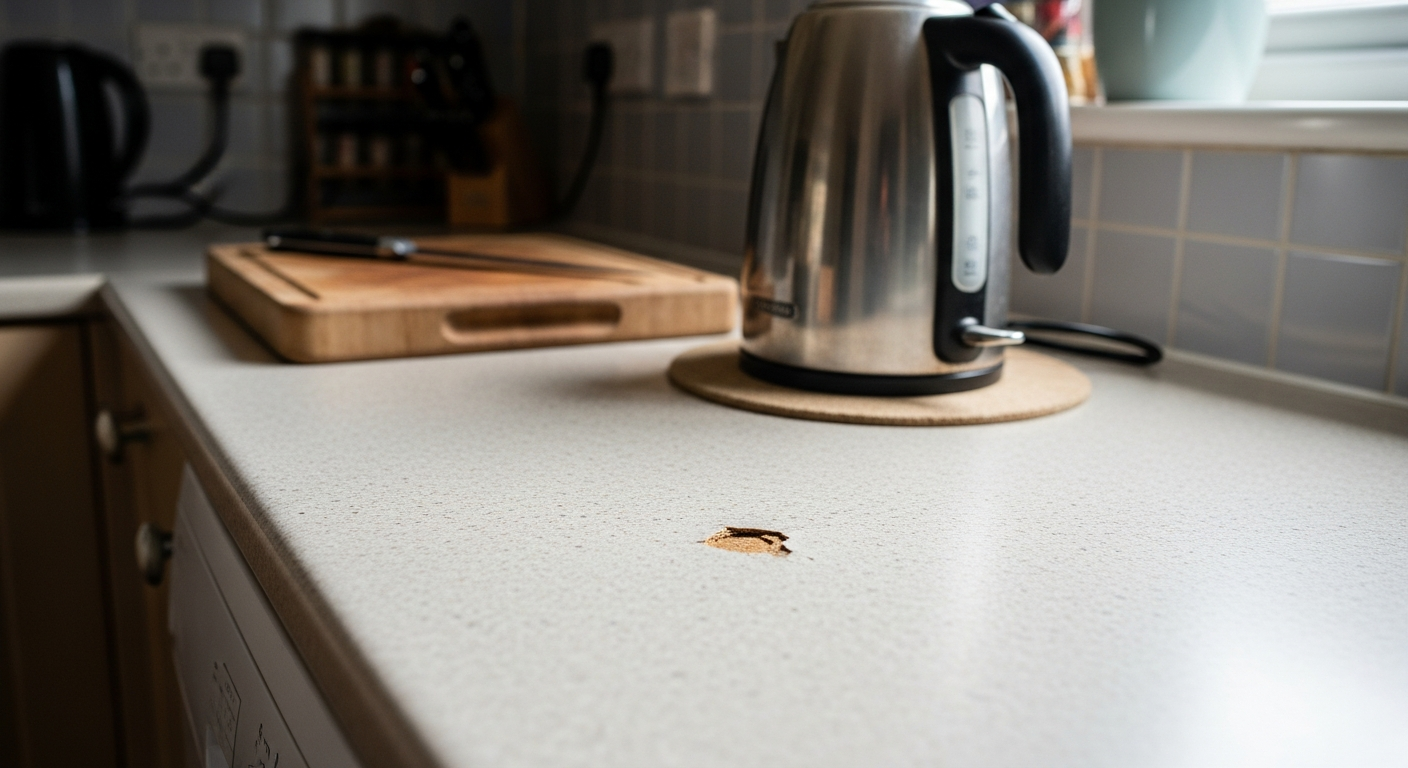
Minor chips in both materials can be repaired using a colour-matched epoxy resin filler, often available from stone fabricators or specialist suppliers. Deep cracks or large chips usually require a professional fabricator to assess whether a section needs replacing. See our Fix a Chipped Kitchen Worktop guide for step-by-step detail.
When ordering granite, ask your fabricator to show you the actual slab — not just a sample tile — before signing off, because mineral veining and colour can vary dramatically within the same quarry batch. For quartz, request a large A4-sized sample under your kitchen’s specific lighting conditions, as warm LED downlights can make cooler-toned engineered stones look markedly different to how they appear in a showroom.
Sources
- Which? — Kitchen worktops: best materials reviewed — which.co.uk
- Checkatrade — How much do granite worktops cost? — checkatrade.com
- Checkatrade — How much do quartz worktops cost? — checkatrade.com
This guide is for general information only. Always work safely and follow manufacturer instructions. DIYnut accepts no liability for injury or damage arising from DIY work.