Solid Wood vs MDF Kitchen Units
MDF kitchen units cost less and resist warping, making them practical for most UK kitchens. Solid wood costs more but offers longevity and a premium look. For budget or humid kitchens, MDF wins. For a high-end or period home, solid wood is worth the investment.

What Is Solid Wood?
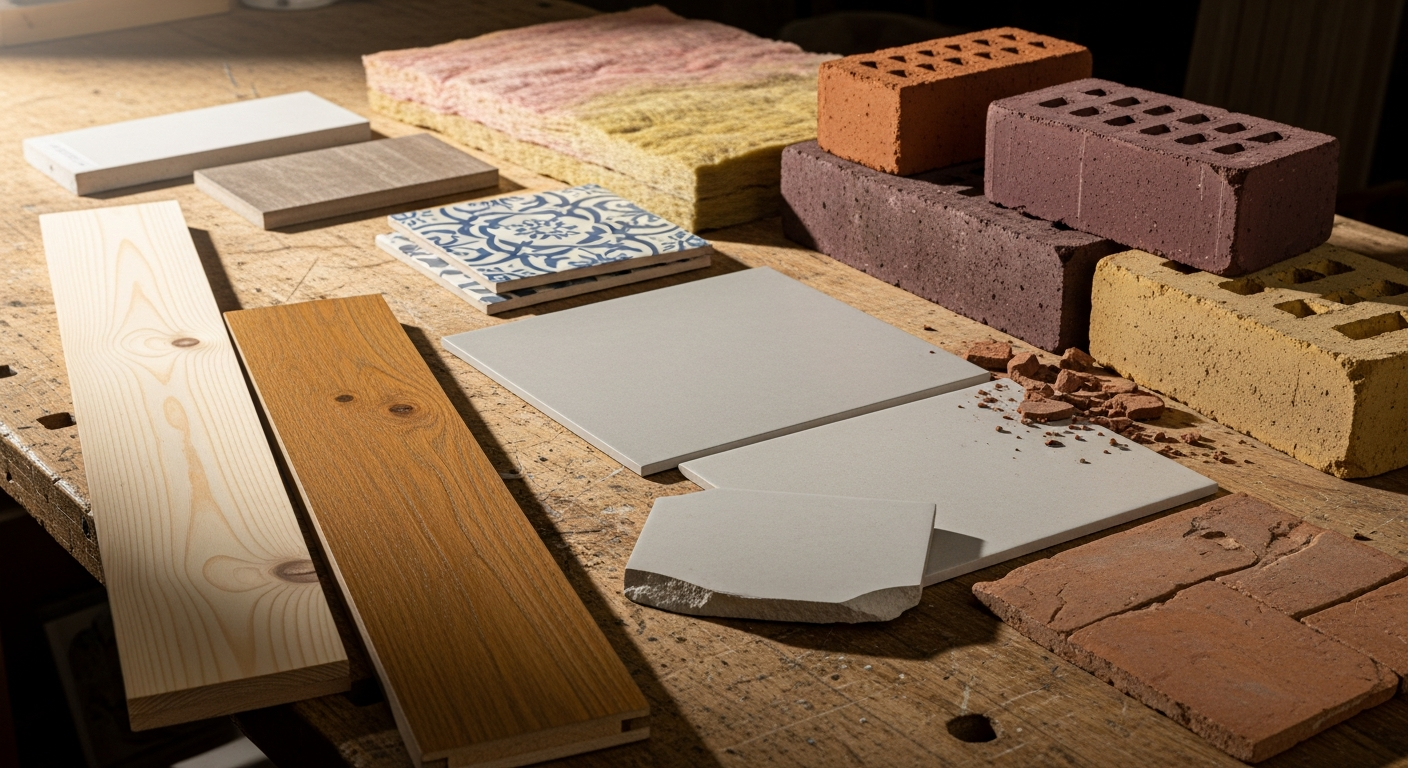
Solid wood kitchen units are made from timber cut directly from trees — commonly oak, ash, beech, or pine — rather than processed wood composites. Each door, frame, or carcass panel is cut from natural timber, giving genuine grain patterns and a tactile quality that no manufactured board fully replicates. Solid wood expands and contracts with humidity and temperature changes, which means joinery and installation must account for movement. Units are typically more expensive than composite alternatives and require periodic oiling, waxing, or repainting to maintain their appearance. For guidance on fitting new cabinets, see our Replace Kitchen Cabinet Hinges guide for hardware that suits both materials.
What Is MDF?
Medium-density fibreboard (MDF) is an engineered wood product made by binding wood fibres with resin under heat and pressure. Kitchen unit doors, cabinet carcasses, and drawer fronts are frequently manufactured from MDF because it machines cleanly, accepts paint without grain telegraphing through, and remains dimensionally stable in centrally heated rooms. Moisture-resistant (MR) MDF is available for kitchen and bathroom environments and resists swelling better than standard grades, though it is not fully waterproof. MDF is heavier than comparable solid timber sections and cannot be repaired as easily once chipped at edges. For a related task, see how to Reface Kitchen Cabinet Doors — a job where MDF replacements are particularly cost-effective.
Side-by-Side Comparison
| Factor | Solid Wood | MDF |
|---|---|---|
| Cost per m² | £80–£250+ | £30–£90 |
| Durability | High — resists knocks; can be sanded and refinished | Moderate — chips at edges; surface repairs are difficult |
| Appearance | Natural grain; ages attractively; unique per piece | Smooth, consistent; ideal for painted or wrapped finishes |
| Install Difficulty | Moderate — heavier; movement gaps required | Easy to moderate — consistent dimensions; cuts cleanly |
| Maintenance | Periodic oiling or repainting; sanding to refresh | Wipe down; repaint if damaged; edge sealant recommended |
| Lifespan | 20–40+ years with maintenance | 10–20 years typical |
Solid Wood — Pros and Cons
- Pros
- Can be sanded, refinished, or repainted multiple times — extending lifespan significantly
- Natural grain provides a premium, distinctive appearance that adds value to period and high-spec homes
- Strong and resistant to everyday knocks and scratches when properly finished
- Environmentally preferable when sourced from certified sustainable forestry (look for FSC or PEFC marking)
- Retains resale appeal — buyers and valuers recognise solid wood kitchens as a quality indicator
- Cons
- Significantly more expensive to buy and fit than MDF alternatives
- Expands and contracts with humidity — poor installation or sealing causes warping and gaps
- Requires ongoing maintenance; neglected finishes allow moisture ingress and staining
- Harder to achieve a perfectly smooth painted finish without specialist priming and filling of grain
- Heavier than MDF, which increases handling difficulty during installation
MDF — Pros and Cons
- Pros
- Considerably cheaper than solid wood — makes quality-looking kitchens accessible on tighter budgets
- Dimensionally stable in heated interiors — does not expand and contract like natural timber
- Takes paint exceptionally well, giving a smooth, flawless finish popular in contemporary kitchens
- Available in moisture-resistant grades suitable for kitchen environments
- Easy to machine into routed profiles and decorative shapes — versatile for shaker and slab door styles
- Cons
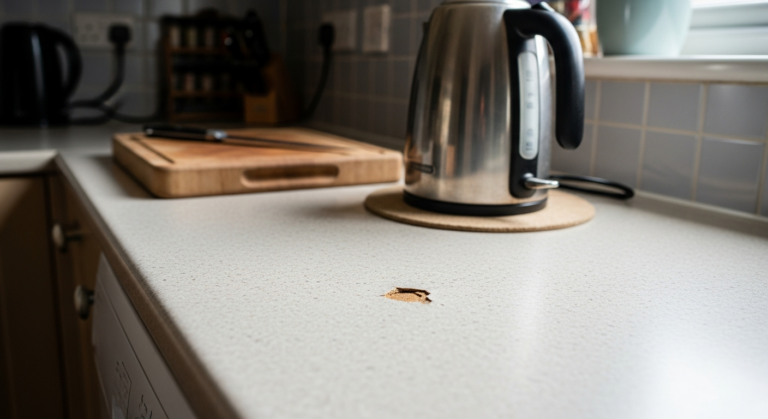
- Edges chip and swell when exposed to standing water — must be sealed thoroughly during installation
- Cannot be refinished by sanding the way solid timber can; heavy damage usually means replacement
- Contains urea-formaldehyde resins; choose low-emission (CARB2 or E1-rated) boards in living spaces
- Heavy for its size — large MDF panels require two people to handle safely
- Less appealing to buyers in premium property markets compared to genuine timber
Which Is Better For…?
- A tight budget kitchen refit: MDF wins. Lower material cost and ease of painting means you get a smart-looking kitchen for significantly less outlay. See how to Update Cabinets Without Replacing to stretch your budget further.
- A period or farmhouse-style home: Solid wood is the better match. Natural grain profiles, shaker frames, and authentic timber age sympathetically in older properties where MDF can look incongruous.
- A kitchen prone to steam or condensation: Moisture-resistant MDF edges out standard solid wood here due to dimensional stability — but both materials require proper extraction and ventilation. Neither is suitable where water regularly contacts cabinet surfaces directly.
- A rental property or short-term renovation: MDF is the practical choice. Lower upfront cost and easy replaceability mean you are not over-investing in a property where wear and tear is harder to control.
- A long-term family home where quality matters: Solid wood is the stronger investment. The ability to sand, re-oil, and repaint over decades means a solid wood kitchen can last the lifetime of the house with proper care, whereas MDF units will likely need replacing after 15–20 years.
UK Cost Comparison
MDF kitchen unit doors and carcass panels typically cost £30–£90 per m² depending on grade, finish, and supplier. Moisture-resistant MDF commands a small premium over standard boards. Solid wood kitchen doors and frames range from £80–£250+ per m², with hardwoods such as oak sitting at the upper end and softwoods such as pine at the lower end. These are material-only figures; fitting costs vary by region and complexity. For context, a full UK kitchen refit using MDF units typically runs considerably cheaper in cabinet costs than an equivalent solid wood specification — a meaningful difference when multiplied across an average kitchen. Always factor in the cost of paint, primer, hinges, and fixings when comparing quotes. For hardware costs, our guide to Fit a Soft Close Hinge covers what to expect when upgrading fittings on either material. You can also review the broader Kitchen Guide for a full breakdown of kitchen renovation costs across all components.
Frequently Asked Questions
Is MDF good enough for kitchen units?
Yes — moisture-resistant MDF is widely used by mainstream kitchen manufacturers and performs well in most UK kitchens when properly sealed and installed. It is not suitable where it will be in direct, repeated contact with water.
Does solid wood kitchen add value to a home?
Solid wood kitchens are generally viewed favourably by buyers and valuers, particularly in mid-to-high-value properties. The uplift depends heavily on finish quality and overall kitchen condition rather than the material alone.
Can you paint MDF kitchen doors?
Yes — MDF takes paint very well once primed correctly with a solvent-based or specialist MDF primer to seal the surface and edges. Multiple thin coats produce a smooth, durable finish.
How long do MDF kitchen units last?
With proper care, MDF kitchen units typically last 10–20 years. Edge swelling from moisture and hinge damage are the most common failure points; both can be delayed with good installation practice.
Which is easier to fit — solid wood or MDF kitchen units?
MDF is generally easier to cut, drill, and fit due to its consistent density and predictable dimensions. Solid wood requires allowances for seasonal movement and is heavier to handle, making installation more demanding.
When fitting MDF unit doors, seal all cut edges with neat PVA or a dedicated MDF edge primer before applying topcoat — bare MDF edges absorb moisture and paint at a different rate to the face, which causes visible swelling and paint failure within a year in kitchen conditions. Solid wood doors should be finished on the back face as well as the front; finishing one side only creates unequal moisture movement and leads to bowing.
Sources
- Which? — Kitchen buying guide: what to look for — which.co.uk
- FSC UK — Certified wood products and sustainable forestry — fsc-uk.org
- HSE — Wood dust: health effects and control — hse.gov.uk
This guide is for general information only. Always work safely and follow manufacturer instructions. DIYnut accepts no liability for injury or damage arising from DIY work.