How to Cut In Paint Neatly – DIY Guide
How to Cut In Paint Neatly
Get crisp, clean edges every time without masking tape slowing you down.
To cut in paint neatly, load a good-quality angled brush with a small amount of paint, steady your hand against the wall, and draw a slow, confident stroke along the edge. Work in sections of around 30 cm, keeping a wet edge to blend into rolled sections without lap marks.


- Angled cutting-in brush (50–63 mm)
- Paint kettle or small container
- Roller and roller frame
- Roller tray
- Stepladder
- Damp cloth or kitchen roll
- Low-tack masking tape (optional)
- Emulsion wall paint
- Undercoat or primer (if needed)
- Fine-grit sandpaper (120–180 grit)
- Sugar soap solution
- Filler and filling knife (for any cracks)
- Dust sheets
Step-by-Step Guide
Prepare the Surface and Room
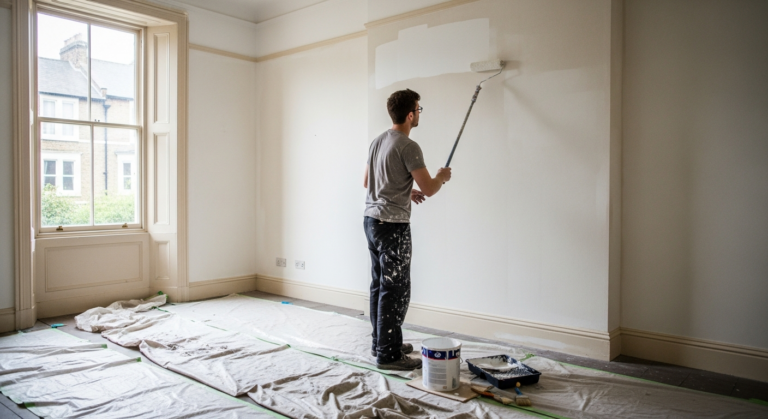
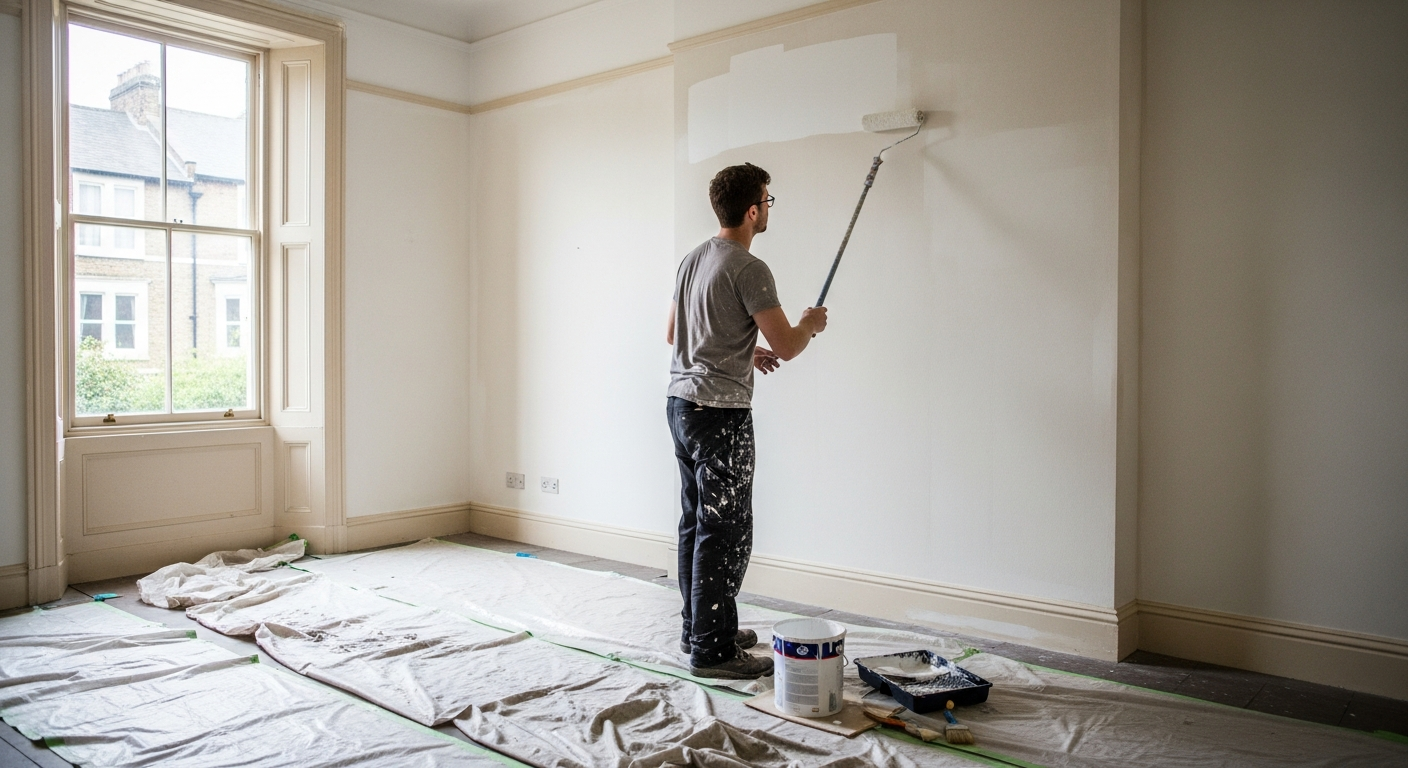
Wipe down walls with a sugar soap solution and allow to dry fully — cutting in over grease or dust causes the paint to drag and pull away from the edge. Fill any cracks before you start; painting over a rough edge makes a neat line impossible. Lay dust sheets on the floor and move furniture clear. If you’re new to painting, see our full guide on how to paint a room for complete room prep steps.
Load the Brush Correctly
Pour paint into a small kettle or container — never cut in directly from a full tin, as an overloaded brush drips and causes runs. Dip the bristles no more than one third of their length into the paint, then wipe one side lightly against the rim to remove excess. You want the brush loaded enough to flow but not so wet that paint bleeds out of control. A consistent load is the single biggest factor in a clean edge.
Set Your Hand Position and Cut the Edge
Rest the side of your hand or your little finger lightly against the wall or trim to act as a guide — this steadies the brush and gives you a consistent standoff distance from the edge. Start the stroke 3–4 mm away from the line, then gently flex the bristles toward the edge as you draw the brush along in a slow, smooth motion. Work in 20–30 cm strokes, overlapping each pass slightly while the paint is still wet. Keep your elbow moving with your wrist rather than pivoting from the wrist alone — this gives a straighter line over longer runs.
Work Wet Edge to Wet Edge
Cut in one full wall at a time before rolling, so the cut-in strip is still wet when you roll up to it — this allows the two areas to blend together and eliminates the hard line (lap mark) that appears when paint dries before being joined. If you are working alone on a large room, cut in one wall, roll it immediately, then move to the next. Painting a ceiling follows the same wet-edge principle — always cut the ceiling perimeter before rolling the field.
Cut In at Ceiling Lines, Skirting Boards, and Architrave
The ceiling line is the most visible and most unforgiving edge in the room. Work with the room’s natural light source behind you so shadows reveal any wobble immediately. At the skirting board, run the brush bristles along the top of the board using the same resting-hand technique. If your skirting boards are already painted in gloss or satinwood, low-tack masking tape applied firmly to the top edge gives a clean boundary — press the tape down with a fingernail to prevent paint bleeding underneath. Remove the tape while the paint is still slightly tacky, not bone dry, to avoid lifting the edge.
Check and Correct Before the Paint Dries
Step back and view the edge from a low angle with a light source raking across the wall — any wobbles or thin patches show up clearly at this stage. Use a barely loaded brush to touch in any gaps while the paint is still open. Once the first coat is fully dry, lightly sand any raised nibs with fine-grit sandpaper, then apply a second coat using the same technique. Two thin, controlled coats will always give a sharper result than one heavy pass. For advice on how many coats to apply, see our guide on how many coats of paint a wall needs.
Frequently Asked Questions
Do I need masking tape to cut in neatly?
No — most decorators cut in freehand using an angled brush and the resting-hand technique, which is faster and produces a cleaner result than tape. Tape is useful for beginners or where two contrasting colours meet, but it must be pressed down firmly and removed while the paint is still slightly wet to avoid tearing the edge.
What size brush should I use for cutting in?
A 50–63 mm angled cutting-in brush is the standard choice for wall edges, ceiling lines, and around trim. The angled bristle profile lets you steer the paint precisely to the edge without the body of the brush dragging into the adjacent surface.
Should I cut in before or after rolling?
Always cut in before rolling each wall, then roll immediately while the cut-in strip is still wet. This allows the two areas to merge and removes the risk of a visible lap line at the boundary between brushed and rolled paint. If you are painting a feature wall in a contrasting colour, the same rule applies.
Why does my cut-in edge look patchy after it dries?
Patchy edges are usually caused by inconsistent brush loading, painting over a surface that is not properly primed, or applying one heavy coat instead of two thin ones. Sand lightly between coats and ensure the wall is sealed — bare plaster or filled cracks must be primed first or they will absorb paint unevenly.
How do I fix a wobbly cut-in line once the paint has dried?
If the line has dried, carefully apply low-tack masking tape along the correct boundary, then touch in the correction with a small brush. Alternatively, if the adjacent surface (ceiling or woodwork) has not yet been painted, use that coat to neaten the boundary by painting neatly up to or slightly over the wall colour.
Thin your first coat of emulsion by around five per cent with water when cutting in — it flows more freely off the brush, self-levels faster, and leaves fewer brush marks at the edge, giving you a cleaner base for the topcoat to sit on.
Sources
- Which? — How to paint a room — which.co.uk
- HSE — Health and safety in the painting and decorating industry — hse.gov.uk
- Historic England — Practical Building Conservation: Decorative Finishes — historicengland.org.uk
This guide is for general information only. Always work safely and follow manufacturer instructions. DIYnut accepts no liability for injury or damage arising from DIY work.