Paint a House Exterior: Trade vs DIY
Painting & Decorating › Painting & Decorating
Paint a House Exterior: Trade vs DIY
Decide whether to tackle exterior painting yourself or hire a professional.
Painting a house exterior is DIY-able for single-storey work on sound surfaces. Two-storey or higher properties, significant surface repairs, or access requiring scaffolding are best left to a professional decorator with the right equipment and insurance.

The DIY Option
Painting a house exterior is within reach of a competent DIYer, provided the property is single-storey or you can safely access upper sections from a scaffold tower rather than a ladder. The key skills needed are thorough surface preparation — washing down walls, filling cracks, sanding and priming bare masonry or timber — followed by the application of a suitable exterior masonry paint or timber finish in dry, mild conditions. Realistically, a semi-detached house requires a full weekend of preparation and two to three further days of painting. You will need a scaffold tower or hired staging (not just a stepladder for upper sections), a large masonry brush, a long-pile roller and extension pole, dust sheets, masking tape, a pressure washer or stiff brush for cleaning, exterior filler, stabilising primer, and appropriate exterior-grade paint. Materials for an average three-bedroom semi typically cost £300–£700 depending on paint quality and the number of coats required. The main risks are working at height without adequate support, applying paint in unsuitable weather (below 5 °C or in rain), and poor preparation leading to early peeling. Before you pick up a brush, read our guide on how to paint exterior walls for a step-by-step walkthrough of preparation and application. If your walls have cracks that need attention first, our guide on how to render an outside wall covers repair options before you paint.
The Trade Option
A professional exterior decorator will assess the condition of your render, masonry, and timber before starting work. They will pressure-wash the entire facade, treat any mould or algae, fill and make good cracks and gaps, apply stabilising primer to friable surfaces, and then apply two coats of exterior masonry paint to walls and appropriate primer and topcoat to all external timber including window frames, soffits, fascias, and bargeboards. Professionals work from scaffolding erected specifically for the job, which they either supply or arrange. Typical trade costs for a three-bedroom semi-detached house in the UK range from £1,500 to £4,500 for labour and materials combined, depending on property size, surface condition, region, and whether scaffolding is included. Larger detached properties or those with significant render repairs can cost considerably more. To find a reputable decorator, look for members of the Painting and Decorating Association (PDA) or request quotes through a vetted trade directory. Always obtain at least three written quotes and check that the decorator carries public liability insurance. For timber repairs to window frames that may be needed before painting, a joiner working alongside your decorator may be appropriate — see our guide on how to repair a wooden window frame.
Side-by-Side Comparison
| Factor | DIY | Trade |
|---|---|---|
| Cost | £300–£700 (materials only) | £1,500–£4,500 (labour + materials) |
| Time | 5–10 days (prep + painting) | 3–7 days (professional crew) |
| Skill Required | Intermediate — surface prep is critical | Fully skilled — trade knowledge of substrates and weather windows |
| Risk Level | Medium–High — working at height is the primary hazard | Low — professionals use compliant access equipment and carry insurance |
| End Quality | Good if prep is thorough; prone to runs or missed spots at height | High — consistent coverage, professional finish, longer durability |
| Legal Requirements | No certification required; listed buildings or conservation areas may need consent | No certification required for painting alone; scaffolding must comply with the Work at Height Regulations 2005 |
When DIY Makes Sense
- The property is single-storey or all upper sections can be safely reached from a hired scaffold tower on firm, level ground.
- The existing surface is sound — no large cracks, active damp, crumbling render, or extensive bare masonry requiring specialist treatment.
- You have the time to prepare surfaces properly: cleaning, filling, priming, and waiting for drying times between coats.
- You are comfortable working at height and have access to the correct access equipment — not a stepladder propped against the wall.
When You Must Use a Tradesman
- The property is two storeys or higher and full scaffolding is needed — erecting and using scaffolding safely is subject to the Work at Height Regulations 2005 (HSE), and incorrect scaffolding erection is a significant safety risk.
- The property is a listed building or within a conservation area — changes to the external appearance, including paint colour, may require listed building consent or permitted development approval from the local planning authority.
- There is active damp, cracked or blown render, or structural defects behind the surface — these must be assessed and remediated by a specialist before any paint is applied, or the new coating will fail prematurely.
- The wall is clad with a specialist material such as timber weatherboarding, EIFS (external insulation), or pebbledash in poor condition — incorrect preparation or paint choice can cause long-term moisture problems and void any product guarantees.
If You DIY — Where to Start
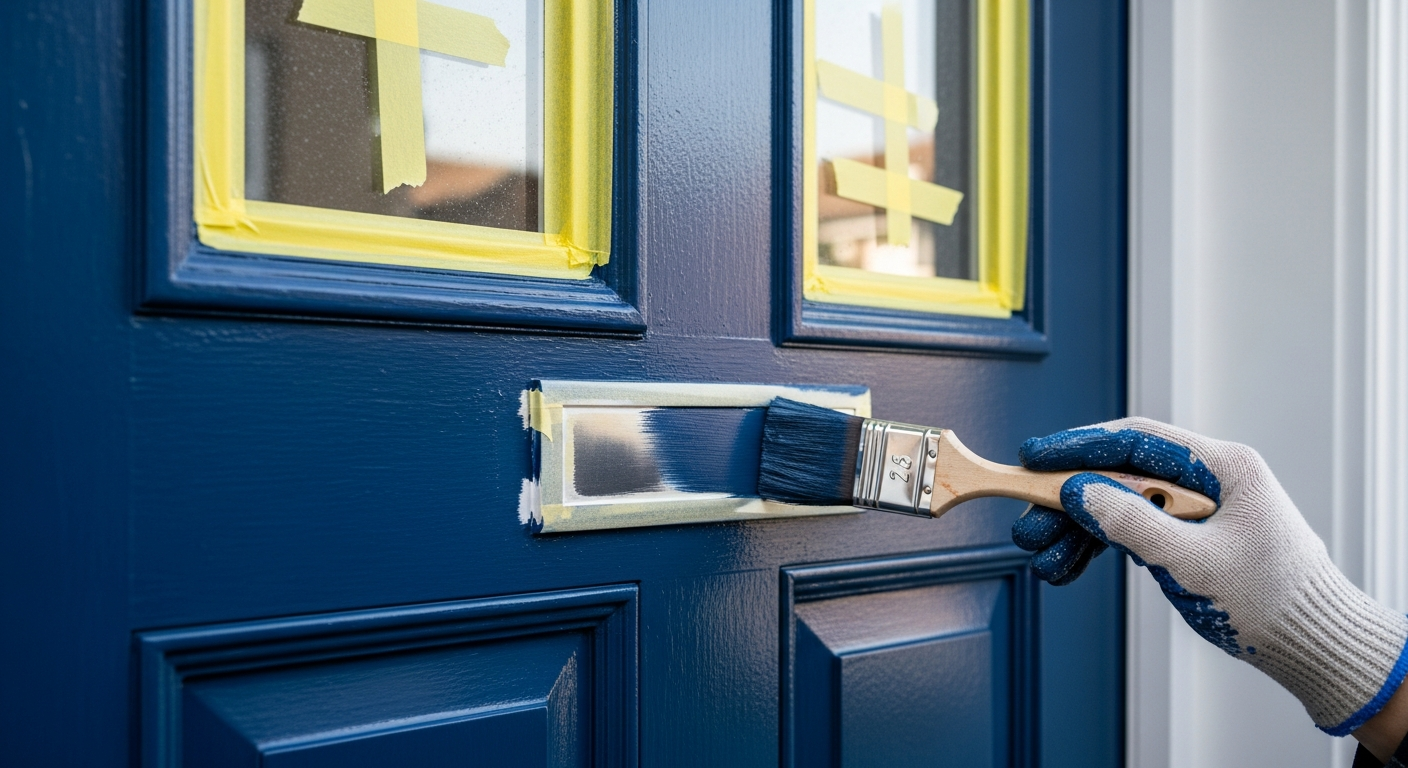
If you have decided to paint your house exterior yourself, start with thorough preparation — it accounts for the majority of the work and almost entirely determines how long the finish lasts. Our step-by-step guide on how to paint exterior walls covers everything from washing and repairing masonry through to choosing the right paint and applying it in the correct conditions. For associated timber work such as window frames and soffits, see our guide to prepping and undercoating wood before applying a topcoat, and for any front door repainting that forms part of the project, our guide on how to paint a front door gives a full method. All exterior painting guides sit within the broader Painting & Decorating Guide for further reference.
Frequently Asked Questions
Do I need planning permission to paint the outside of my house?
In most cases, no — repainting the exterior of a house in England does not require planning permission. However, if your property is listed or within a conservation area, you may need listed building consent or local authority approval before changing the colour or finish, so check with your local planning authority first.
What time of year is best to paint a house exterior in the UK?
Late spring to early autumn (May to September) offers the best conditions — dry weather, temperatures consistently above 10 °C, and longer daylight hours. Avoid painting when rain is forecast within 24 hours, when temperatures drop below 5 °C, or during direct strong sunlight, which can cause the paint to dry too quickly and blister.
How long does exterior house paint last in the UK?
A professionally applied exterior masonry paint on a well-prepared surface typically lasts 8–15 years before it needs repainting, depending on the paint quality, aspect, and exposure to weather. DIY applications on less thoroughly prepared surfaces may need refreshing sooner.
Can I use a ladder instead of a scaffold tower to paint upstairs?
A ladder alone is not suitable for extended painting work at height — it limits your reach, requires both hands free, and creates a significant fall risk. The HSE recommends a scaffold tower or other stable working platform for any exterior work above ground-floor height that lasts more than a few minutes.
How many coats of exterior masonry paint does a house need?
Bare or previously unpainted masonry typically requires a stabilising primer followed by two full coats of exterior masonry paint. Previously painted surfaces in sound condition usually need one preparatory coat and one finishing coat, though porous or highly absorbent surfaces may require an additional coat.
Professional decorators always check the dew point, not just the air temperature, before starting exterior work — painting when the surface temperature is within 3 °C of the dew point causes adhesion failure even on dry-looking days. A basic digital psychrometer (available cheaply from tool suppliers) takes the guesswork out of this before you commit a full day’s work to a wall.
Sources
- HSE — Work at Height Regulations 2005: Guidance for the Construction Industry — hse.gov.uk
- Which? — How much does it cost to paint the outside of a house? — which.co.uk
- Painting and Decorating Association — Find a Decorator — paintingdecoratingassociation.co.uk
This guide is for general information only. Always work safely and follow manufacturer instructions. DIYnut accepts no liability for injury or damage arising from DIY work.