How to Paint a Front Door – DIY Guide
Painting & Decorating › Woodwork
How to Paint a Front Door
Get a smart, long-lasting finish on your front door in a weekend.
To paint a front door, remove it from its hinges, sand and clean the surface, apply a suitable primer, then work top to bottom in thin, even coats of exterior wood paint. Allow full drying time between coats for a hard-wearing, weather-resistant finish.

- Medium-grit sanding block or sandpaper (80–120 grit)
- Fine-grit sandpaper (180–240 grit)
- Paintbrush (50 mm or 63 mm, angled)
- Flat filling knife
- Screwdriver
- Lint-free cloths
- Masking tape
- Tack cloth
- Exterior wood primer or combined primer-undercoat
- Exterior gloss or satin wood paint
- Flexible exterior wood filler
- White spirit or brush cleaner
- Fine wire wool (0000 grade)
- Sugar soap solution
- Painters masking tape
- Dust sheets
Step-by-Step Guide
Remove the Door and All Hardware
Take the door off its hinges with a screwdriver so you can work on it flat — this gives you a far better finish than painting it upright in the frame. Remove the letterbox, door knocker, handle, and any other ironmongery and set them aside. Painting around hardware causes drips and uneven edges that are difficult to correct later.
Clean and Degrease the Surface
Mix a sugar soap solution in a bucket and scrub the entire door thoroughly, paying attention to the edges and any moulded panels where grease and grime accumulate. Rinse with clean water and allow the door to dry completely before touching it with sandpaper. Any contamination left on the surface will stop paint bonding correctly. Before you reach for the brush, read our guide on how to prep and undercoat wood — good preparation is what separates a finish that lasts from one that peels.
Fill, Sand, and Key the Surface
Inspect the door for cracks, dents, or areas of bare wood, and press flexible exterior wood filler into any defects with a flat filling knife. Once dry, sand the filler flush with 80–120 grit sandpaper, then work over the whole door with 180–240 grit to create a fine key for the primer. Wipe down with a tack cloth to remove every trace of dust — any grit left behind will show through the topcoat. If you spot cracking or movement around the door frame, it is worth understanding why walls crack before repainting over the problem.
Apply Primer or Undercoat
Brush on a coat of exterior wood primer or a combined primer-undercoat, working with the grain on flat panels and into recesses first. Keep your brush strokes long and even, and avoid overloading the brush — thin coats dry harder and adhere better than thick ones. Allow the primer to dry fully according to the tin instructions (usually two to four hours), then lightly sand with fine-grit sandpaper and wipe clean before the topcoat. Understanding how many coats of paint you need for proper coverage will help you plan your day.
Apply the Topcoat in the Correct Order
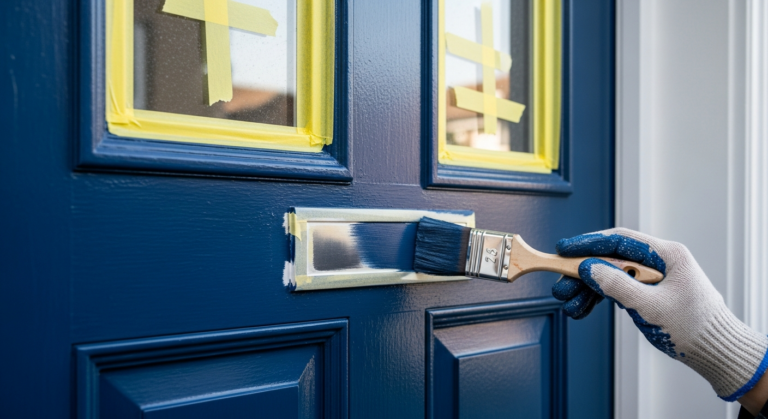
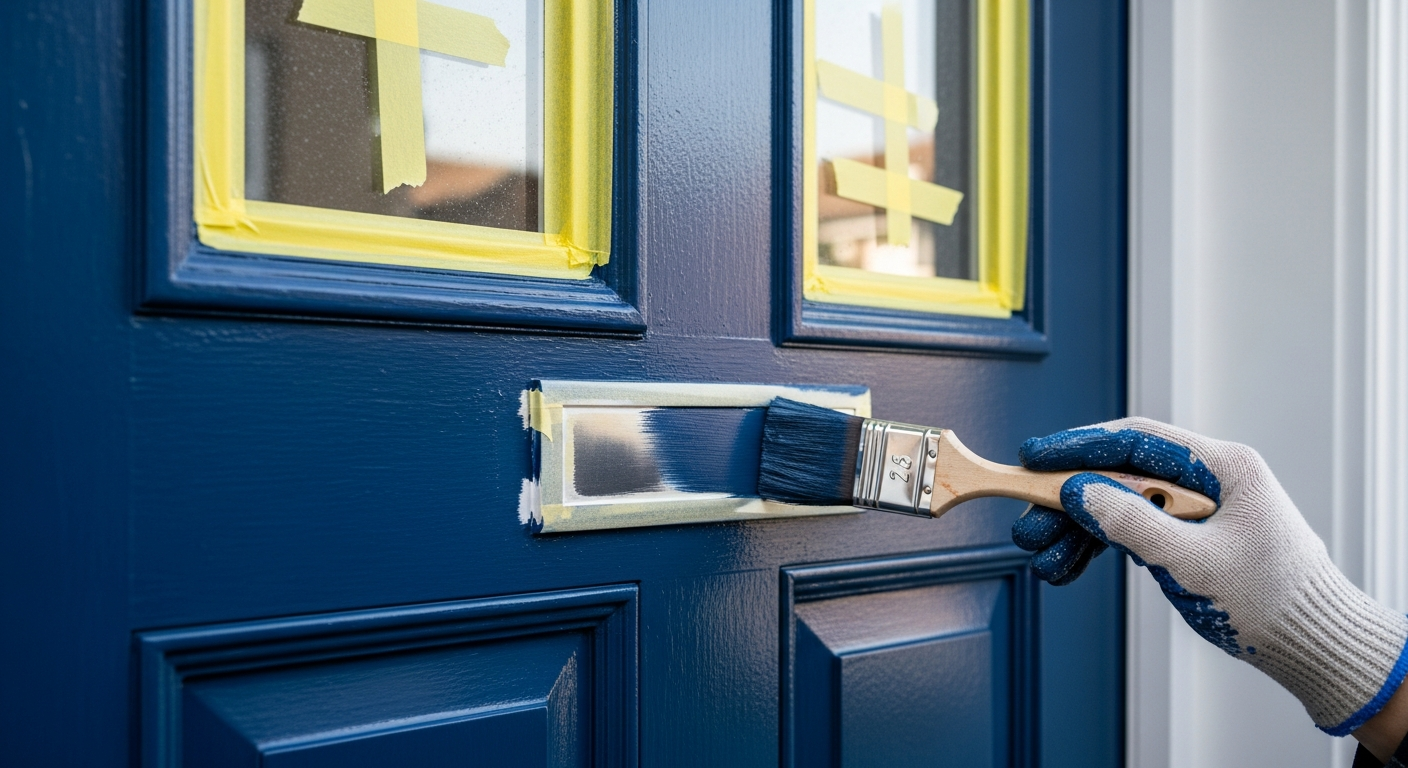
Work in this sequence for a panelled door: mouldings and recessed panels first, then horizontal rails, then vertical stiles, and finally the edges. Use a 50 mm or 63 mm angled brush and apply the paint in thin, even strokes, laying off along the grain with light strokes at the end of each section. Apply a minimum of two topcoats, lightly keying with 0000 wire wool between coats once fully dry. If you find yourself dealing with runs or sags mid-job, our guide on how to fix paint drips and runs will walk you through the correction.
Refit Hardware and Rehang the Door
Leave the final coat to harden for the manufacturer’s recommended time — for most exterior gloss or satin paints, allow at least four to six hours before handling and ideally 24 hours before rehanging. Refit all ironmongery and carefully rehang the door on its hinges, checking it opens and closes without sticking. A freshly painted door can feel tacky against the frame for a day or two, so prop it slightly open or use a thin strip of card as a spacer until the paint has fully cured. If the door starts sticking after painting, our guide on how to plane a sticking door explains the fix.
Frequently Asked Questions
What is the best type of paint for a front door?
Use an exterior-grade gloss or satin wood paint formulated to withstand UV exposure, rain, and temperature changes. Water-based exterior wood paints have largely caught up with oil-based in durability and dry faster, making them a practical choice for a one-day job.
Do I need to strip the old paint before repainting a front door?
Not unless the existing paint is flaking, peeling, or so thick that the door no longer closes properly. If the surface is sound, cleaning, light sanding, and priming any bare patches is sufficient before applying new topcoats.
How long does a painted front door take to dry?
Most exterior wood paints are touch-dry within one to two hours and ready for a second coat in four to six hours, but full hardness (curing) takes 24–48 hours. Avoid slamming the door against the frame during this period to prevent the paint surface from sticking or marking.
Can I paint a front door without taking it off its hinges?
Yes, but the result will not be as good. Working flat prevents runs on vertical surfaces, lets you paint the top and bottom edges properly, and makes it far easier to keep coats even. If removing it is not possible, wedge it open and mask the frame carefully before you start. For neat edge work, our guide on how to cut in paint neatly will help.
How often should I repaint a front door?
A properly prepared and painted front door should hold its finish for three to five years on most UK properties. South- or west-facing doors exposed to direct sunlight and driving rain will need attention sooner — watch for fading, chalking, or hairline cracking as signs it is time to repaint.
Decant your paint into a kettle or small paint pot rather than dipping from the tin — this keeps the tin clean and lets you add a very small amount of white spirit to oil-based paint (no more than 5%) on the first coat to get it into recesses without drag marks. Stir thoroughly before each coat and never shake the tin, as shaking introduces air bubbles that show up in a gloss finish.
Sources
- HSE — Lead paint in older properties: guidance for workers — hse.gov.uk
- Which? — How to paint a front door — which.co.uk
- Historic England — Maintenance and repair of traditional windows and doors — historicengland.org.uk
This guide is for general information only. Always work safely and follow manufacturer instructions. DIYnut accepts no liability for injury or damage arising from DIY work.