How to Diagnose and Fix a Noisy Boiler – DIY Guide
A boisy boiler is usually caused by kettling, air in the system, low water pressure, or a failing pump. Identify the noise type — banging, whistling, gurgling, or humming — and follow the correct fix. Some issues are DIY-safe; others need a Gas Safe engineer.


- Radiator bleed key
- Flat-head screwdriver
- Adjustable spanner
- Pressure gauge
- Torch
- Bucket
- Central heating inhibitor fluid
- PTFE tape
- Replacement boiler pressure relief valve (if required)
- Replacement pump (if required)
- Magnetic filter media (if required)
- Descaling solution (boiler-compatible)
Step-by-Step Guide
Identify the Noise Type
Listen carefully and match the noise to a category: a low rumbling or whistling usually means kettling caused by limescale build-up on the heat exchanger; a banging or clunking points to air in the system or a failing pump; a gurgling sound indicates trapped air or low pressure; a constant humming or vibration is often a worn pump or loose mounting bracket. Getting this right determines every step that follows — fixing the wrong cause wastes time and money. If you are unsure whether your boiler is gas-fired and when it was last serviced, check the appliance data plate before going any further.
Check and Correct the Boiler Pressure
Look at the pressure gauge on the boiler front panel — a healthy system sits between 1 and 1.5 bar when cold. Low pressure starves the pump and heat exchanger, causing gurgling and banging. If pressure reads below 1 bar, repressurise the boiler using the filling loop under the unit: open both filling loop valves slowly until the gauge reaches 1.2 bar, then close both valves fully and reset the boiler. If pressure drops again within days, there is a leak or a faulty pressure relief valve — call a Gas Safe engineer.
Bleed the Radiators to Remove Trapped Air
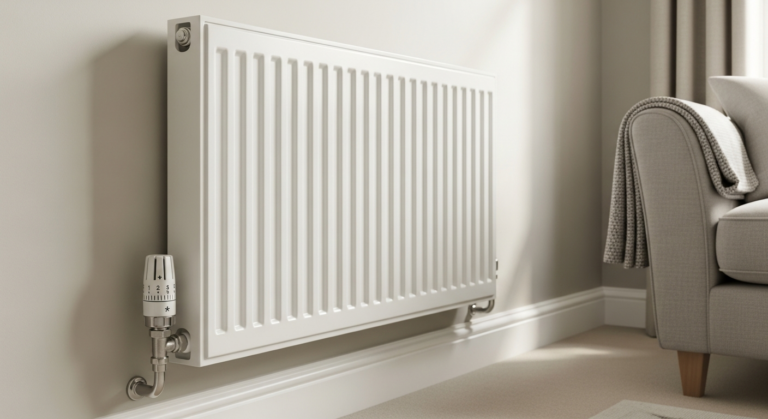
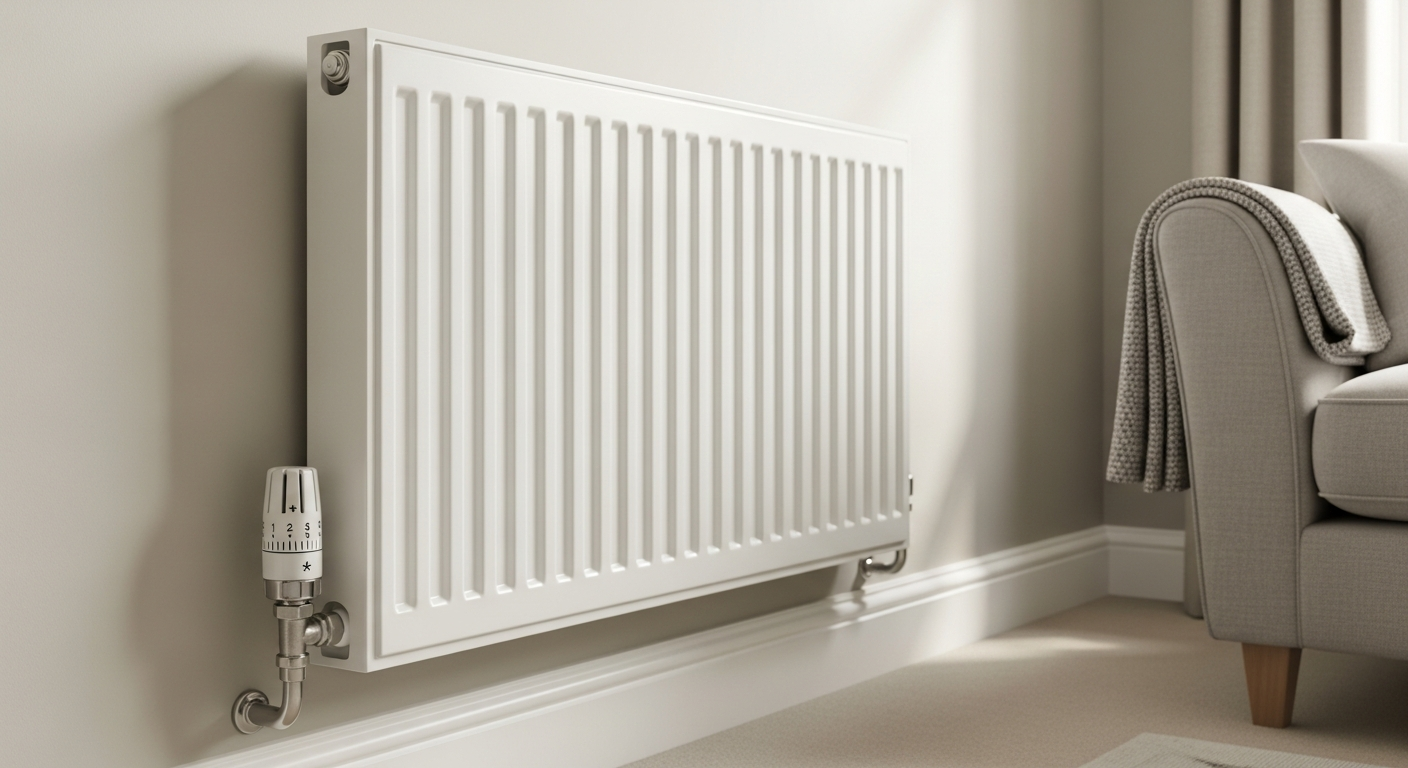
Air trapped in the central heating circuit is one of the most common causes of gurgling and banging from both radiators and the boiler itself. Turn the heating off and allow the system to cool for 20 minutes. Starting with the radiator furthest from the boiler, insert a bleed key into the bleed valve and turn it a quarter-turn anti-clockwise — hold a cloth beneath it. You will hear hissing as air escapes; once water flows steadily, close the valve. Work back towards the boiler, bleeding every radiator in turn. Recheck boiler pressure afterwards and top up if needed.
Assess for Kettling and Treat Limescale
Kettling — a rumbling or whistling noise similar to a boiling kettle — is caused by limescale restricting flow through the heat exchanger, which causes localised boiling. It is especially common in hard-water areas across the south and east of England. This is not a DIY repair on the heat exchanger itself, but you can add a boiler-compatible descaling solution to the system via the feed-and-expansion tank or a dedicated dosing point, following the product instructions. A power flush carried out by a qualified heating engineer will remove sludge and scale more thoroughly. If you also have leaking radiator valves allowing fresh oxygenated water in repeatedly, fix those first or scale will return quickly.
Check the Pump and Investigate Vibration
A humming or vibrating boiler is often the pump running at too high a speed setting, or a pump that is failing. Locate the pump — usually a cylindrical motor inside or adjacent to the boiler casing — and check its speed setting dial. Most domestic systems run well on speed 2; dropping from speed 3 to speed 2 can eliminate excess noise immediately. If the pump vibrates even at the lowest setting, or makes a grinding noise, it is likely worn and needs replacing — this is a job for a Gas Safe registered engineer on combination boilers where the pump is integral. If you also notice low water pressure throughout the house alongside pump noise, raise system pressure first before assuming pump failure.
Add Central Heating Inhibitor and Monitor
Once you have addressed the root cause, protect the system going forward. Drain approximately 5 litres from a low-point drain cock into a bucket, then add the correct dose of central heating inhibitor fluid — check the product label for your system volume. Inhibitor prevents corrosion and sludge build-up, both of which cause noise over time. Refill the system, recheck pressure, run the heating on full for 30 minutes, and listen. If the noise has reduced significantly, the fix has worked. If the same noise persists or a new noise has appeared, book a service with a Gas Safe registered engineer — do not continue operating a gas appliance that you cannot diagnose with confidence.
Frequently Asked Questions
Is a noisy boiler dangerous?
Most boiler noises — kettling, gurgling, and humming — are system faults rather than immediate safety hazards, but they should be investigated promptly. Any noise accompanied by a gas smell, a yellow or orange burner flame, or a carbon monoxide alarm sounding is a gas safety emergency: evacuate the property, do not use any switches, call the National Gas Emergency Service on 0800 111 999, and do not re-enter until the property is declared safe.
Why does my boiler make a banging noise when the heating comes on?
A bang at start-up is usually caused by delayed ignition — gas accumulates before igniting — which requires a Gas Safe engineer to investigate the burner and gas valve. Banging during operation more often indicates air in the system or a water hammer effect in the pipework; bleeding the radiators and checking system pressure should be your first step.
Can I fix a kettling boiler myself?
You can add descaling solution or central heating inhibitor to the system yourself, which may reduce mild kettling. However, if the heat exchanger is significantly scaled, a power flush or heat exchanger replacement is required — both need a qualified heating engineer. Kettling left untreated shortens boiler lifespan considerably.
Why is my boiler gurgling after I bleed the radiators?
Gurgling after bleeding usually means the system pressure dropped below 1 bar when you released air, and the pump is now drawing in more air. Repressurise the boiler to 1.2 bar using the filling loop, then run the heating and check again. If gurgling persists, there may be a small leak allowing air to enter the circuit.
How often should a boiler be serviced to prevent noise problems?
The HSE and boiler manufacturers recommend an annual service by a Gas Safe registered engineer. A yearly service catches scale, sludge, and component wear before they cause noise or breakdown — and keeps your boiler warranty valid. You can find registered engineers on the Gas Safe Register at gassaferegister.co.uk.
Fit an inline magnetic filter on the return pipework before the boiler if your system suffers from recurring sludge or noise — it captures iron oxide particles that cause pump wear and heat exchanger scaling far more effectively than inhibitor alone. Combine it with an annual inhibitor dose check and most repeat noise calls simply stop happening.
Sources
- HSE — Gas Safety (Installation and Use) Regulations 1998 — hse.gov.uk
- Gas Safe Register — Find a registered engineer and boiler safety advice — gassaferegister.co.uk
- Which? — Boiler noises: what they mean and what to do — which.co.uk
Safety Notice: Electrical and plumbing work can be dangerous if done incorrectly. In the UK, certain electrical work must comply with Part P of the Building Regulations and certain plumbing work with Part G. If in doubt, consult a qualified electrician (NICEIC/NAPIT registered) or plumber (CIPHE/WaterSafe registered). This guide is for general information only — it is not a substitute for professional advice.