How to Reset a Boiler – DIY Guide
To reset a boiler, locate the reset button on the front panel, press and hold it for 3–5 seconds, then release and wait for the boiler to fire up. If it locks out again within a few cycles, an underlying fault needs diagnosing — repeated resets without investigation can mask a serious problem.

- Torch
- Pen and paper (for noting fault codes)
- Smartphone or camera (to photograph error display)
- Flathead screwdriver (if panel access required)
- Boiler manufacturer manual or digital copy
- None required for basic reset
Step-by-Step Guide
Check the boiler display for a fault or error code
Before touching the reset button, look at the boiler display and note any fault code showing. Each code points to a specific cause — for example, low pressure, ignition failure, or a flame sensor fault. Photograph or write the code down so you can look it up in your manual or the manufacturer’s website. Resetting without understanding the code means you may be clearing a symptom rather than solving the problem. If your boiler is showing no display at all, check that the unit has power at the fused spur or consumer unit first.
Check the boiler pressure gauge
A low pressure reading is the single most common reason a boiler locks out. Look at the pressure gauge on the front of the boiler — it should read between 1 and 1.5 bar when cold. If it reads below 0.5 bar, the boiler will not fire safely and resetting it will not work until pressure is restored. Follow our guide to repressurise a boiler before attempting a reset. If the pressure is correct, move on to the next step.
Locate the reset button on the boiler
The reset button is almost always on the front control panel. On most modern boilers it is clearly labelled — often marked with a flame symbol, the word ‘Reset’, or a circular arrow. Some older boilers have a recessed reset button that requires a thin object to press. If you cannot find it, check your boiler manual — most manufacturers publish manuals freely online. Do not press any other buttons or adjust any settings at this stage.
Press and hold the reset button
Press the reset button firmly and hold it for 3–5 seconds, then release. The boiler should attempt to ignite — you may hear a clicking sound as the igniter fires, followed by the burner lighting. The display may flash or cycle through a start-up sequence. Stand back and give the boiler 30–60 seconds to complete its start-up routine before assuming it has failed. If you can hear the boiler firing and the display returns to its normal operating screen, the reset has worked.
Confirm the system is running correctly
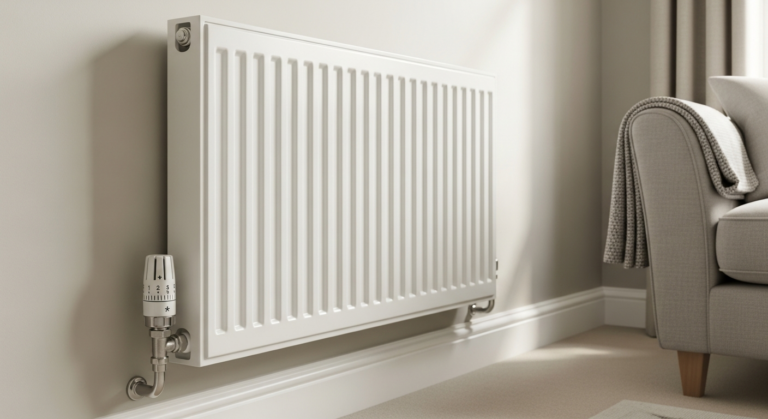
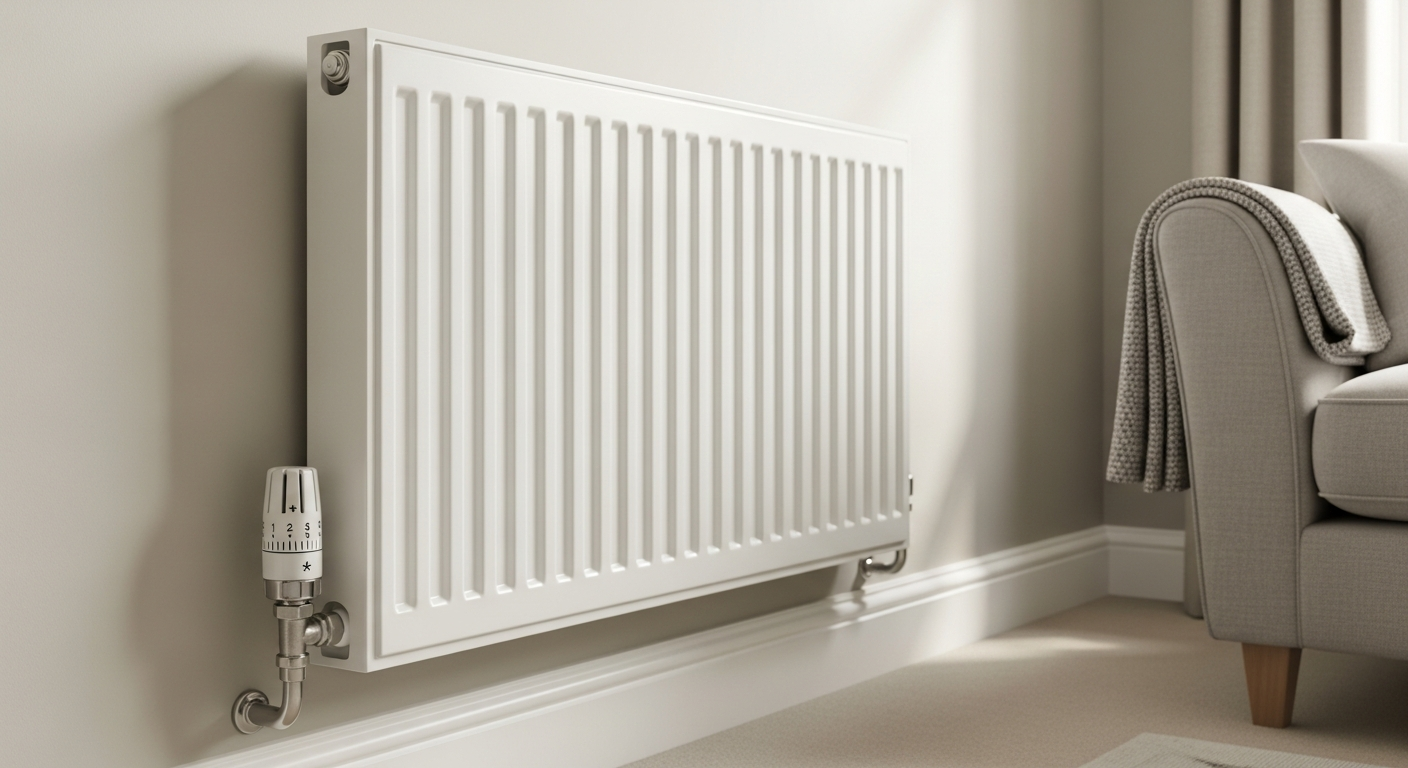
Once the boiler has reset and fired, check that your radiators are warming up and that hot water is available at the tap. If you still have no hot water after the reset , the fault has not been resolved by the reset alone. Also check for any unusual noises — kettling, banging, or persistent clicking — which may indicate a secondary issue. Our boiler making noise guide covers the most common causes.
Call a Gas Safe registered engineer if the boiler locks out again
If the boiler resets successfully but locks out again within one or two firing cycles, do not keep resetting it. Repeated lockouts indicate a persistent fault — common causes include a faulty flame sensor, blocked condensate pipe, failing pump, or a gas supply issue. Any work beyond a basic reset on a gas boiler must be carried out by a Gas Safe registered engineer. You can find a registered engineer at the Gas Safe Register website (gassaferegister.co.uk). Never attempt to repair internal gas boiler components yourself — it is illegal and dangerous.
Frequently Asked Questions
Where is the reset button on my boiler?
On most modern combi and system boilers, the reset button is on the front control panel and is labelled with a flame icon, the word ‘Reset’, or a circular arrow symbol. If you cannot locate it, download your boiler’s manual from the manufacturer’s website — the model number is usually printed on a label inside the front cover.
Why does my boiler keep locking out after I reset it?
Repeated lockouts after resetting usually point to a recurring fault — most commonly low system pressure, a blocked condensate pipe, a faulty flame sensor, or an ignition problem. If low pressure is the cause, follow our guide to fixing low water pressure before calling an engineer. Anything beyond pressure-related causes requires a Gas Safe registered engineer to investigate.
Is it safe to reset a boiler myself?
Yes — pressing the reset button on a gas boiler is a simple, safe user action that manufacturers design homeowners to carry out themselves. What is not safe is attempting to access internal components, adjust gas valves, or repair any part of the boiler beyond the controls on the front panel. All gas work beyond the reset button must be done by a Gas Safe registered engineer.
My boiler condensate pipe is frozen — will a reset fix it?
No. If the condensate pipe (the plastic pipe that runs from the boiler to an outside drain) is frozen, the boiler will lock out and will not reset until the blockage is cleared. Thaw the pipe gently with warm — not boiling — water applied to the outside section, then attempt the reset. If you are not sure which pipe is the condensate pipe, your boiler manual will identify it.
How many times can I reset my boiler before calling an engineer?
If the boiler resets and runs normally, one reset is fine. If it locks out again within a few firing cycles, attempt no more than two or three resets before calling a Gas Safe registered engineer. While you wait, bleeding your radiators can help rule out air in the system as a contributing factor to poor heating performance.
If a boiler locks out repeatedly in cold weather, the condensate pipe is almost always the culprit before anything else — insulating that section of external pipe with foam lagging prevents the freeze in the first place and saves an emergency call-out. Fit lagging in autumn and you will likely never need to deal with a freeze-related lockout again.
Sources
- Gas Safe Register — What to do if your boiler breaks down — gassaferegister.co.uk
- HSE — Gas safety in the home — hse.gov.uk
- Which? — Boiler pressure: how to repressurise your boiler — which.co.uk
Safety Notice: Electrical and plumbing work can be dangerous if done incorrectly. In the UK, certain electrical work must comply with Part P of the Building Regulations and certain plumbing work with Part G. If in doubt, consult a qualified electrician (NICEIC/NAPIT registered) or plumber (CIPHE/WaterSafe registered). This guide is for general information only — it is not a substitute for professional advice.