How to Unblock a Bath Drain – DIY Guide
To unblock a bath drain, remove the drain cover, clear visible hair and debris by hand, use a drain snake or plunger to shift the blockage, then flush with hot water. Most bath blockages are caused by hair and soap scum and can be cleared without chemicals in 30–45 minutes.


- Plunger
- Drain snake or flexible drain rod
- Needle-nose pliers or bent wire hook
- Bucket
- Old toothbrush
- Rubber gloves
- Flathead screwdriver
- Bicarbonate of soda
- White vinegar
- Boiling or very hot water
- Drain cleaning fluid (optional)
- Drain cover removal tool or coin
- Disposable cloths or rags
- Petroleum jelly (for plunger seal)
Step-by-Step Guide
Remove the Drain Cover
Put on rubber gloves before touching anything. Most bath drain covers either unscrew with a flathead screwdriver or lift straight off with a coin slotted into the cross-recess. If the cover is stuck with soap residue, work around the edge with the screwdriver to break the seal — do not force it. Set the cover aside and drop it into the bucket to contain any drips. With the cover off, use a torch to look down into the drain: if you can see a solid mat of hair sitting in the first 50–75 mm, you can clear it without any tools at all.
Pull Out Hair and Debris by Hand
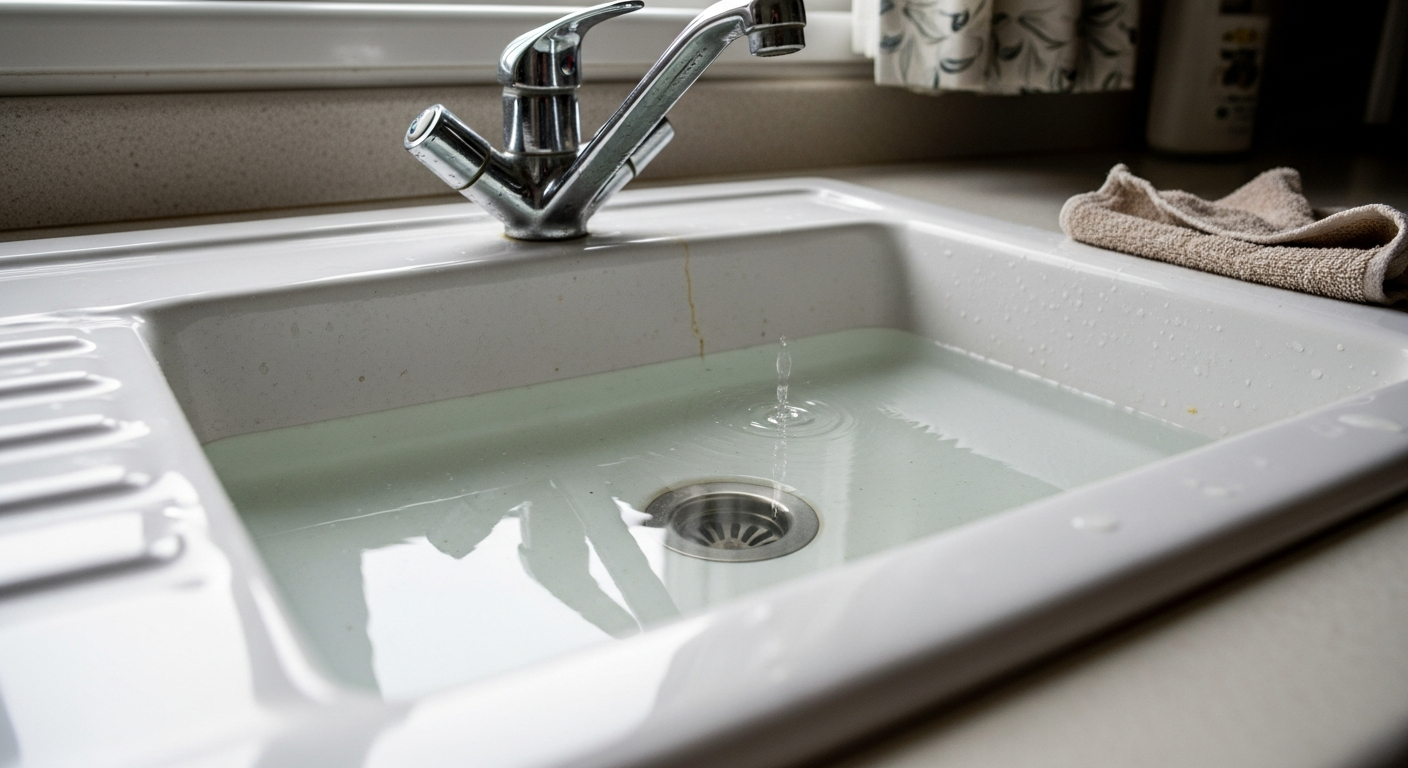
Reach into the drain opening with needle-nose pliers or a bent wire hook and pull out any visible hair, soap scum, and debris. Bath blockages are almost always a compacted plug of hair bound together with soap fat sitting just below the drain cover — removing it by hand is faster and more effective than any chemical treatment. Work slowly and pull upward in a corkscrew motion to extract the full mass rather than breaking it up and pushing it deeper. Drop everything into the bucket as you go, not down the drain. Sink drains block in the same way — the same technique applies there too.
Use a Plunger if the Blockage Persists
If the drain is still slow after clearing visible debris, fill the bath with 75–100 mm of warm water — enough to submerge the plunger cup. Apply a thin smear of petroleum jelly around the rim of the plunger cup to improve the seal against the bath surface. Place the plunger directly over the drain opening, press down firmly to expel air, then pump vigorously up and down 10–15 times without breaking the seal. On the final stroke, pull the plunger sharply upward — the sudden change in pressure dislodges blockages that pushing alone cannot shift. Repeat two or three times if needed, checking drain flow after each attempt.
Snake the Drain for Deeper Blockages
If plunging does not clear the drain, feed a flexible drain snake or drain rod into the drain opening. Push it down steadily, rotating it clockwise as you go — the rotating action wraps hair around the tip and hooks it rather than pushing it further into the pipe. Once you feel resistance, rotate and push a little further, then slowly withdraw the snake, bringing the blockage material with it. Most bath drain pipes run horizontally into the main soil stack within 600–900 mm, so the blockage is rarely deep. Clear the snake tip into the bucket between passes. If you notice persistent slow drainage elsewhere in your bathroom, check your toilet is not also contributing to the problem before concluding the bath drain alone is at fault.
Flush With Bicarbonate of Soda, Vinegar, and Hot Water
Once the mechanical blockage has been removed, pour 150 g of bicarbonate of soda directly down the drain followed immediately by 150 ml of white vinegar. The fizzing reaction breaks down residual soap scum coating the pipe walls. Leave it to work for 15 minutes with the drain uncovered, then flush through with the hottest tap water you can run — or a kettle of near-boiling water poured slowly and steadily. Do not use boiling water directly if you have plastic push-fit waste pipes, as it can soften and distort the joints. This flush step helps prevent the blockage returning quickly by stripping the soap film that hair clings to. For guidance on dealing with smelly or persistently slow drains, see our guide on how to unblock a sink drain for additional techniques that transfer directly to bath waste pipes.
Refit the Drain Cover and Test
Clean the drain cover thoroughly with an old toothbrush and hot soapy water before refitting — soap and hair residue on the cover itself can contribute to future blockages by catching debris before it washes through. Refit the cover by reversing how you removed it: push-fit types click back into place, screw-fit types need only finger-tight pressure to avoid cracking the chrome or plastic. Run the bath taps at full flow for 60 seconds and watch the drain: water should clear within 5–10 seconds of the taps being turned off. If it still pools or drains slowly, the blockage may be further along the waste pipe — at that point, review our full plumbing guide to understand your waste pipe layout before deciding whether to investigate further or call a plumber.
Frequently Asked Questions
Why does my bath drain keep blocking so quickly after I clear it?
Recurring blockages usually mean the inside of the waste pipe is coated in a thick layer of soap scum that hair clings to immediately after clearing. A monthly flush of bicarbonate of soda, white vinegar, and hot water strips that coating and significantly slows the rate of re-blocking. If it keeps happening despite regular maintenance, the pipe may have a partial sag or a rough joint internally — at that point it is worth inspecting the waste pipe run under the bath.
Can I use a drain unblocker chemical product instead of doing it manually?
Chemical drain cleaners can shift grease-based blockages but are largely ineffective against hair, which is the primary cause of bath drain blockages. Manual removal with a hook, pliers, or drain snake is faster, safer for your pipework, and more effective. If you do use a chemical product, always follow the manufacturer’s instructions precisely and ensure the bathroom is well ventilated — never mix different chemical products in the drain.
Is it safe for me to unblock a bath drain myself, or do I need a plumber?
Unblocking a bath drain is a straightforward DIY task that does not involve cutting into pipework, soldering, or any work that requires a qualified plumber. It carries no Part P electrical risk and no WaterSafe compliance implications — it is simple drain maintenance. You only need a professional if the blockage is in the soil stack or external drain, or if you discover a cracked or leaking waste pipe during the process.
How do I remove a bath drain cover that has no screws and won’t lift off?
Many modern bath drain covers are a push-and-turn type: press down firmly on the cover and rotate it a quarter-turn anticlockwise, then lift. Others use a cross-recess slot that accepts a coin rather than a screwdriver. If the cover is genuinely stuck with years of soap residue, apply warm water around the edge, leave for five minutes, then work around the perimeter with a flathead screwdriver wrapped in a cloth to avoid scratching the bath surface.
My bath is draining slowly but I can’t find a visible blockage — what should I check?
If the drain cover area is clear, the blockage is likely in the trap directly beneath the bath or in the horizontal waste pipe running to the soil stack. Remove the bath panel if accessible and check the trap — on most baths this is a P-trap or bottle trap that unscrews by hand for cleaning. If the trap is clear, the blockage is further along the waste run and a longer drain snake will be needed. You should also check whether other fixtures in the bathroom are draining slowly, as this would indicate a blockage in the shared waste or soil stack rather than the bath drain itself.
After clearing the blockage, hold a thin piece of tissue paper near the drain cover whilst the taps are running — if it flutters toward the drain, your air admittance valve (or venting) is working correctly. If it gets sucked flat against the cover, you likely have a venting issue causing siphoning, which will make the trap drain sluggishly even when the pipe is clear — that is the real culprit worth investigating before you keep unblocking the same drain repeatedly.
Sources
- WaterSafe — Find a WaterSafe approved plumber — watersafe.org.uk
- HSE — Domestic plumbing maintenance guidance — hse.gov.uk
- Which? — How to unblock a drain — which.co.uk
Safety Notice: Electrical and plumbing work can be dangerous if done incorrectly. In the UK, certain electrical work must comply with Part P of the Building Regulations and certain plumbing work with Part G. If in doubt, consult a qualified electrician (NICEIC/NAPIT registered) or plumber (CIPHE/WaterSafe registered). This guide is for general information only — it is not a substitute for professional advice.