How to Unblock a Sink – 2026 Guide
How to Unblock a Sink
Clear a blocked kitchen or bathroom sink yourself in under an hour.
To unblock a sink, start with a plunger, then try a bicarbonate of soda and vinegar flush. If that fails, remove and clean the P-trap by hand. Most sink blockages are caused by grease, soap, or hair buildup and can be cleared without calling a plumber.


Try a plunger first
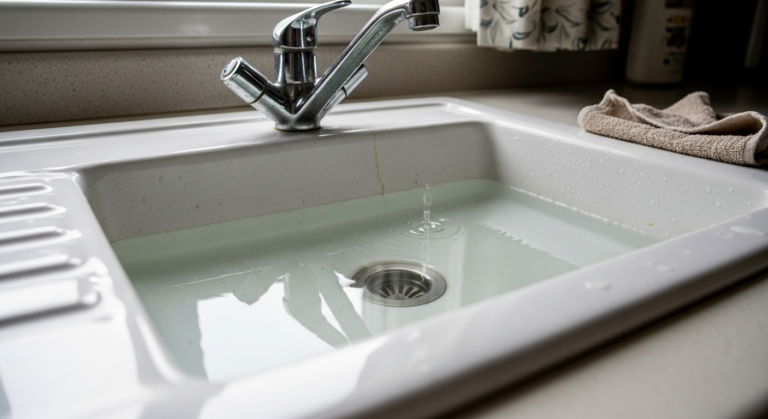
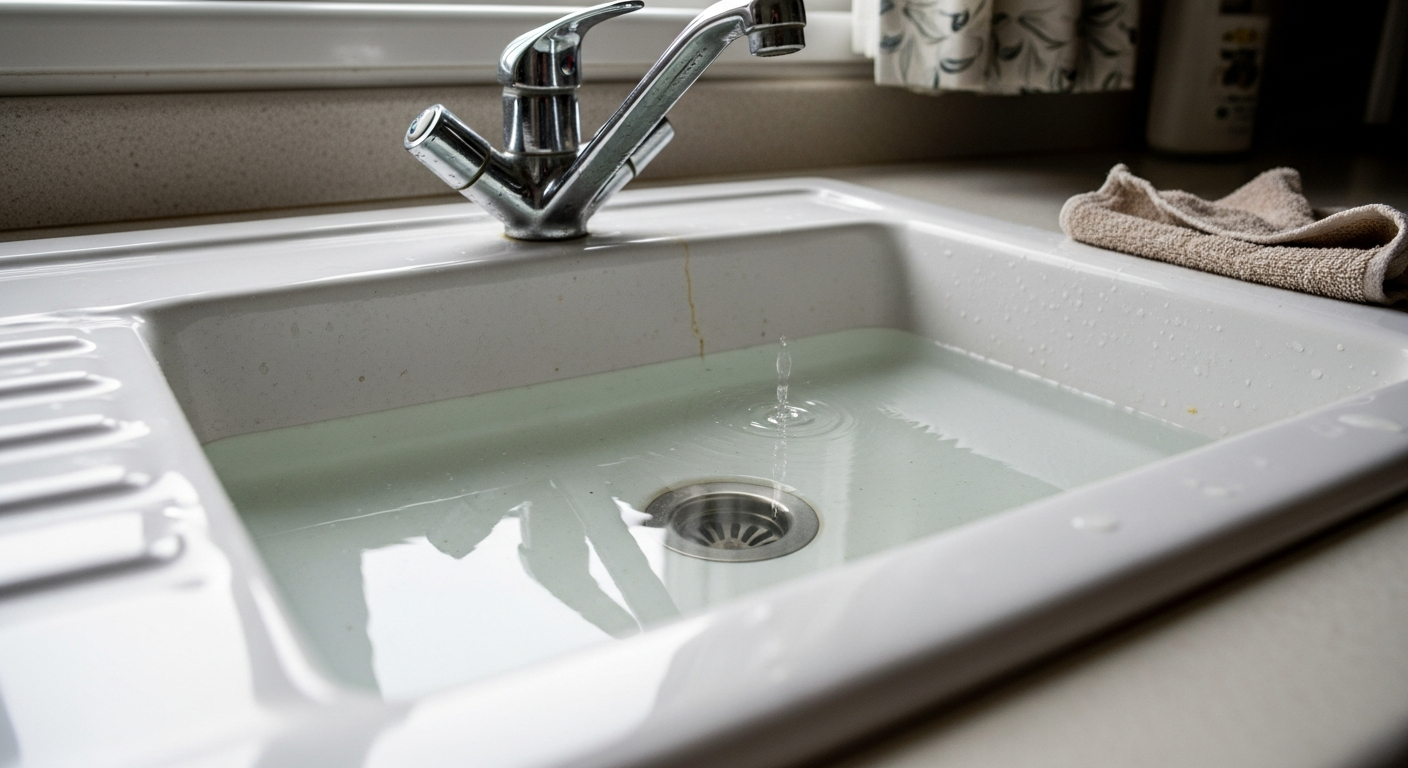
Fill the sink with enough water to cover the rubber cup of the plunger — this creates the hydraulic seal you need. Block the overflow hole with a damp cloth to stop air escaping. Place the cup directly over the plughole, press down firmly to seat it, then pump up and down with short sharp strokes 15–20 times before pulling away sharply. Repeat two or three times. Run the tap — if water drains freely, the job is done.
Flush with bicarbonate of soda and vinegar
If plunging alone does not clear the blockage, pour 100 g of bicarbonate of soda directly down the drain, followed immediately by 200 ml of white vinegar. The chemical reaction produces carbon dioxide which helps break down grease and soap scum. Cover the plughole with the plug or a cloth for five minutes to keep the reaction working inside the pipe, then flush with a full kettle of boiling water. Do not use boiling water on plastic push-fit waste pipes — use very hot tap water instead to avoid distorting the fittings.
Remove and clean the P-trap
If the flush has not worked, the blockage is likely sitting in the P-trap — the curved section of pipe beneath the sink. Place your bucket directly under the trap. Most plastic traps can be undone by hand; use an adjustable spanner only if they are tight, and wrap the jaws in cloth to avoid marking the fitting. Once the trap is off, pull out any debris by hand and scrub the inside with an old toothbrush. Check the pipe leading into the wall for any visible obstruction and probe gently with a flexible drain snake if needed. This is also a good time to check for any signs of a dripping tap or leaking joint while everything is accessible.
Reassemble and test the trap
Before refitting, inspect the rubber washer inside each trap fitting — if it is cracked or flattened, replace it now to prevent a slow drip after reassembly. Wrap a single layer of PTFE tape around any threaded connections if the old tape looks worn. Hand-tighten the trap fittings, then give each one a quarter-turn with the spanner. Run the hot tap for two full minutes and check every joint for drips. A slow drip from a trap joint after reassembly nearly always means the washer is seated incorrectly — loosen, re-seat, and retighten.
Use a chemical drain cleaner as a last resort
If the blockage persists after clearing the trap and rodding the pipe, a gel-formula chemical drain cleaner can dissolve residual organic matter further along the waste run. Pour the product exactly as directed on the label — do not exceed the recommended dose or leave it longer than stated. Never mix chemical drain cleaners with bicarbonate of soda, vinegar, or any other product already in the pipe. Ventilate the room fully and keep children and pets out of the area. If the sink is still blocked after this step, the obstruction is likely deeper in the soil stack and a qualified plumber should be called.
Frequently Asked Questions
What is the fastest way to unblock a sink?
A cup plunger used correctly — with the overflow blocked and enough water to cover the cup — is the fastest method and clears most blockages in under two minutes. If plunging fails, removing and cleaning the P-trap physically is the next quickest fix.
Can I use boiling water to unblock a sink?
Boiling water is effective on grease blockages in metal waste pipes, but it can warp or collapse plastic push-fit fittings. If your waste pipe is plastic — which most modern UK sinks use — stick to the hottest water from your tap rather than water fresh from the kettle.
Why does my sink keep blocking even after I clear it?
Recurring blockages usually mean grease or soap is accumulating on the inside walls of the pipe, gradually narrowing the bore. A monthly flush of bicarbonate of soda followed by hot water keeps the pipe clear. In kitchen sinks, fitting a grease trap or food-waste strainer significantly reduces build-up.
Is it safe to use a chemical drain cleaner in a bathroom sink?
Gel-formula drain cleaners are generally safe for ceramic basins and modern plastic waste pipes if used as directed and flushed thoroughly. Avoid powder or granule formulas, which generate significant heat and can crack older ceramic ware. Always ventilate the room, wear gloves and eye protection, and never mix products. For guidance on bathroom plumbing and fixtures, see our bathroom guide.
When should I call a plumber instead of unblocking the sink myself?
Call a qualified plumber if multiple fixtures are slow or blocked simultaneously, if you can hear gurgling from other drains when you use the sink, or if the blockage persists after clearing the trap and using a drain snake. These signs point to a blockage in the main soil stack or underground drain, which requires specialist equipment. You may also want to check whether any underlying issues — such as a running toilet — are affecting drain pressure.
After reassembling a P-trap, run the hot tap for at least two minutes rather than just a quick blast — thermal expansion of the pipe and fittings is what fully seats the washers and reveals any slow weep that hand-tightening alone misses. Checking with dry tissue paper around each joint after that two-minute run will show a drip that a visual check on wet pipework will not.
Sources
- Which? — How to unblock a sink — which.co.uk
- HSE — Drain cleaning chemicals: safe use guidance — hse.gov.uk
- WaterSafe — Find a WaterSafe approved plumber — watersafe.org.uk
Safety Notice: Electrical and plumbing work can be dangerous if done incorrectly. In the UK, certain electrical work must comply with Part P of the Building Regulations and certain plumbing work with Part G. If in doubt, consult a qualified electrician (NICEIC/NAPIT registered) or plumber (CIPHE/WaterSafe registered). This guide is for general information only — it is not a substitute for professional advice.