Pipes Making Noise
Noisy pipes are most commonly caused by water hammer, loose pipe fixings, or thermal expansion. Identifying when the noise occurs — on flow, on shut-off, or overnight — pinpoints the cause. Most issues are DIY-fixable; gas or sealed central heating faults need a professional.

What’s Causing This?
Water hammer is the most frequent cause of banging or thudding pipes. It happens when a tap or valve is closed quickly, sending a pressure shockwave through the pipework. The bang is often sharp and sudden, occurring the moment you turn off a tap or an appliance valve shuts. See our guide on how to fix water hammer noise in pipes for step-by-step solutions.
Loose or unsupported pipe runs allow pipes to vibrate or rattle against joists, walls, or each other when water flows through them. Plastic pipes expand more than copper and are particularly prone to this. The noise is usually a rhythmic rattling or tapping that follows water use rather than appearing at shut-off.
Thermal expansion in heating pipes produces ticking or creaking as pipes heat up and cool down. Copper pipes passing through tight clips or notches in joists have nowhere to expand and click against the wood. This is very common on central heating systems when the boiler fires up — check our boiler making noise guide if the sound appears to come from the boiler itself.
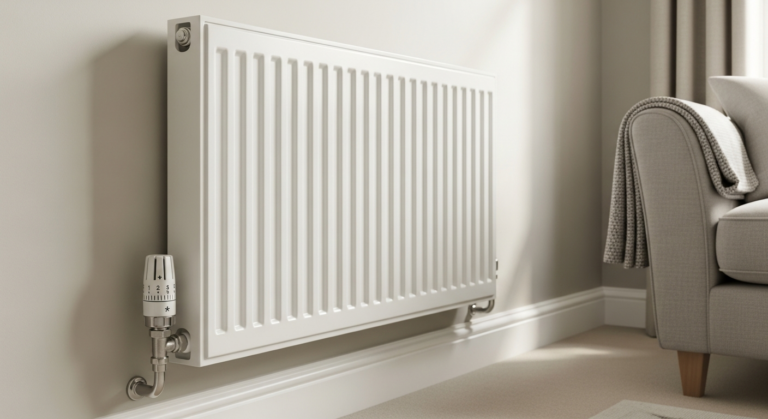
Trapped air in heating or hot water pipes creates gurgling, rumbling, or intermittent banging. Air accumulates at high points in the system and disrupts water flow. Radiators that are cool at the top are a tell-tale sign. Bleeding a radiator releases trapped air and often eliminates the noise entirely.
Limescale or debris build-up can cause whistling or whining in hot water pipes, particularly in hard-water areas. Partial blockages narrow the bore and force water through at higher velocity, generating noise. This is more gradual in onset and tends to worsen over months rather than appearing suddenly.
How to Diagnose the Exact Cause
- Note exactly when the noise happens. Does it occur when you turn a tap off (water hammer), while water is running (loose pipes or debris), when the heating fires up (thermal expansion), or randomly overnight (trapped air in heating)?
- Locate the noise as precisely as possible. Walk the pipe runs while a helper reproduces the sound. Tap walls lightly — a hollow thud suggests a pipe cavity; a sharp ring suggests a free-running pipe vibrating against a hard surface.
- Check your water pressure. Excessively high mains pressure amplifies water hammer and pipe vibration. If you have a pressure gauge, connect it to an outside tap. Domestic supply should typically be between 1 and 3 bar; above this, a pressure-reducing valve may be needed.
- Bleed all radiators and check the boiler pressure gauge. If gurgling or banging follows the heating circuit, trapped air is the most likely culprit. Boiler pressure below 1 bar can also cause circulation noise — see how to repressurise a boiler if the gauge reads low.
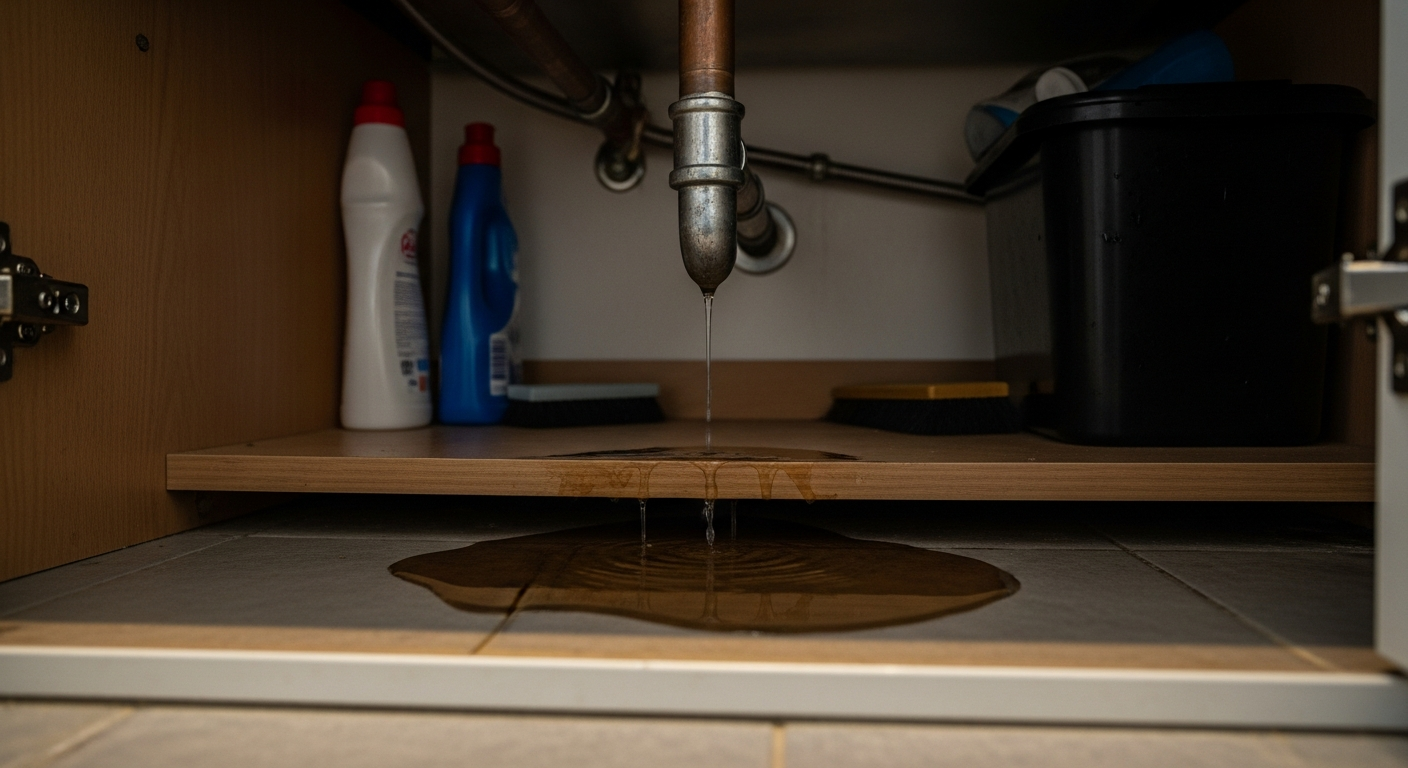
- Inspect visible pipe clips and fixings. In the loft, under the sink, and beneath floorboards (where accessible), check that clips are present every 1.2 m on horizontal copper runs and every 0.5 m on plastic, and that no pipes are rubbing against wood or masonry.
- Run the hot tap and listen. A high-pitched whistle that appears only on the hot side suggests limescale restriction. If the noise occurs on both hot and cold, the cause is more likely pressure, hammer, or loose fixings.
How to Fix It
Water hammer: Fit a hydraulic shock arrestor or mini expansion vessel on the offending supply line. Alternatively, slow down the rate at which taps or appliance valves close. Full instructions are in our fix water hammer noise in pipes guide.
Loose pipes: Add additional pipe clips at the correct centres for your pipe material, and insert rubber-lined clips rather than bare plastic ones to absorb vibration. Where pipes pass through joists or noggins, pack the hole with foam pipe lagging to eliminate rattling. Our guide on how to insulate pipes covers lagging technique in detail.
Thermal expansion noise: Replace any tight-fitting clips on heating pipe runs with larger rubber-lined clips that allow the pipe to slide slightly. Where pipes pass through joists, enlarge the hole slightly and pack with foam. This gives the pipe room to expand without clicking.
Trapped air: Bleed each radiator in the system starting with the ground floor. If air returns repeatedly, the system may need inhibitor topping up or the feed-and-expansion tank float valve checking. See how to bleed a radiator for the full process.
Limescale restriction: A chemical descaler circulated through the heating system (power flush) removes heavy scale deposits. On domestic hot water pipes, a whole-house scale inhibitor fitted at the mains entry point slows future build-up. Power flushing a sealed heating system should be carried out by a qualified plumber.
When to Call a Tradesman
Call a Gas Safe registered engineer if the noise appears to originate at or near your boiler, or if you smell gas at any point. Under no circumstances should a homeowner work on gas pipework or internal boiler components — this is illegal under the Gas Safety (Installation and Use) Regulations 1998, enforced by the HSE.
Call a qualified plumber if: mains water pressure is confirmed as too high and a pressure-reducing valve needs fitting; pipes are leaking at joints as a result of repeated hammer stress; or the noise is inside a sealed, pressurised heating system that requires power flushing or chemical treatment. Disturbing sealed heating systems incorrectly can invalidate boiler warranties and cause further damage. Checkatrade recommends obtaining at least three quotes for any job where a sealed system is involved.
If you cannot safely access pipe runs without removing structural floorboards, or if pipes run through walls that would require notching load-bearing timbers, stop and get professional advice first.
How to Prevent It Happening Again
- Fit a mains pressure-reducing valve if your supply exceeds 3 bar — high pressure is the single biggest driver of water hammer and pipe stress over time.
- Service your boiler annually with a Gas Safe engineer; a correctly pressurised and inhibitor-dosed system produces far less noise and corrosion.
- Use rubber-lined pipe clips throughout and check them every few years, particularly on plastic hot water pipes that expand and contract more than copper.
- In hard-water areas, fit an inline scale inhibitor at the mains entry point to reduce limescale accumulation in hot water pipework and the boiler heat exchanger.
Frequently Asked Questions
Why do my pipes bang when I turn the tap off?
This is almost certainly water hammer — a pressure shockwave caused by the sudden stoppage of fast-moving water. Fitting a shock arrestor on the supply line or slowing the valve closure rate resolves it in most cases.
Why do my heating pipes make a ticking or creaking noise?
Ticking and creaking in heating pipes is caused by thermal expansion — copper pipes lengthen as they heat up and click against tight clips or joists. Replacing tight clips with rubber-lined, slightly larger ones gives the pipe room to move and stops the noise.
Is a noisy pipe dangerous?
Most pipe noise is a nuisance rather than an emergency, but persistent water hammer can stress pipe joints over time and eventually cause leaks. Gurgling from a boiler or heating system should be investigated promptly to avoid pump or heat exchanger damage.
Why do my pipes gurgle at night when no water is being used?
Overnight gurgling is usually trapped air moving through the heating or hot water circuit as it cools down, or a slow-filling cistern in the loft. Bleeding the radiators and checking the cold water storage tank float valve usually resolves it.
Can I fix noisy pipes myself or do I need a plumber?
Most causes — water hammer, loose clips, trapped air, and thermal expansion — are DIY-fixable with basic tools. You need a qualified plumber for high-pressure reducing valves, sealed system power flushing, or any work involving gas pipework.
When tracking down intermittent pipe noise, turn the central heating off completely for 24 hours and test cold water taps independently — this isolates heating circuit noise from mains supply noise and halves your diagnostic time. Many plumbers charge an hour’s labour just to reach this conclusion on site.
Sources
- HSE — Gas Safety (Installation and Use) Regulations 1998 — hse.gov.uk
- Which? — Water hammer: what it is and how to fix it — which.co.uk
- Checkatrade — How to find and hire a plumber — checkatrade.com
Safety Notice: Electrical and plumbing work can be dangerous if done incorrectly. In the UK, certain electrical work must comply with Part P of the Building Regulations and certain plumbing work with Part G. If in doubt, consult a qualified electrician (NICEIC/NAPIT registered) or plumber (CIPHE/WaterSafe registered). This guide is for general information only — it is not a substitute for professional advice.