How to Fix a Frozen Pipe – DIY Guide
Fix a frozen pipe by locating the frozen section, turning off your stopcock, then applying gentle heat with a hot water bottle or warm towels. Work from the tap end back towards the boiler. Never use a naked flame. Check for splits once thawed.


- Hot water bottle
- Hairdryer
- Towels or cloths
- Bucket
- Torch
- Pipe repair clamp (if needed)
- Warm water
- Pipe lagging foam
- Self-amalgamating tape
- Pipe repair patch kit
- PTFE tape
- Absorbent cloths
Step-by-Step Guide
Turn Off the Water Supply
Before applying any heat, locate your stopcock — usually under the kitchen sink or where the rising main enters the property — and turn it off clockwise. This is critical: if the pipe has already split along a frozen section, releasing the pressure immediately limits flooding damage. If you’re unsure where your stopcock is, read our guide on how to turn off your water supply before you do anything else. Open the nearest tap to relieve any residual pressure in the line and have towels and a bucket ready.
Locate the Frozen Section
Trace the affected pipe from the tap or fitting that has lost flow back towards the water source. Frozen sections are most common in unheated spaces — loft pipes, pipes running through an external wall cavity, under-floor runs, or in an uninsulated garage. Run your hand along the pipe: the frozen section will feel noticeably colder than the rest, and you may see frost or condensation on the outside. Mark the frozen area with a piece of tape so you know exactly where to apply heat.
Apply Gentle Heat to the Frozen Section
Work from the tap or open end of the pipe back towards the frozen blockage — this gives the melting ice somewhere to drain rather than building pressure behind it. Wrap a hot water bottle directly around the pipe, or fold warm (not boiling) damp towels over the frozen section and refresh them regularly. A hairdryer on its lowest heat setting, held at least 15 cm from the pipe, is also effective on copper and plastic pipes. Move the heat source continuously — do not concentrate it in one spot. Never use a blowtorch, heat gun on maximum, or any open flame: these can cause copper to fail at solder joints and will melt plastic pipe outright.
Check for Splits or Leaks as the Pipe Thaws
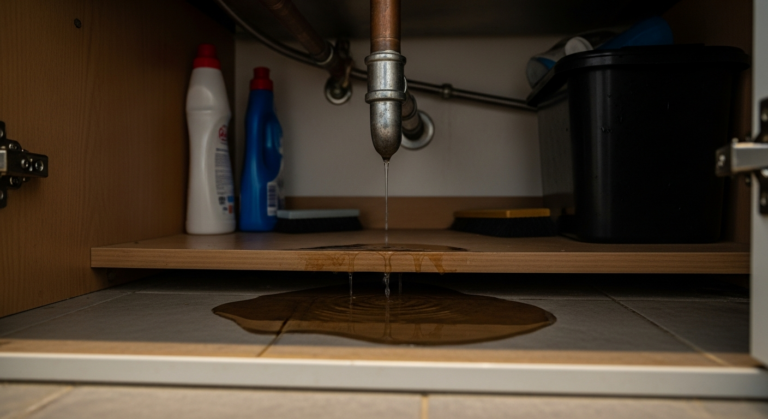
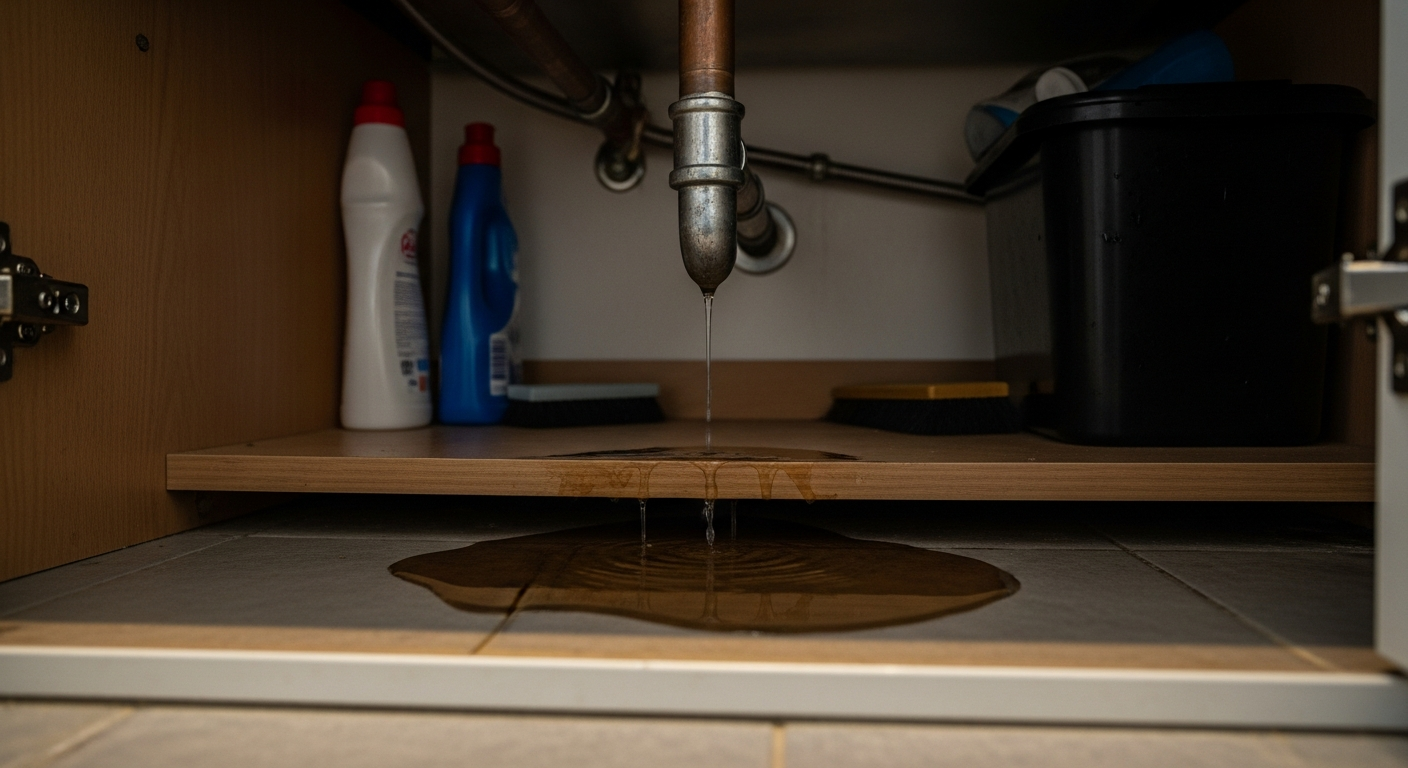
As the ice melts, inspect the full length of the frozen section closely. A frozen pipe expands, and even a pipe that looks intact can have a hairline split or a failed solder joint that will only become apparent once water pressure returns. If you spot a leaking pipe joint or crack, do not restore the water supply — repair the damage first. A pipe repair clamp or self-amalgamating tape can provide a temporary fix, but a burst pipe will need a proper repair before the water goes back on.
Restore the Water Supply and Test
Once you are satisfied the thawed section is intact, slowly turn the stopcock back on — no more than a quarter turn at a time — while keeping a close eye on the pipe. Check every joint, fitting, and the full length of the previously frozen run for drips. Run the tap the pipe feeds until flow is fully restored and steady. If water pressure seems low after thawing, there may be a secondary frozen section further along the run — repeat the process from Step 2.
Insulate the Pipe to Prevent Refreezing
Once the pipe is working again, fit foam pipe lagging along the entire vulnerable run while conditions are still cold. Push split foam lagging over the pipe and tape the seam closed with self-amalgamating tape or purpose-made lagging tape. Pay particular attention to any section of pipe that runs through an unheated space, close to an external wall, or through a loft. If temperatures are forecast to drop again overnight, leave the heating on a low setting or let a cold tap drip slightly to keep water moving — standing water freezes far more readily than flowing water.
Frequently Asked Questions
How do I know if a frozen pipe has burst?
Once thawed, a burst pipe will leak visibly at the split or at the nearest joint. If you notice water staining, damp patches on walls or ceilings, or a significant drop in pressure when you restore the supply, isolate the water again immediately and inspect the full run. See our guide on how to fix a burst pipe for the repair steps.
Can I pour boiling water directly onto a frozen pipe?
No. Pouring boiling water onto a cold pipe — especially copper — causes rapid thermal shock that can crack solder joints or split the pipe wall. Use warm water at no more than 50°C, applied via a cloth or hot water bottle rather than poured directly.
What pipes are most at risk of freezing?
Pipes in loft spaces, those running close to external walls, and any pipe in an unheated outbuilding or garage are highest risk. Water in outdoor supply pipes and condensate pipes on boilers can also freeze during prolonged cold spells.
Should I call a plumber to thaw a frozen pipe?
If you cannot locate the frozen section, if the pipe runs inside a wall or under a concrete floor, or if you suspect the pipe has already split, call a WaterSafe-registered plumber (watersafe.org.uk). Attempting to thaw a pipe you cannot see risks making the situation significantly worse.
How can I prevent pipes freezing in future?
Fit foam pipe lagging to all exposed pipes in unheated areas — this is the single most effective preventive measure. Keep the heating set to at least 13°C overnight during cold snaps, and ask a plumber to drain down any supply to outbuildings before winter if those runs are not lagged. For more context on the wider plumbing system, our complete plumbing guide covers all the key areas.
When thawing a loft pipe in near-freezing conditions, place a fan heater pointing into the loft hatch on a low setting while you work — raising the ambient temperature even slightly means the pipe stays thawed long enough for you to fit lagging before it refreezes. Thawing without immediately lagging in the same session is a wasted job.
Sources
- HSE — Dealing with frozen and burst pipes — hse.gov.uk
- Which? — How to fix a frozen pipe — which.co.uk
- WaterSafe — Find a registered plumber — watersafe.org.uk
Safety Notice: Electrical and plumbing work can be dangerous if done incorrectly. In the UK, certain electrical work must comply with Part P of the Building Regulations and certain plumbing work with Part G. If in doubt, consult a qualified electrician (NICEIC/NAPIT registered) or plumber (CIPHE/WaterSafe registered). This guide is for general information only — it is not a substitute for professional advice.