How to Fix a Leaking Pipe Joint – DIY Guide
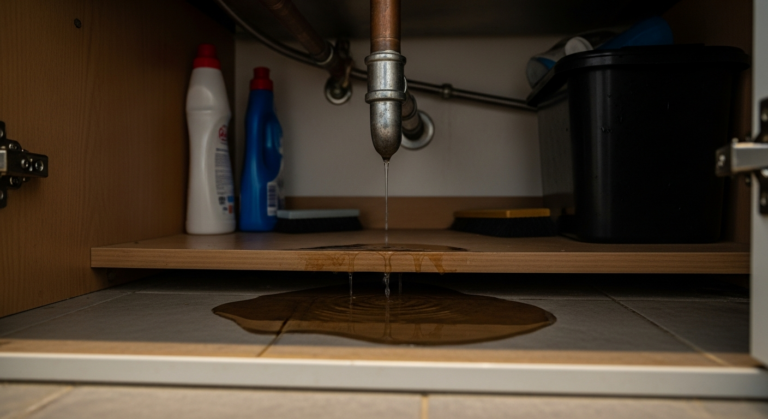
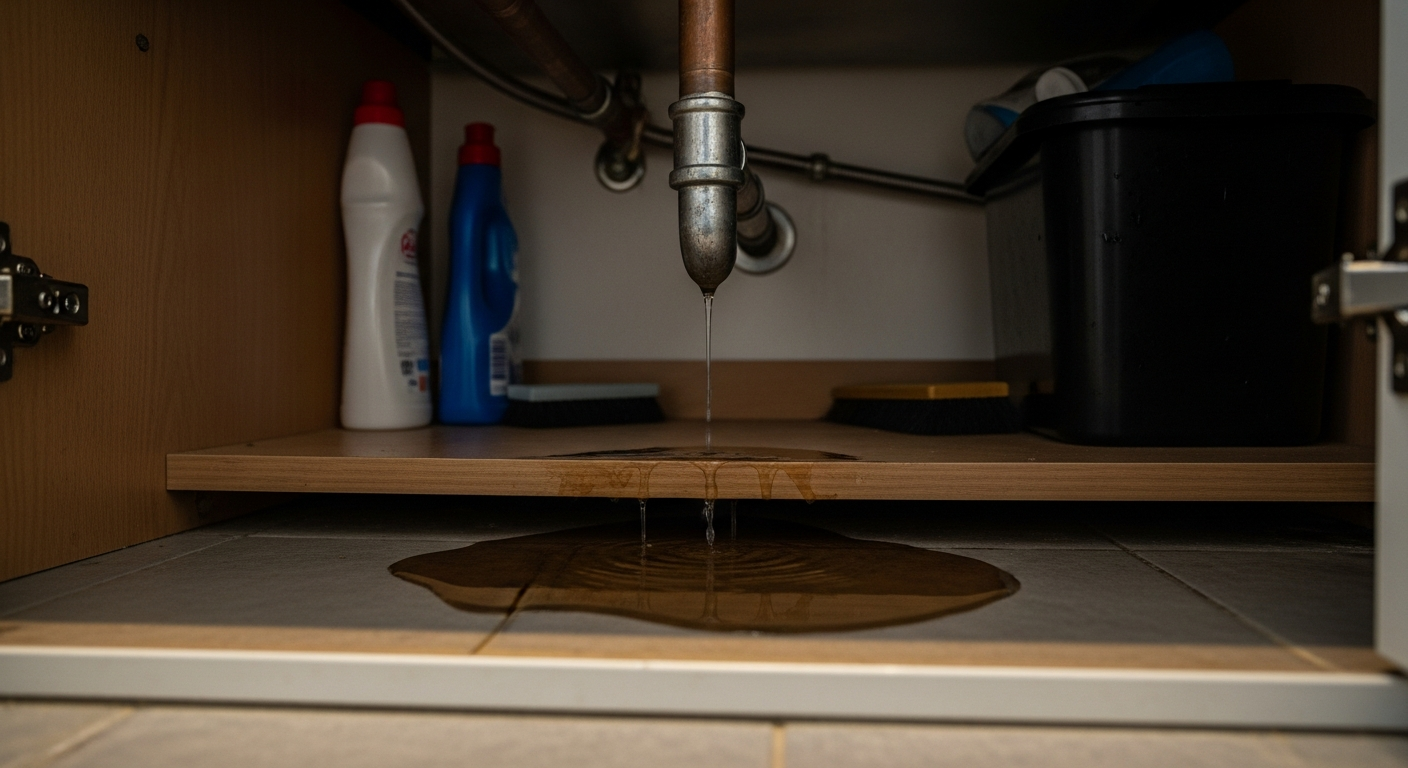
Fix a leaking pipe joint by isolating the water supply, draining the pipe, drying the joint thoroughly, then tightening or remaking the joint using PTFE tape, jointing compound, or a new compression fitting depending on joint type.


- Adjustable spanner
- Pipe slice or hacksaw
- Pipe cutter
- Cloth or dry rags
- Bucket
- Torch or inspection light
- Deburring tool
- PTFE tape
- Pipe jointing compound
- Compression fitting (matching pipe diameter)
- Push-fit coupling
- Pipe repair clamp (emergency use)
- Replacement olive
- Flux and lead-free solder (for soldered joints)
Step-by-Step Guide
Isolate the Water Supply
Turn off the water supply to the affected pipe before doing anything else. If you have an inline isolation valve on the pipe run, use a flathead screwdriver to turn it 90 degrees. If not, turn off the water supply at the stopcock, usually located under the kitchen sink or where the mains enters the property. Open a nearby tap at a lower point to drain residual water from the pipe — this prevents water weeping back into the joint while you work.
Identify the Joint Type
Determine what type of joint is leaking before you decide on a fix — the repair method is different for each. Compression fittings have a nut and olive (a small brass ring) and are tightened mechanically. Soldered (capillary) joints are heated and rely on solder to seal. Push-fit fittings use an internal rubber O-ring and simply push onto the pipe. Check whether the pipe is copper or plastic, as this affects which fittings and repair techniques apply. Our copper vs plastic pipes guide explains the key differences if you are unsure.
Dry the Pipe and Joint Thoroughly
Use dry rags and hold a cloth firmly around the pipe to absorb all remaining moisture. Even a small amount of water will prevent jointing compound, PTFE tape, and solder from sealing correctly. If the pipe is still weeping, push a small piece of bread (without the crust) into the pipe — it temporarily absorbs water flow and dissolves harmlessly once the supply is restored. Do not skip this step: a wet joint is the single most common reason a repair fails on the first attempt.
Remake or Tighten the Joint
For a compression fitting, use two adjustable spanners — one to hold the body of the fitting, one to tighten the nut — and give it a quarter to half turn further. If it still weeps after retightening, disassemble the fitting completely, slide off the old olive, and fit a new olive with jointing compound applied around it before reassembling. For a push-fit fitting, insert a pipe insert (pipe stiffener) into the end of the pipe if not already present, then push the fitting firmly until it clicks. For a soldered joint, the pipe must be cut back, cleaned, refluxed, and resoldered — if you are not confident with soldering, fit a push-fit or fit a compression fitting instead, which requires no heat.
Apply PTFE Tape or Jointing Compound Where Required
PTFE tape is used on threaded joints — wrap it clockwise (in the direction of the thread) three to five times around the male thread before reconnecting. Jointing compound can be used on compression olives and threaded fittings for additional sealing. Do not apply PTFE tape to push-fit or compression joints where rubber O-rings do the sealing — it creates an uneven surface and can cause the joint to leak rather than seal. Fixing a dripping tap uses the same PTFE technique on threaded tap tails, so the skill transfers directly.
Restore the Water Supply and Check for Leaks
Turn the water supply back on slowly, allowing pressure to build gradually. Watch the joint closely for the first 60 seconds — do not walk away immediately. Run your finger around the full circumference of the joint and check for any moisture. If a minor weep persists on a compression fitting, tighten the nut by no more than a further quarter turn. If the joint leaks significantly or you cannot stop the weep, the pipe end may be damaged or oval — cut back to clean pipe and fit a new coupling. If you are dealing with a leak near a radiator valve, our guide on fixing a leaking radiator valve covers the specific steps for that fitting type.




Similar Posts
How to Insulate Pipes – DIY Guide
Insulate pipes to prevent freezing and cut heat loss. Step-by-step DIY guide covering foam lagging, bends, and loft pipes. Beginner-friendly.
How to Fix a Burst Pipe – DIY Guide
Fix a burst pipe fast with this step-by-step guide. Stop water damage, choose the right repair, and get your supply back on today.
How to Fix a Frozen Pipe – DIY Guide
Fix a frozen pipe safely — locate the freeze, apply gentle heat, and check for splits before turning the water back on.