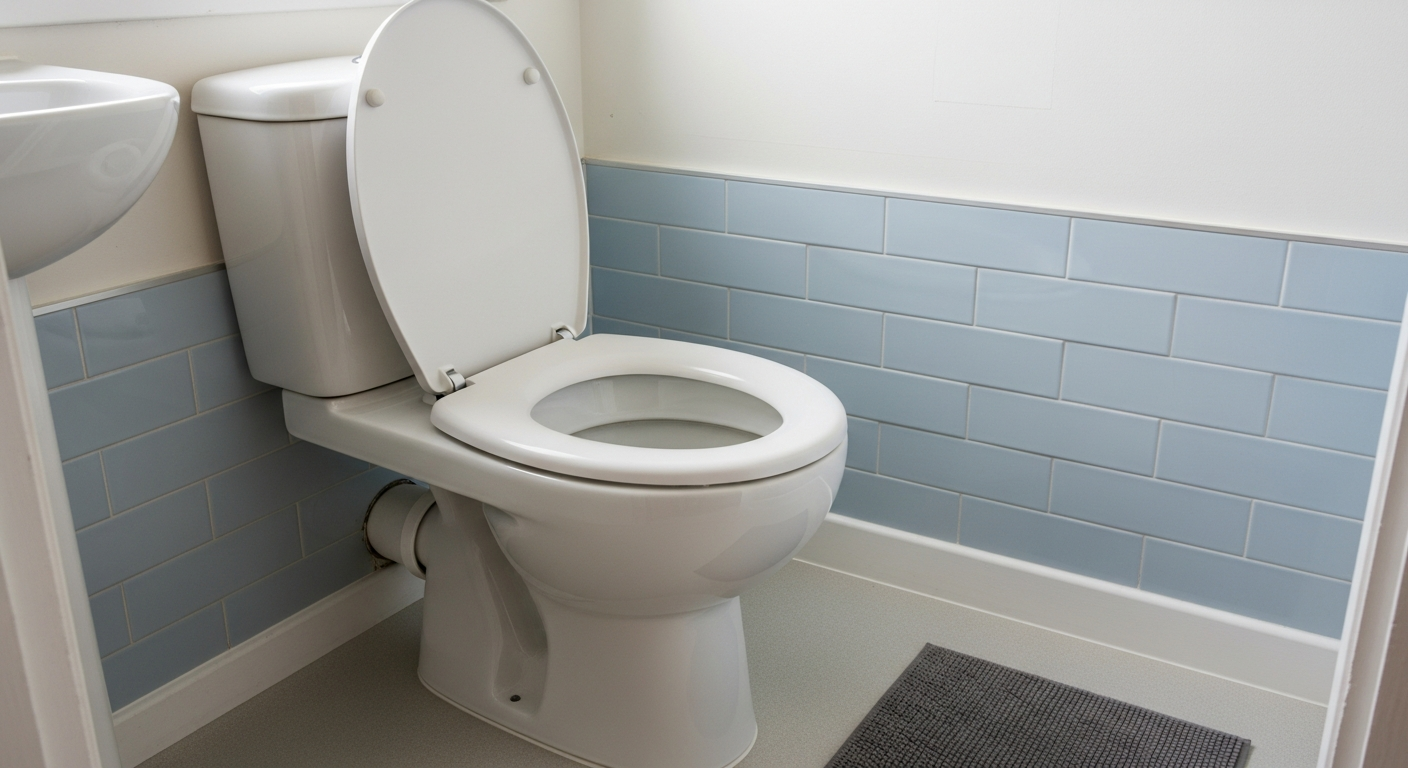
Toilet Not Flushing Properly
A toilet that won’t flush properly is most often caused by a faulty flapper valve or low water level in the cistern. Both are straightforward DIY fixes. Check the cistern first — lift the lid and confirm water reaches the marked fill line before investigating further.

What’s Causing This?
Worn or warped flapper valve. The flapper sits at the bottom of the cistern and controls water release into the pan. Over time the rubber warps, stiffens or develops a poor seal, meaning water trickles out constantly or the flush lacks force. This is the most common cause of a weak flush. See our guide on how to fix a toilet that won’t flush for step-by-step help.
Low cistern water level. If the fill valve or float is set too low, the cistern won’t hold enough water to generate a full flush. The water level should sit roughly 25 mm below the overflow tube. Adjusting the float arm or fill valve height usually resolves this quickly.
Faulty or jammed flush handle mechanism. The handle, lift arm or chain linking the handle to the flapper can break, stretch or become disconnected. If the handle feels loose or has to be held down for a full flush, the linkage is likely the problem. Our fix toilet flush handle guide walks through this repair.
Partial blockage in the pan or trap. A partial obstruction in the toilet trap or soil pipe reduces the siphonic action that clears waste. The flush appears weak even though the cistern is full. See our unblock a toilet guide if you suspect this is the issue.
Low mains water pressure. If the cistern takes a long time to refill between flushes, or other taps in the house also run slowly, low incoming water pressure may be reducing fill rate and flush performance. Our guide on fixing low water pressure covers what to check first.
How to Diagnose the Exact Cause
- Remove the cistern lid and observe the water level. It should sit approximately 25 mm below the overflow tube. If it is significantly lower, the fill valve or float needs adjustment — this is your starting point.
- Flush the toilet and watch the flapper. The flapper should lift fully, stay open while the cistern empties, then drop and seal completely. If it closes too early, sticks open, or you can see it is warped or discoloured, replace it.
- Check the flush handle and linkage. With the lid off, press the handle and watch whether the lift arm raises the flapper fully. A slack chain, broken arm or disconnected link will prevent the flapper lifting high enough for a strong flush.
- Pour a bucket of water directly into the pan. Use about 10 litres poured quickly from waist height. If waste clears efficiently, the problem is in the cistern mechanism rather than a blockage. If waste clears slowly or backs up, you have a partial blockage in the trap or soil pipe.
- Check how long the cistern takes to refill. Time it from the end of a flush to the fill valve clicking off. If it takes more than three minutes, check whether the isolation valve on the supply pipe to the cistern is partially closed, and confirm water pressure at a nearby tap is normal.
- Inspect for a running toilet. If you can hear water trickling into the pan after the cistern has refilled, a leaking flapper is confirmed. A few drops of food colouring in the cistern will show up in the pan within minutes if the seal is failing. For help with this, see our guide on fixing a running toilet.
How to Fix It
Worn flapper valve: Turn off the water supply using the cistern isolation valve, flush to empty the cistern, unhook the old flapper from the overflow tube pegs and disconnect the chain. Fit a new flapper of the same size, reconnect the chain leaving 10–15 mm of slack, and restore the water supply. Full instructions in our fix a toilet that won’t flush guide.
Low water level: If your cistern has a ball float on an arm, gently bend the arm upward slightly to raise the float cut-off point. Modern fill valves have an adjustment screw or clip on the valve stem — turn clockwise to raise the water level. Check the level after the next refill and adjust again if needed.
Faulty flush handle or linkage: Reattach a disconnected chain or replace a corroded lift arm. If the handle itself is broken, replacement handle kits are inexpensive and sold by size to match your cistern. See our toilet flush handle repair guide for the full process.
Partial blockage: Use a toilet plunger with a flange (not a flat cup plunger) to create a seal inside the pan outlet and work it firmly up and down. If plunging does not clear it, a toilet auger threaded into the trap will usually dislodge the obstruction. Persistent blockages may indicate a problem further down the soil stack — see our guide on why a toilet keeps blocking.
Low water pressure: Check the isolation valve is fully open (slot in line with the pipe). If pressure is low throughout the house, contact your water supplier as this may be a supply issue. Our guide to low water pressure causes explains the most common reasons and what you can do yourself.
When to Call a Tradesman
Call a qualified plumber if the flush problem is accompanied by gurgling from other drains or waste backing up into a bath or basin — this indicates a blocked soil stack or drain that requires professional rodding or jetting equipment. Similarly, if the toilet pan itself is cracked or the cistern is leaking from the base rather than a visible internal component, replacement is needed and a plumber will ensure the new unit is fitted to current Building Regulations standards. If your property has a macerator (saniflo-style) toilet and the flush is failing, do not attempt internal repairs yourself unless you are competent with these systems — a fault can result in pump damage or sewage leaks. Landlords must ensure rented properties have properly functioning sanitation at all times under the Landlord and Tenant Act 1985, so persistent flush failure in a rented property should be reported to the landlord in writing without delay.
How to Prevent It Happening Again
- Inspect cistern internals annually. Lift the lid once a year and check the flapper for signs of staining, warping or brittleness. Rubber components typically last 5–10 years but degrade faster in areas with hard or heavily chlorinated water. Replacing them before they fail prevents weak flushes.
- Only flush the three Ps. Flushing anything other than pee, paper, and poo — including wet wipes labelled ‘flushable’, cotton wool, or sanitary products — is the leading cause of partial blockages. Water UK advises that no wipes should be flushed regardless of labelling.
- Avoid in-cistern bleach blocks. Solid bleach blocks placed inside the cistern accelerate the degradation of rubber flappers and seals, shortening their service life significantly. Use rim blocks or in-pan cleaners instead.
- Check fill time after any plumbing work. If the isolation valve on the supply pipe has been closed and reopened for any reason, confirm it is fully open afterwards. A partially closed valve reduces fill rate and flush volume without any obvious warning signs.
Frequently Asked Questions
Why does my toilet flush weakly even though the cistern is full?
A full cistern with a weak flush usually points to a flapper that is closing too early or not lifting fully, reducing the volume of water released into the pan. Check that the chain has the right amount of slack and that the flapper opens completely when you press the handle.
How do I know if my toilet flapper needs replacing?
Add a few drops of food colouring to the cistern and wait 10 minutes without flushing. If colour appears in the pan, the flapper seal is failing and needs to be replaced. Visible warping, staining or a rubbery residue on your fingers when you touch it are also signs it is past its best.
Can low water pressure cause a poor toilet flush?
Yes, but only indirectly — low pressure slows cistern refill rather than affecting flush force directly. If your cistern takes a very long time to refill, each flush will have less water behind it than the system was designed for, resulting in a weaker flush over time.
Is a poorly flushing toilet a problem I need to fix urgently?
It depends on severity. A slightly weak flush can usually wait a day or two while you source parts, but a toilet that fails to clear waste is a hygiene risk and should be fixed promptly. If you have only one toilet in the property, prioritise the repair or call a plumber the same day.
Can I replace a toilet cistern myself?
Yes — replacing a standard close-coupled or back-to-wall cistern is within DIY capability provided you can isolate the water supply and follow manufacturer fitting instructions. You do not need to notify Building Control for a like-for-like cistern replacement. Our guide on replacing a toilet cistern covers the process in full.
When fitting a new flapper, take the old one to the merchants rather than guessing the size — flappers vary by cistern brand and diameter, and the wrong size will never seal properly regardless of how new it is. If you cannot source an exact match, a universal flapper with an adjustable seat ring is a reliable alternative that works across most standard cisterns.
Sources
- Water UK — Fine to Flush standard and what not to flush — water.org.uk
- Which? — How to fix a toilet that won’t flush — which.co.uk
- HSE — Sanitation, toilet and washing facilities guidance — hse.gov.uk
Safety Notice: Electrical and plumbing work can be dangerous if done incorrectly. In the UK, certain electrical work must comply with Part P of the Building Regulations and certain plumbing work with Part G. If in doubt, consult a qualified electrician (NICEIC/NAPIT registered) or plumber (CIPHE/WaterSafe registered). This guide is for general information only — it is not a substitute for professional advice.