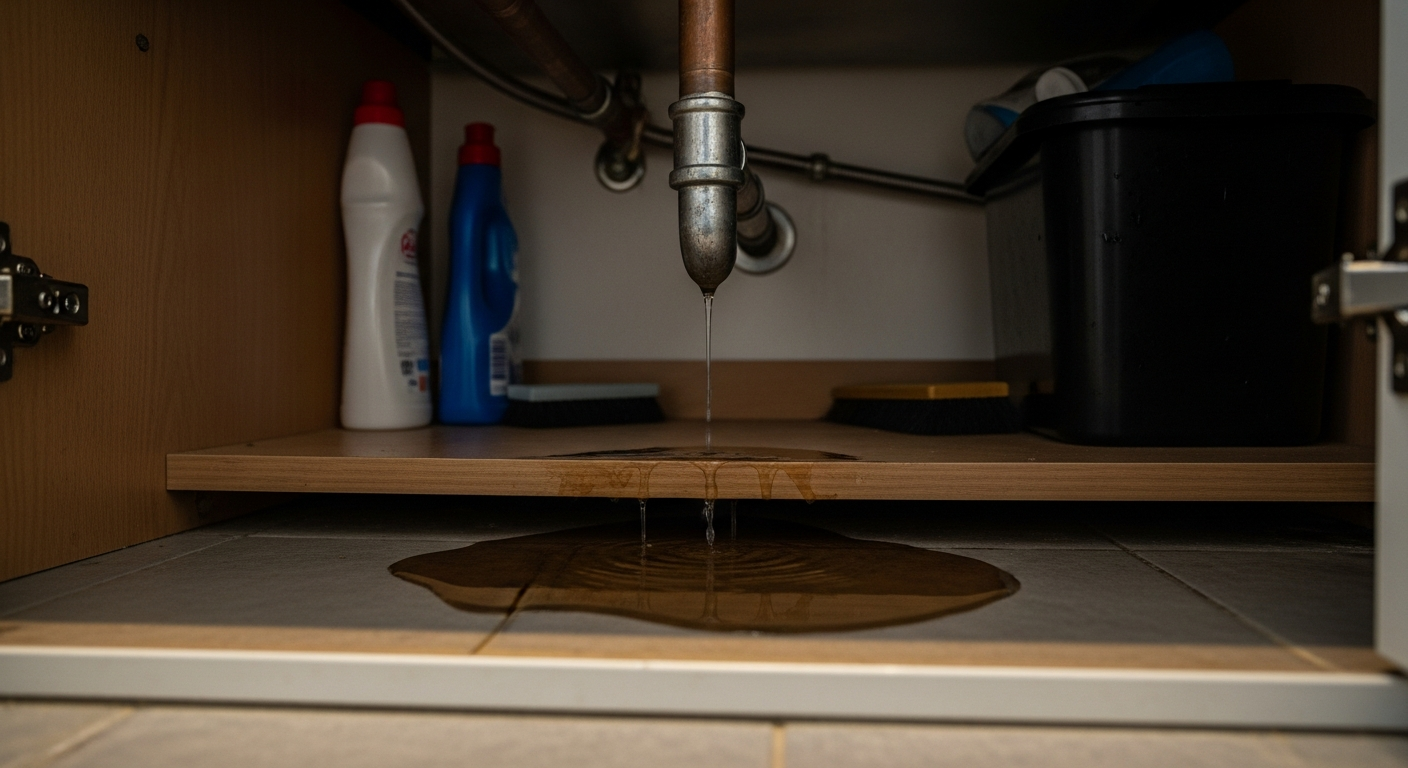
Winterise Your Pipes
Winterising your pipes means insulating exposed pipework, draining outdoor supplies, and checking your boiler before the first frost. Do this in October or November to avoid frozen or burst pipes, which can cause serious water damage and expensive repairs.

Why This Season Matters
Once outdoor temperatures drop below zero, any uninsulated or exposed pipework is at risk of freezing. Water expands as it freezes, and a single frozen section can split a copper or plastic pipe, releasing hundreds of litres of water into your home before you notice. In the UK, cold snaps can arrive with little warning from late October onwards, so acting before the first frost is essential — not optional.
Insurers and loss adjusters consistently report that escape of water — often caused by burst frozen pipes — is one of the most expensive domestic insurance claims. Spending a few hours and a modest amount on pipe lagging and a boiler check in autumn can prevent weeks of disruption and significant repair costs in winter.
Your Complete Checklist
- Insulate all exposed pipes in unheated spaces (loft, garage, under-floor voids) — Insulate Pipes guide
- Locate and test your main stopcock to confirm it turns off fully — How to Turn Off Water Supply
- Drain and disconnect outdoor hosepipes and shut off external tap supplies — Turning Off Water Supply
- Check for and repair any dripping taps before cold weather arrives — Fix a Dripping Tap
- Bleed all radiators to remove trapped air and ensure full heat output — Bleed a Radiator
- Check and top up boiler pressure if needed — Repressurise a Boiler
- Test your boiler by running the heating — reset if it fails to fire — Reset a Boiler
- Inspect pipe joints in the loft and under the sink for any weeping leaks — Fix a Leaking Pipe Joint
- Balance radiators so heat is distributed evenly throughout the house — Balance Radiators
- Check outside drains are clear of leaves and debris — Unblock an Outside Drain
- Confirm you know the location of the cold water storage tank (if applicable) and that it has a fitted lid
- If going away, set the heating to come on at minimum 12°C — do not turn it off entirely
Step-by-Step for Each Task
Insulating exposed pipes: Measure the diameter of your pipes — most domestic pipes are 15 mm or 22 mm. Buy pre-split foam lagging of the correct bore from a builders’ merchant. Cut lengths with scissors or a craft knife, peel open the split, and press firmly around the pipe. Secure with self-amalgamating tape at joins. Pay particular attention to the loft, any pipe running along an external wall, and under the kitchen or bathroom floor where it is cold and often overlooked. See the full pipe insulation guide for detail on bends and tees.
Testing and operating your stopcock: The main stopcock is usually under the kitchen sink or where the supply enters the property. Turn it clockwise to close; it should stop all water within seconds. If it is stiff or will not fully close, apply a small amount of plumber’s grease and work it back and forth. A stopcock that fails when you need it most — mid-burst — is a serious problem. If it is seized beyond freeing, call a plumber to replace it before winter.
Bleeding radiators: Turn the heating on and let it reach full temperature, then switch it off. Starting on the ground floor, insert a radiator bleed key into the bleed valve (square insert at the top corner of the radiator). Hold a cloth underneath and turn the key a quarter-turn anti-clockwise. You will hear hissing air escaping. As soon as water appears without spluttering, close the valve. After bleeding, check the boiler pressure gauge — you may need to repressurise the boiler to restore it to 1–1.5 bar.
Checking the boiler: Switch the heating and hot water on manually rather than waiting for the timer. Listen for unusual sounds — kettling, banging, or persistent clicking without ignition. Check the pressure gauge reads between 1 and 1.5 bar when cold. If the boiler does not fire, try a reset following the manufacturer’s instructions. If it locks out repeatedly, do not keep resetting it — call a Gas Safe registered engineer. Having your boiler serviced annually in early autumn is the single most effective way to avoid a mid-winter breakdown.
Tools and Materials You’ll Need
- Foam pipe lagging (15 mm and 22 mm bore, pre-split)
- Self-amalgamating tape or pipe lagging tape
- Craft knife or scissors
- Tape measure
- Radiator bleed key
- Small cloth or container (for bleeding radiators)
- Torch (for inspecting loft pipes and under-sink areas)
- Plumber’s grease (for freeing stiff stopcock)
- Pipe repair clamp or emergency pipe repair tape (kept in reserve)
- Pen and paper or phone (to note stopcock location and meter reading)
Common Mistakes to Avoid
- Turning the boiler off completely when going away. An unheated house can drop to temperatures cold enough to freeze pipes within the walls overnight. Keep the heating set to a minimum of 12°C, even when the property is empty.
- Forgetting the loft. Loft spaces are unheated and can fall well below zero. Cold-water storage tanks and any feed pipes running through the loft are among the most vulnerable points in a domestic system — insulate them before insulating the loft floor beneath.
- Leaving outdoor taps live. External tap fittings are rarely frost-proof. Shut off the internal isolator valve, drain the tail of the tap, and leave the tap in the open position over winter so any residual water can escape rather than freeze and split the fitting.
- Ignoring a dripping tap. A slow drip seems minor, but if a tap seat or washer fails and the pipe leading to it freezes, you lose the ability to isolate the flow quickly. Fix any dripping taps before cold weather sets in.
- Rushing a frozen pipe thaw. If a pipe does freeze, never apply direct flame or boiling water. Use a warm — not hot — cloth or a hair dryer on a low setting, working from the tap end back towards the coldest point. Rapid temperature change can crack the pipe even before it fully thaws. Keep the relevant tap open so water and pressure can escape as the ice melts. Full advice is in the frozen pipe guide.
Frequently Asked Questions
At what temperature do pipes freeze in a UK home?
Pipes can begin to freeze when sustained air temperatures drop to around -6°C, but poorly insulated or exposed pipework in unheated loft spaces can freeze at temperatures just below zero if the cold persists overnight. The risk is highest in lofts, garages, and along external walls.
Should I leave my heating on low all day in winter or use a timer?
A timer set to run the heating at two or three intervals across the day is generally more energy-efficient than leaving it on low continuously, but both approaches prevent freezing. The critical point is that the property should never drop below 12°C — keep a minimum frost-protection setting active when you are away.
Can I insulate pipes in the loft myself, or do I need a plumber?
Fitting foam pipe lagging is a straightforward DIY task requiring no tools beyond a craft knife and tape measure. You do not need any qualifications or permits. The only exception is if the pipes are part of a gas installation — those must only be worked on by a Gas Safe registered engineer.
What should I do if I discover a burst pipe?
Turn off the main stopcock immediately to stop the flow, then turn on all cold taps to drain the system quickly. Switch off any electrics in areas where water is coming through. Once the immediate damage is controlled, you can assess whether it is a repair you can tackle — see the full burst pipe guide for next steps.
Is it worth getting my boiler serviced before winter?
Yes. An annual service by a Gas Safe registered engineer checks the heat exchanger, seals, flue, and controls — the components most likely to cause a mid-winter breakdown. The HSE and the Gas Safe Register both recommend annual servicing for safety as well as efficiency.
When insulating pipes in the loft, insulate the sides and top of the cold-water storage tank but leave the underside uninsulated — this allows residual warmth rising from the house below to help prevent the water inside from freezing. Fitting a purpose-made tank jacket on top completes the protection without blocking that upward heat source.
Sources
- HSE — Frozen and burst pipes: advice for homeowners and landlords — hse.gov.uk
- Gas Safe Register — Annual boiler servicing guidance — gassaferegister.co.uk
- Which? — How to prevent frozen pipes — which.co.uk
Safety Notice: Electrical and plumbing work can be dangerous if done incorrectly. In the UK, certain electrical work must comply with Part P of the Building Regulations and certain plumbing work with Part G. If in doubt, consult a qualified electrician (NICEIC/NAPIT registered) or plumber (CIPHE/WaterSafe registered). This guide is for general information only — it is not a substitute for professional advice.