Low Water Pressure
Low water pressure is most commonly caused by a partially closed stopcock, blocked aerator, or limescale build-up in pipes or fittings. Check your stopcock is fully open first. Many causes are DIY-fixable; mains supply issues or pressure regulator faults need a plumber.

What’s Causing This?
Partially closed stopcock or service valve. This is the most common culprit. If the stopcock under your sink or where the supply enters the property has been knocked or only partially reopened after previous work, it will restrict flow throughout the house. Check it is turned fully anticlockwise. See our guide on how to fix low water pressure for step-by-step instructions.
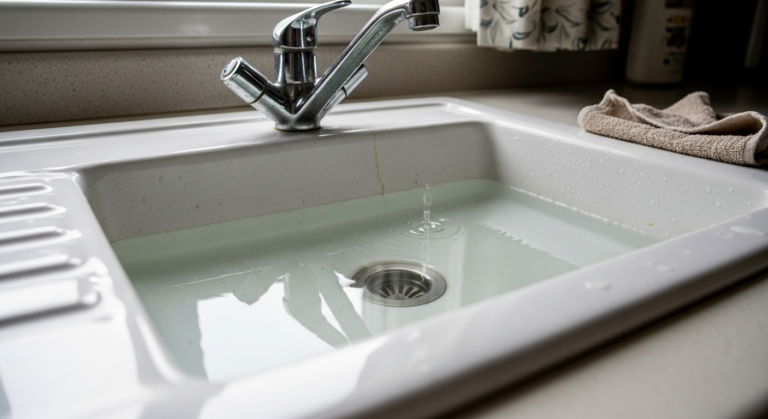
Blocked or limescaled aerator or tap cartridge. Over time, limescale and debris collect in tap aerators, cartridges, and showerheads — especially in hard-water areas. This restricts flow at individual outlets rather than across the whole house. If pressure is low at just one tap, the aerator or cartridge is the likely cause. Our guide to fixing a monobloc tap covers cartridge removal and cleaning.
Mains supply pressure problem. Your water supplier is responsible for maintaining a minimum pressure at the boundary of your property. If neighbours are also affected, or pressure is consistently poor at all outlets with the stopcock fully open, contact your water supplier. Under the Water Industry Act 1991, suppliers must maintain a minimum static pressure of 10 metres head (around 1 bar) at the property boundary.
Partially blocked or corroded pipes. Older galvanised or iron pipework can corrode internally, narrowing the bore and reducing flow. This tends to worsen gradually over years. If your property has original pipework and you have consistently low pressure, pipe condition is worth investigating. A Gas Safe or qualified plumber can assess this.
Faulty or incorrectly set pressure reducing valve (PRV). Many properties fitted with a PRV (a small brass valve on the incoming mains) can suffer low pressure if the PRV fails or is set too low. PRV adjustment or replacement should be carried out by a qualified plumber. See why is my water pressure low for a full breakdown of PRV issues.
How to Diagnose the Exact Cause
- Check whether the problem is whole-house or isolated. Turn on taps in the kitchen and bathroom. If pressure is low everywhere, the cause is on the incoming supply side (stopcock, PRV, mains). If it’s only at one outlet, the problem is local to that tap or fitting.
- Inspect the main stopcock. Find the internal stopcock — usually under the kitchen sink or where the supply pipe enters the property. Confirm it is turned fully anticlockwise (open). If it feels stiff or will only open partway, this is likely your cause.
- Check external service valves and the external stop tap. Your water supplier’s external stop tap (usually under a small cover in the pavement or front garden) should be fully open. Do not attempt to operate this yourself — contact your water supplier if you suspect it is partially closed.
- Test pressure at the kitchen cold tap. The kitchen cold tap is typically fed directly from the mains and gives the best indication of incoming supply pressure. If this tap has strong pressure but others do not, the issue is downstream.
- Remove and inspect aerators and showerheads. Unscrew the aerator from the end of the affected tap. Soak it in a descaling solution for 30 minutes and rinse. Refit and test. If pressure improves, limescale was the cause.
- Check your boiler pressure gauge if hot water pressure is low. Low pressure on hot water outlets only can indicate a boiler or system pressure issue. Check the pressure gauge on your boiler — if it reads below 1 bar, you may need to repressurise the boiler. Also check whether a boiler reset is needed.
- Contact your water supplier if mains pressure is suspected. Ask neighbours if they are affected. Report a pressure complaint — your supplier is obliged to investigate under the Water Supply (Water Fittings) Regulations 1999.
How to Fix It
Partially closed stopcock: Turn the stopcock fully anticlockwise. If it is stiff or will not open fully, do not force it — a plumber should replace it. Full instructions in our fix low water pressure guide.
Blocked aerator or cartridge: Remove the aerator from the tap spout, soak in a proprietary descaler or white vinegar for 30–60 minutes, scrub with an old toothbrush, and refit. For cartridge-type taps, see our guide on fixing a monobloc tap for removal and cleaning steps. Replacing bathroom taps entirely may be worthwhile on older fittings — see how to replace bathroom taps.
Low boiler system pressure (hot water only): If the boiler pressure gauge reads below 1 bar, follow the manufacturer’s instructions to repressurise via the filling loop. Our repressurise a boiler guide walks you through this safely.
Mains supply problem: Contact your water supplier directly. You are entitled to report low pressure as a service complaint. They are obliged to investigate and, if mains pressure is genuinely below the statutory minimum, remediate the issue at no cost to you.
Faulty PRV: Do not attempt to adjust or replace a pressure reducing valve yourself unless you are a competent plumber. Incorrect PRV settings can cause dangerously high pressure elsewhere in the system. Call a qualified plumber.
Corroded or narrowed pipes: Replacement of corroded pipework is a job for a qualified plumber. See our copper vs plastic pipes guide for an overview of your options before speaking to a tradesman.
When to Call a Tradesman
Call a qualified plumber if: the stopcock is fully open but pressure remains low throughout the house; you suspect a faulty or incorrectly set pressure reducing valve; your pipework is old galvanised or iron and may be corroded internally; or you have low pressure alongside discoloured water, which can indicate pipe deterioration. PRV replacement and mains-side work must be carried out by a competent person — incorrect work on mains pressure can create a risk of burst pipes or backflow contamination, which is a legal offence under the Water Supply (Water Fittings) Regulations 1999. Any work that requires breaking into the mains supply must comply with Water Regulations and may require notification to your water supplier. Use a plumber registered with the Association of Plumbing and Heating Contractors (APHC) or the Chartered Institute of Plumbing and Heating Engineering (CIPHE) for mains and PRV work. For boiler-related pressure faults involving gas components, only a Gas Safe registered engineer should work on the appliance.
How to Prevent It Happening Again
- Exercise your stopcock annually. Turn it fully off and back on once a year to prevent it seizing in a partially open position — a seized stopcock is both a cause of reduced pressure and a serious hazard if you need to isolate water in an emergency.
- Descale aerators and showerheads every six months if you live in a hard-water area. A brief soak in descaler keeps flow rates consistent and extends the life of your fittings.
- Fit an inline scale filter on the incoming mains if you are in a hard-water area. This reduces limescale accumulation throughout the system and protects appliances as well as pipework.
- Monitor boiler pressure regularly. Check the pressure gauge monthly and top up via the filling loop if it drops below 1 bar — catching this early prevents performance issues across your hot water system.
Frequently Asked Questions
Why has my water pressure suddenly dropped?
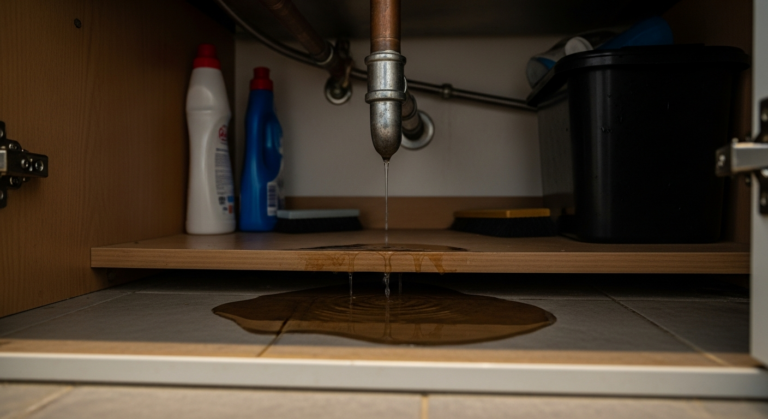
A sudden drop is most often caused by a partially closed stopcock, a burst or leaking pipe somewhere in the system, or a mains supply issue affecting your area. Check your stopcock first, then look for signs of a leak under sinks and around visible pipework. If neighbours are also affected, contact your water supplier.
Is low water pressure the water company’s responsibility?
Under the Water Industry Act 1991, water suppliers must maintain a minimum pressure of 10 metres head (around 1 bar) at the property boundary. If pressure is below this at the boundary — not just inside your home — it is the supplier’s responsibility to investigate and fix. Report it as a formal complaint.
Can I fit a pump to boost water pressure myself?
Pumps can be fitted to boost pressure on gravity-fed systems (such as from a header tank), but fitting a pump directly on the mains supply is restricted under the Water Supply (Water Fittings) Regulations 1999 and may require approval from your water supplier. Seek advice from a qualified plumber before purchasing or installing a booster pump.
Why is my hot water pressure low but cold water pressure is fine?
If cold water pressure is normal but hot water pressure is weak, the issue is likely within your hot water system — a low boiler pressure reading, a faulty hot water cylinder, or scale build-up in the hot water circuit. Check the boiler pressure gauge first; if it reads below 1 bar, repressurise the system.
Will a combi boiler improve my water pressure?
A combi boiler heats water directly from the mains, so hot water pressure should match your incoming cold mains pressure. If mains pressure is poor, a combi boiler will not improve it — the root cause must be addressed first. However, switching from a gravity-fed system to a combi can feel like a significant pressure improvement at hot outlets.
When descaling an aerator, always check the internal rubber washer at the same time — limescale accumulation often masks a deteriorated washer that is also restricting flow. Replacing both in one go saves you pulling the tap apart twice within a few months.
Sources
- Which? — Water pressure problems: what to do — which.co.uk
- HSE — Water Supply (Water Fittings) Regulations 1999 — hse.gov.uk
- Ofwat — Your rights: water pressure and supply — ofwat.gov.uk
Safety Notice: Electrical and plumbing work can be dangerous if done incorrectly. In the UK, certain electrical work must comply with Part P of the Building Regulations and certain plumbing work with Part G. If in doubt, consult a qualified electrician (NICEIC/NAPIT registered) or plumber (CIPHE/WaterSafe registered). This guide is for general information only — it is not a substitute for professional advice.