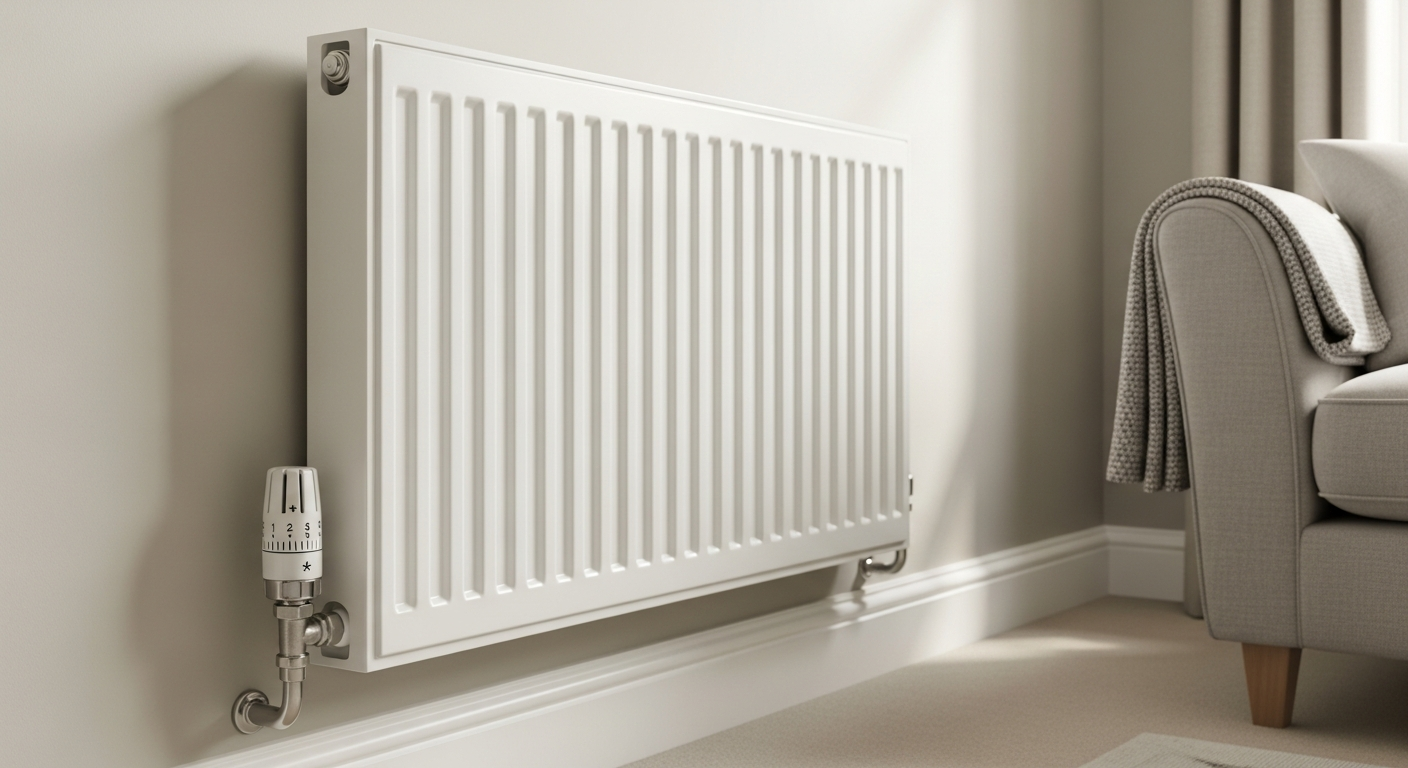
Radiator Cold at Top
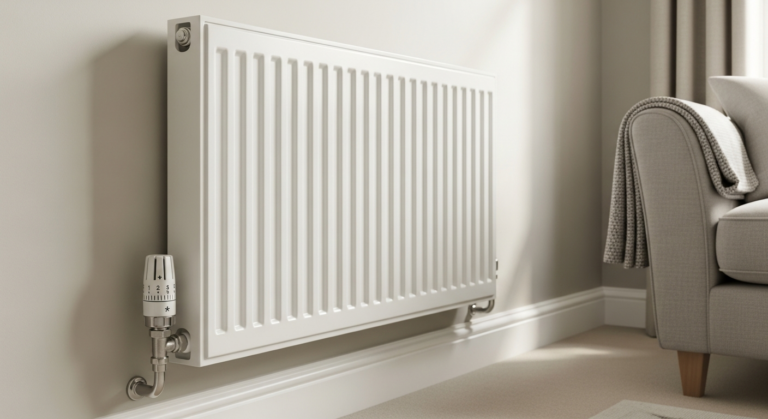
A radiator cold at the top almost always contains trapped air. Bleeding the radiator releases this air and restores full heat. If bleeding doesn’t help, the cause is likely sludge, a faulty valve, or a system pressure problem.

What’s Causing This?
Trapped air in the radiator is by far the most common reason a radiator is cold at the top but warm at the bottom. Air accumulates at the highest point of the radiator and prevents hot water filling the full panel. This is a straightforward DIY fix — see our guide on how to bleed a radiator.
Magnetite sludge build-up can cause cold patches at the bottom or throughout the radiator, but where sludge restricts flow severely, the top section may also fail to heat. This requires a power flush or chemical flush of the system. See our guide to fixing a cold radiator for more on sludge.
Unbalanced radiators can mean some radiators receive insufficient hot water flow, leaving the top section cold. If multiple radiators in the house are underperforming, the system likely needs balancing to distribute heat evenly.
Low system pressure reduces the ability of the pump to push hot water to the top of radiators, particularly on upper floors. Check your boiler pressure gauge — if it reads below 1 bar, you may need to repressurise the boiler.
A faulty radiator valve may be stuck partially closed, restricting flow into the radiator and leaving the top cold. A stiff or seized thermostatic radiator valve (TRV) is a common culprit, particularly on older systems. See our guide on radiator valve problems for diagnosis steps.
How to Diagnose the Exact Cause
- Check the temperature pattern. Run your hand across the radiator. If the top is cold but the bottom is warm or hot, trapped air is the most likely cause. If the whole radiator is cold or there are cold patches lower down as well, a different issue is at play.
- Try bleeding the radiator. Using a radiator bleed key, open the bleed valve (located at the top corner of the radiator) until air hisses out. Hold a cloth underneath. When water begins to trickle out steadily, close the valve. If air escapes and the radiator heats fully afterwards, trapped air was the cause.
- Check your boiler pressure. Look at the pressure gauge on your boiler. It should read between 1 and 1.5 bar when cold. Below 1 bar indicates low pressure, which can prevent full heating. If the gauge reads zero or very low, repressurise before bleeding.
- Check the radiator valves. Ensure both the TRV (or manual valve) and the lockshield valve at the opposite end are open. A TRV stuck at zero or a fully closed lockshield will prevent hot water entering the radiator entirely.
- Compare with other radiators. If several radiators throughout the house are cold at the top or heating poorly, the system likely needs balancing or the boiler pump may be underperforming. If only one radiator is affected, the fault is localised to that radiator or its valves.
- Feel the pipework leading to the radiator. If the pipes feeding the radiator are hot but the radiator itself stays cold at the top even after bleeding, sludge blockage or a faulty valve is more likely than trapped air.
How to Fix It
Trapped air: Bleed the radiator using a bleed key. After bleeding, check the boiler pressure and top up if it has dropped below 1 bar. Full step-by-step instructions are in our bleed a radiator guide.
Low boiler pressure: Locate the filling loop on your boiler and slowly open the valves until the pressure gauge reads approximately 1.2 bar, then close the loop. See our guide to repressurising a boiler for the full process.
Unbalanced radiators: Adjust the lockshield valves across the system so that radiators furthest from the boiler receive a greater share of flow. Our radiator balancing guide walks through this step by step.
Faulty or seized valve: If the TRV head is stuck, remove it and try manually freeing the pin underneath with pliers. If the valve body is faulty, it will need replacing — this requires isolating the radiator. See our guide on how to remove a radiator before attempting valve replacement.
Sludge build-up: Add a central heating inhibitor to the system via the feed and expansion tank or a radiator bleed point. For heavy sludge, a power flush carried out by a qualified heating engineer is the most effective solution.
When to Call a Tradesman
Call a Gas Safe registered engineer if your boiler repeatedly loses pressure after you repressurise it — this points to a leak or a fault with the expansion vessel that requires professional diagnosis. Similarly, if you reset or repressurise and the boiler then displays a fault code, do not continue to override it; consult our boiler reset guide first, but arrange an engineer visit if the fault persists. Any work that involves opening gas pipework or working on a gas boiler must legally be carried out by a Gas Safe registered engineer under the Gas Safety (Installation and Use) Regulations 1998. A power flush, while not gas work, is best left to a qualified heating engineer as incorrect flushing can damage older pipework or heat exchangers. If you are unsure whether a valve replacement involves isolating the whole system or if your property has an older, gravity-fed open-vented system, get a qualified plumber to assess before proceeding.
How to Prevent It Happening Again
- Add a central heating inhibitor annually. A good-quality inhibitor reduces corrosion inside the system and significantly slows the build-up of magnetite sludge, which is the underlying cause of repeated air and blockage problems.
- Check boiler pressure monthly during winter. Catching a gradual pressure drop early means you can repressurise before it causes cold radiators or a lockout.
- Fit a magnetic system filter. A magnetic filter fitted to the return pipe near the boiler captures sludge particles before they circulate through radiators. Most heating engineers recommend fitting one whenever a boiler is serviced.
- Have your boiler serviced every year. Annual servicing by a Gas Safe registered engineer includes checks on system pressure, pump operation, and inhibitor levels — all factors that contribute to radiators staying cold at the top if neglected.
Frequently Asked Questions
Why is my radiator cold at the top but hot at the bottom?
This pattern is almost always caused by trapped air sitting at the highest point of the radiator, preventing hot water from filling it fully. Bleeding the radiator with a bleed key will usually resolve it within a few minutes.
How often do radiators need bleeding?
Most central heating systems need bleeding at least once a year, typically at the start of the heating season. If radiators need bleeding more frequently than this, it may indicate a leak introducing air into the system or a failing auto air vent.
Will bleeding a radiator reduce boiler pressure?
Yes, bleeding releases a small amount of water along with the air, which can cause a slight drop in boiler pressure. Check the pressure gauge after bleeding and repressurise if it has fallen below 1 bar.
Can I bleed a radiator while the heating is on?
It is safer and more effective to turn the heating off and allow the system to cool for 30–60 minutes before bleeding. This reduces the risk of scalding from hot water and gives trapped air time to settle at the top of the radiator.
My radiator is still cold at the top after bleeding — what next?
If bleeding produces no air and the radiator remains cold, check that both valves are fully open and verify boiler pressure. If the pipes feeding the radiator are hot but the panel stays cold, sludge blockage or a stuck valve is the likely cause.
If you bleed a radiator and only water — no air — comes out, but the top still stays cold, tap the top of the radiator firmly with a rubber mallet before trying again; this dislodges stubborn air pockets trapped behind internal baffles. On double-panel radiators, both panels can trap air independently, so you may need to bleed from both bleed points if the radiator has two.
Sources
- HSE — Gas Safety (Installation and Use) Regulations 1998 — hse.gov.uk
- Which? — How to bleed a radiator — which.co.uk
- Heating and Hotwater Industry Council (HHIC) — Central heating system maintenance guidance — hhic.org.uk
Safety Notice: Electrical and plumbing work can be dangerous if done incorrectly. In the UK, certain electrical work must comply with Part P of the Building Regulations and certain plumbing work with Part G. If in doubt, consult a qualified electrician (NICEIC/NAPIT registered) or plumber (CIPHE/WaterSafe registered). This guide is for general information only — it is not a substitute for professional advice.