Tap Dripping
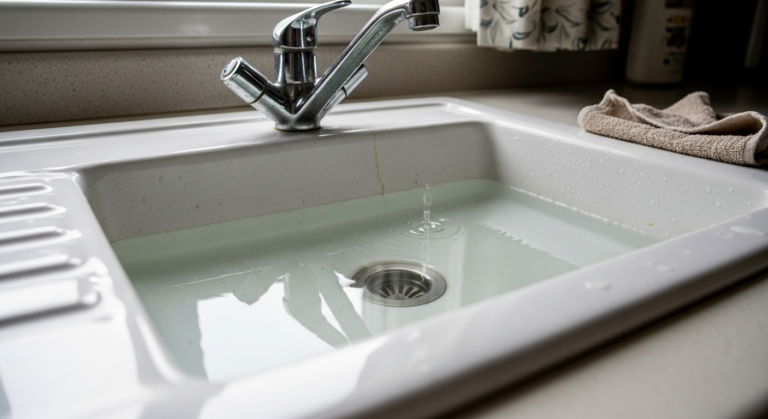
A dripping tap is most commonly caused by a worn washer or O-ring inside the tap body. In most cases this is a straightforward DIY fix requiring basic tools. Turn off the water supply first, then replace the faulty component to stop the drip.

What’s Causing This?
Worn tap washer — the most common cause by far. Every time you turn a traditional pillar or crosshead tap off, a rubber washer presses against a valve seat to stop the flow. Over time the washer hardens, cracks or deforms, and water weeps past it. You’ll usually see dripping from the spout. See our guide to replacing a tap washer to sort this quickly.
Worn or damaged O-ring — found on ceramic disc taps and monobloc mixer taps. The O-ring seals the cartridge spindle. When it perishes, water seeps out around the base of the spout or handle rather than from the spout tip. If you have a mixer tap, read our guide to fixing a monobloc tap.
Faulty or worn ceramic disc cartridge — ceramic disc taps use two precision-ground discs instead of a washer. A hairline crack, grit contamination or worn seating surface causes the tap to drip even when closed. The fix is cartridge replacement rather than a simple washer swap.
Corroded or damaged valve seat — if the valve seat (the surface the washer presses against) is pitted or corroded, even a new washer won’t seal properly. This is more common in older properties with hard water. A tap reseating tool can resurface the seat; otherwise tap replacement may be needed. Our full fix a dripping tap guide covers this scenario.
Loose or worn packing nut / gland — on older pillar taps, the gland nut seals the spindle where it exits the tap body. A worn gland causes dripping around the spindle or handle rather than the spout. Tightening the gland nut a quarter-turn or repacking with PTFE tape often resolves it without replacing any parts.
How to Diagnose the Exact Cause
- Locate where the drip is coming from. Water dripping from the spout tip points to a washer or ceramic disc problem. Water seeping around the base of the spout or handle indicates an O-ring. Water weeping around the spindle or handle stem points to a gland/packing issue.
- Identify your tap type. Turn the tap on and off. A tap that requires multiple turns is a traditional washer-based pillar tap. A tap that opens and closes in a quarter-turn is a ceramic disc type. A single-lever mixer is almost certainly monobloc with a cartridge.
- Turn off the water supply to the tap — usually via the isolation valve under the sink (a flathead screw turned 90°) or at the main stopcock. See our guide on how to turn off your water supply if you’re unsure.
- Remove the tap head or handle. Unscrew or prise off the decorative cover, then undo the retaining screw beneath. Pull or unscrew the head unit off the spindle. On a monobloc tap, refer to the fix guide linked above.
- Inspect the washer. On a pillar tap, the jumper valve and washer sit at the base of the headgear. Check whether the rubber washer is cracked, flattened, or has a groove worn into it. A distorted washer confirms the cause.
- Inspect the O-ring and cartridge. On ceramic disc or monobloc taps, remove the cartridge and examine the O-rings around it for splits or flat spots. Hold the cartridge up to the light — any visible crack in the ceramic discs means the whole cartridge needs replacing.
- Check the valve seat. Shine a torch into the tap body and look at the seat surface. Pitting, scoring, or a greenish-white deposit indicates corrosion. If a new washer seats unevenly against it, the seat is the problem.
How to Fix It
Worn washer: Replace the rubber washer on the jumper valve. Match the size exactly — bring the old one to a plumber’s merchant if unsure. Full step-by-step in our replace a tap washer guide.
Worn O-ring: Remove the cartridge or spout, slide off the old O-ring, and fit a new one of identical diameter and cross-section. Smear with silicone grease before reassembly. Full instructions in our fix a dripping tap guide.
Faulty ceramic disc cartridge: Note the tap make and cartridge dimensions, then source an exact replacement cartridge. Pull out the old cartridge, drop in the new one in the correct orientation, and reassemble. Do not force a cartridge — the discs will crack.
Corroded valve seat: Use a tap reseating tool (a hand-turned cutter that grinds the seat flat) before fitting a new washer. If the seat is too badly damaged, the tap body will need replacing entirely. See our replace bathroom taps guide or replace a kitchen tap guide for full tap replacement.
Loose or worn gland: Try tightening the gland nut by a quarter-turn with an adjustable spanner. If the drip persists, unscrew the gland nut, remove old packing, and wrap 6–8 layers of PTFE tape around the spindle before re-tightening.
When to Call a Tradesman
Call a qualified plumber if you cannot isolate the water supply to the tap — attempting repairs on a live supply risks flooding. If your property has lead pipework or lead-lined cisterns, do not disturb pipework without professional assessment, as HSE guidance on lead in drinking water (hse.gov.uk) applies. Similarly, if the tap is supplied from a combination boiler or unvented hot water cylinder and the drip is on the hot side, release of stored pressure from an unvented system must only be carried out by a qualified plumber holding the appropriate G3 qualification — DIY work on unvented systems is restricted under Building Regulations Part G. If you’ve replaced the washer or cartridge and the tap still drips after reassembly, a plumber can assess whether the valve seat is beyond DIY repair or whether the tap body itself is cracked.
How to Prevent It Happening Again
- Don’t over-tighten taps. Forcing a tap hard shut is the single biggest cause of washer wear — turn it off firmly but without forcing. This alone can double the life of a washer.
- Fit a water softener or inline filter in hard water areas. Limescale build-up accelerates corrosion of valve seats and ceramic discs. In hard water regions, descaling the tap internals every few years extends component life significantly.
- Replace washers proactively. If one tap washer fails, the others in the house are likely the same age and condition. Replace all washers at the same time rather than waiting for each tap to start dripping.
- Check isolation valves annually. Knowing your isolation valves are functional means you can cut the supply quickly for any repair — preventing a minor job from becoming a flood. If a valve is stiff or seized, have it replaced before you next need it.
Frequently Asked Questions
How much water does a dripping tap actually waste?
A single dripping tap can waste a significant volume of water over time — Water UK notes that even a slow drip adds up across days and weeks, increasing your water bill measurably if you’re on a meter. Fixing it promptly is always worthwhile.
Can I fix a dripping tap without turning the water off?
No. You must isolate the supply before opening the tap body — failure to do so will result in uncontrolled water flow once the headgear is removed. Locate your isolation valve or main stopcock before starting any tap repair.
How do I know if I have a ceramic disc tap or a washer tap?
Ceramic disc taps open and close in a quarter-turn (90°). Traditional washer taps require multiple turns from fully open to fully closed. If in doubt, remove the headgear — a rubber washer on a brass jumper means a washer tap; two ceramic discs means a ceramic type.
My tap still drips after I replaced the washer — why?
The most likely cause is a pitted or corroded valve seat that the new washer cannot seal against. Use a tap reseating tool to resurface the seat, or consider replacing the tap if the damage is severe.
Is a dripping tap covered by home insurance?
Standard home insurance policies do not cover wear-and-tear repairs such as a dripping tap — it is considered routine maintenance. However, if a neglected drip causes water damage to a cabinet or floor, that secondary damage may be claimable depending on your policy wording.
When replacing a tap washer, lightly smear the new washer with silicone grease rather than fitting it dry — this prevents the rubber from sticking to the seat and tearing when the tap is next operated under load. Never use petroleum-based grease, which degrades rubber over time.
Sources
- Which? — Leaky tap advice and when to call a plumber — which.co.uk
- HSE — Lead in drinking water: guidance for landlords and homeowners — hse.gov.uk
- Water UK — Water efficiency and the cost of leaks in the home — water.org.uk
Safety Notice: Electrical and plumbing work can be dangerous if done incorrectly. In the UK, certain electrical work must comply with Part P of the Building Regulations and certain plumbing work with Part G. If in doubt, consult a qualified electrician (NICEIC/NAPIT registered) or plumber (CIPHE/WaterSafe registered). This guide is for general information only — it is not a substitute for professional advice.