How to Fix a Leaking Radiator Valve – DIY Guide
To fix a leaking radiator valve, isolate the radiator, drain a little water, tighten or replace the packing nut or olive, and reopen the valve. Most leaks come from a worn gland packing or loose fitting — both are straightforward DIY repairs.


- Adjustable spanner
- Radiator bleed key
- Pipe grips (slip-joint pliers)
- Bucket or washing-up bowl
- Old towels or rags
- Flathead screwdriver
- PTFE tape
- Replacement olive (compression type, correct size)
- Replacement valve packing gland nut
- Jointing compound (suitable for heating systems)
- Radiator inhibitor
- Replacement thermostatic radiator valve head (if needed)
Step-by-Step Guide
Identify the source of the leak
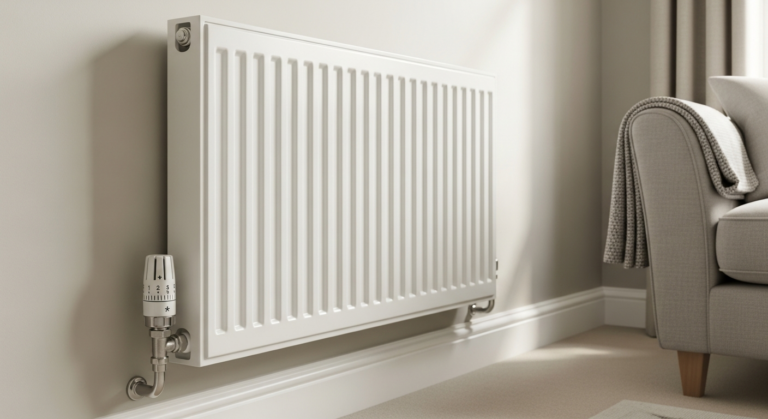
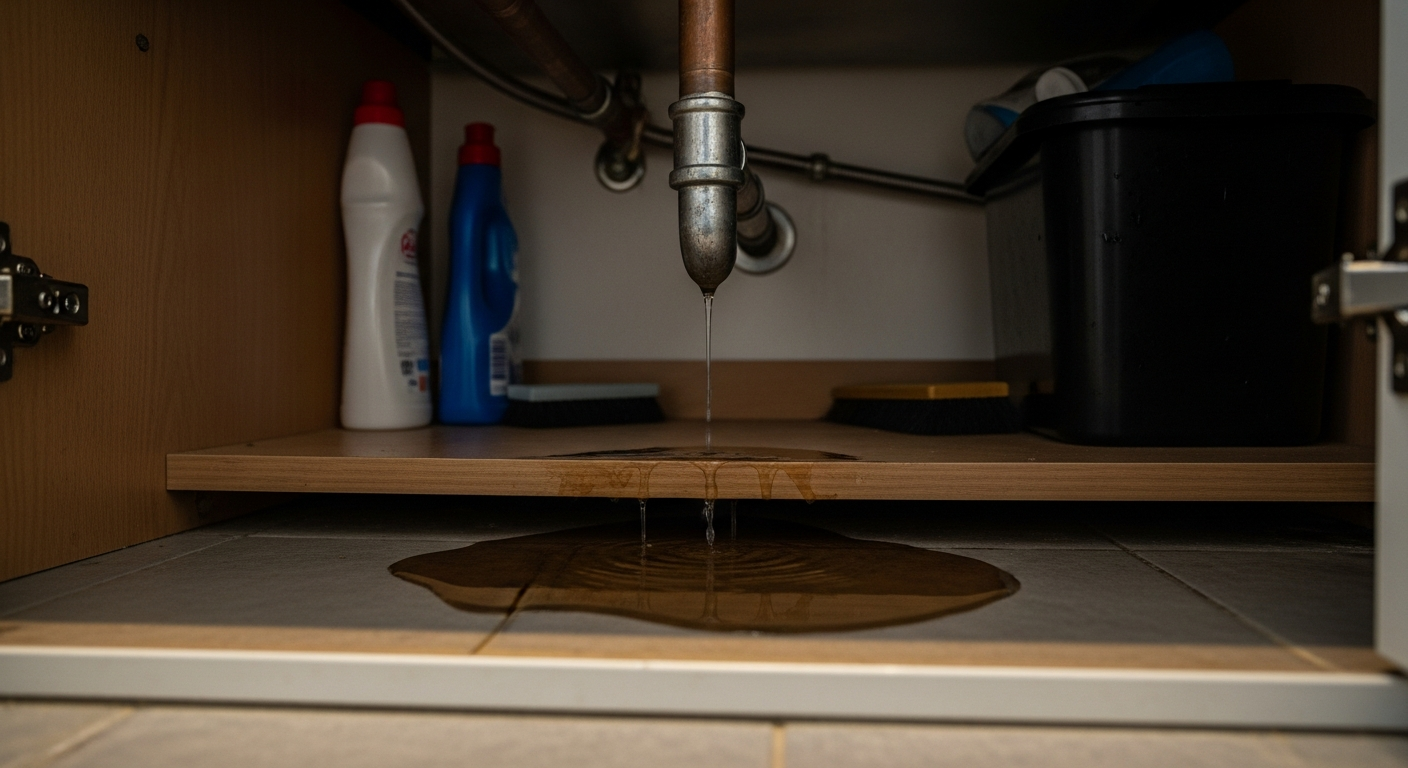
Check exactly where the water is coming from before touching anything. A leak at the valve body where it meets the pipework is usually a failed olive or loose compression fitting. A leak around the valve stem (the spindle you turn to adjust heat) points to worn gland packing. Identifying the source correctly means you only disassemble what you need to. If the radiator is part of a sealed system, check the boiler pressure gauge first — if it has dropped below 1 bar, repressurising may be needed once you’ve completed the repair. For guidance on related pipework issues, see our guide to fixing a leaking pipe joint.
Isolate the radiator and protect the floor
Turn the thermostatic radiator valve (TRV) fully clockwise to close it. If there is a lockshield valve on the opposite end, close that too using a flathead screwdriver — count and note the number of turns so you can reopen it to the same position when you’re done. Lay old towels around the base of the valve and place a bucket directly beneath it to catch any water that escapes during the repair. If you are unsure how to isolate the water supply to your heating system, read our guide on how to turn off the water supply before proceeding.
Tighten or repack the valve gland nut
If the leak is at the valve stem, the gland nut — the small nut that sits just below the valve head — may simply need tightening. Use an adjustable spanner to turn it clockwise by a quarter turn and check whether the drip stops. Do not overtighten; you should still be able to turn the valve spindle freely. If tightening does not stop the leak, remove the valve head (usually a push-fit or screw fitting), unscrew the gland nut fully, and wrap several layers of PTFE tape clockwise around the spindle before reassembling. This refreshes the seal without needing a new valve.
Replace the olive if the leak is at the pipe connection
If water is weeping from where the valve body meets the copper pipe, the compression olive is the likely culprit. Bleed the radiator using a radiator bleed key to release pressure, then place your bucket under the valve. Using pipe grips to hold the valve body steady, unscrew the compression nut with an adjustable spanner. Slide off the old olive — you may need to cut it free if it has set firmly onto the pipe. Clean the pipe end, slide on a new olive of the correct diameter (typically 15 mm for most domestic radiator pipes), apply a small amount of jointing compound, refit the compression nut, and tighten firmly. Before you attempt this, it helps to have already bled the radiator to release trapped pressure.
Reopen the valves and check for leaks
Once the repair is complete, reopen the lockshield valve the same number of turns you recorded earlier, then slowly reopen the TRV. Watch the repaired joint carefully for the first few minutes as pressure builds. Run your finger around the fitting — even a slow weep will show moisture. If the system is sealed (combi or sealed system boiler), repressurise it to 1–1.5 bar following your boiler manufacturer’s instructions. Top up the system inhibitor if you had to drain significant water — this protects the system from corrosion internally.
Monitor and restore the radiator to full operation
Leave the heating on for a full cycle and return after 30 minutes to re-inspect the valve. Check both the compression fitting and the gland nut area with a dry finger or dry tissue — any moisture will show immediately. If the leak has stopped, the job is done. If it persists after a second attempt at tightening or repacking, the valve itself may be beyond simple repair and should be replaced entirely — at which point the system will need to be fully drained and you should consider whether to call a Gas Safe or WaterSafe registered engineer, particularly on a sealed or pressurised system. Persistent drips should never be left — water ingress into floors and joists causes structural damage over time.
Frequently Asked Questions
Can I fix a leaking radiator valve without draining the whole system?
Yes, in most cases. If you close both the TRV and the lockshield valve fully, you isolate just that radiator and can work on the valve without draining the entire system. Keep a bucket and towels to hand as a small amount of water will escape when you loosen fittings.
Why is my radiator valve leaking from the spindle?
Spindle leaks are caused by worn or degraded gland packing — the sealing material inside the valve body that prevents water escaping along the stem. Wrapping PTFE tape around the spindle and retightening the gland nut usually resolves it without replacing the valve.
Do I need a plumber to fix a leaking radiator valve?
Not for most valve leaks. Tightening a gland nut, repacking with PTFE tape, or replacing a compression olive are all DIY-achievable tasks. If the leak is on a sealed system boiler circuit and you are not confident, a WaterSafe registered plumber can carry out the work safely.
How do I know if my heating system is sealed or open vented?
A sealed system has a pressure gauge on or near the boiler (typically reading 1–2 bar) and no visible header tank in the loft. An open vented system has a small cold water tank in the loft that feeds the heating circuit. The repair approach is the same, but sealed systems need repressurising after any water loss. See our guide to fixing burst pipes for more on sealed system precautions.
Can a leaking radiator valve cause a cold radiator?
A small leak at the valve rarely affects heating performance directly, but if it goes untreated and causes significant water loss on a sealed system, boiler pressure will drop and the boiler may lock out entirely, leaving all radiators cold. Fix the leak promptly and repressurise if needed.
When repacking a valve gland, wrap the PTFE tape in the same direction as the thread — clockwise as you look down onto the spindle — so tightening the gland nut draws the tape into the seal rather than unwinding it. Four to six tight wraps is enough; more than that and you risk the spindle binding and making the valve hard to turn.
Sources
- HSE — Domestic heating systems: guidance for installers and users — hse.gov.uk
- WaterSafe — Find a registered plumber and advice on plumbing repairs — watersafe.org.uk
- Which? — How to fix a leaking radiator valve — which.co.uk
Safety Notice: Electrical and plumbing work can be dangerous if done incorrectly. In the UK, certain electrical work must comply with Part P of the Building Regulations and certain plumbing work with Part G. If in doubt, consult a qualified electrician (NICEIC/NAPIT registered) or plumber (CIPHE/WaterSafe registered). This guide is for general information only — it is not a substitute for professional advice.