How to Fix a Monobloc Tap – DIY Guide
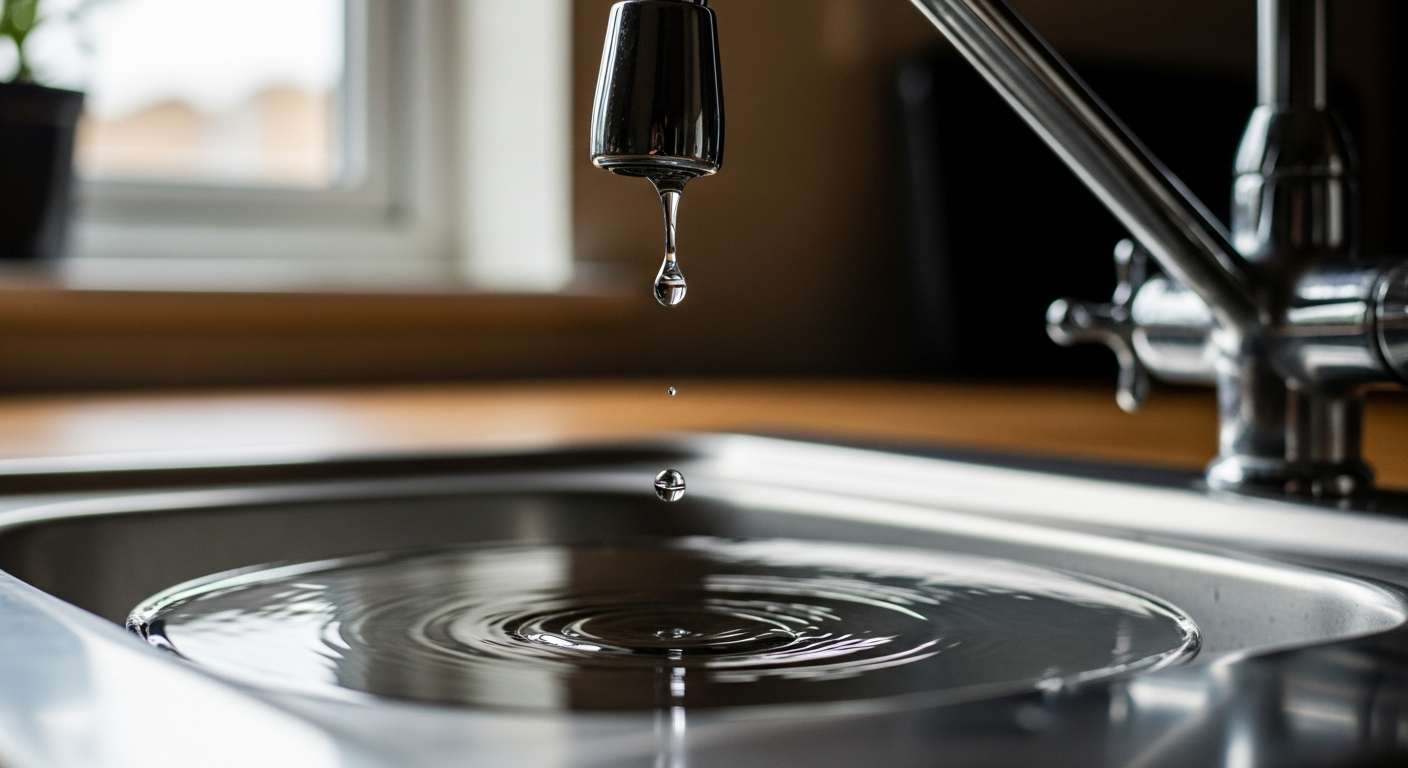
To fix a monobloc tap, isolate the water supply, remove the lever handle, and replace the ceramic cartridge or O-ring causing the fault. Most monobloc tap repairs take under an hour and cost under £20 in parts.


- Adjustable spanner
- Flat-head screwdriver
- Phillips screwdriver
- Allen key set
- Basin wrench
- Pliers
- Bucket or towel
- Ceramic cartridge (matching tap body size)
- O-ring set (assorted sizes)
- Replacement tap washer
- Plumber’s grease
- PTFE tape
- Descaling solution
Step-by-Step Guide
Isolate the Water Supply
Turn off the hot and cold water supplies to the tap — either at the isolating valves under the sink (quarter-turn with a flat-head screwdriver) or at the mains stopcock. Once isolated, open the tap fully to release residual pressure and drain the remaining water into a bucket. Our guide on how to turn off the water supply covers all isolation methods if you cannot locate the valves.
Remove the Tap Handle
Locate the decorative cap on top of the lever handle — prise it off with a flat-head screwdriver to expose the retaining screw underneath. Remove the screw (usually Phillips or Allen key), then lift the handle straight up off the tap body. Some handles unscrew anticlockwise rather than lifting; apply gentle upward pressure while turning if it resists. Place all small parts in a bowl so nothing rolls away.
Extract the Cartridge or Valve
With the handle removed, you will see a retaining nut or collar holding the cartridge in place. Use an adjustable spanner to loosen the retaining nut anticlockwise — protect the tap body with a cloth to avoid scratches. Once the nut is free, pull the cartridge straight up and out. Note its orientation before removal; ceramic cartridges are directional. If the fault is a drip from the spout, the cartridge is almost certainly the culprit. If you have a leak around the base of the spout, inspect the O-rings on the cartridge body instead. You can learn more about related issues in our guide to fixing a tap that won’t turn off.
Replace the Cartridge or O-Rings
Take the old cartridge to a plumbers’ merchant to match the size — measure the overall length and the diameter of the cartridge body before you go, as monobloc cartridges are not universal. If the cartridge discs are cracked or worn, fit a complete replacement cartridge. If only the O-rings are perished or swollen (common in hard-water areas where limescale builds up), slide off the old O-rings, clean the cartridge body with descaling solution, and fit new O-rings of the correct diameter. Apply a thin smear of plumber’s grease to all new O-rings before reassembly. For persistent drips where the cartridge appears intact, also check the tap washer at the base of the cartridge seat.
Reassemble and Test the Tap
Insert the new or refurbished cartridge in the correct orientation, hand-tighten the retaining nut, then give it a firm quarter-turn with the spanner — do not overtighten or you risk cracking the tap body. Refit the handle and retaining screw, then snap the decorative cap back into place. Slowly reopen the isolating valves — open them gradually to avoid water hammer. Run the tap on both hot and cold, check the full range of the lever, and inspect under the sink for any drips. If the tap now drips from the base rather than the spout, the spout O-ring needs replacing — this is a separate, lower seal on the tap body itself.
Check for Leaks and Clear the Aerator
Leave the tap running for two minutes then dry the base, supply hoses, and isolating valves with a cloth and check for moisture. A common post-repair issue is a reduced flow caused by debris dislodged during the work — unscrew the aerator from the spout tip, rinse it under water, and refit. If low water pressure persists after clearing the aerator, the issue lies upstream of the tap rather than in the tap itself.
Frequently Asked Questions
How do I know if my monobloc tap has a ceramic cartridge or a washer?
Most modern monobloc taps (post-1990) use a ceramic disc cartridge — the lever moves through approximately 90 degrees and operation is smooth. Older or budget taps may use a conventional rubber washer on a spindle, which turns through 180 degrees or more. Remove the cartridge and inspect it; a ceramic cartridge will have two flat ceramic discs visible at the base.
My monobloc tap is leaking from the base of the spout, not the handle — what causes this?
A leak at the spout base is almost always caused by a perished O-ring on the swivel spout body rather than a faulty cartridge. The spout O-ring sits in a groove around the lower section of the spout and wears out over time, particularly in hard-water areas. You can replace it without disturbing the cartridge — our guide to fixing a leaking kitchen tap covers spout O-ring replacement in detail.
Can I fix a monobloc tap myself or do I need a plumber?
Replacing a cartridge or O-rings in a monobloc tap is well within DIY capability — no soldering, no pipe work, and no specialist licences are required for this type of repair. If the tap body itself is cracked, the supply hoses are corroded, or you need to alter the pipework beneath, call a WaterSafe-registered plumber.
Where can I buy a replacement monobloc cartridge?
Plumbers’ merchants (trade counters) carry a far wider range of cartridge sizes than DIY sheds and are the best first stop — take the old cartridge with you. Many tap manufacturers also sell cartridges directly by model number, which you can often find stamped on the cartridge body or in the original tap documentation.
My monobloc tap handle is stiff — do I need a new cartridge?
A stiff lever is usually caused by limescale build-up inside the cartridge or on the ceramic discs, rather than a failed cartridge. Remove the cartridge and soak it in descaling solution for 30 minutes, then rinse and reassemble with a light coat of plumber’s grease. If stiffness returns within a few weeks, replace the cartridge entirely. See our full plumbing guide for more advice on hard-water maintenance.
When fitting a new ceramic cartridge, align the flat lug on the cartridge body with the corresponding slot in the tap body before lowering it in — if the lug is even slightly off, the retaining nut will cross-thread and you will mistake it for the wrong cartridge size. Drop it in, rotate it slowly by hand until you feel it drop flush, then thread the nut.
Sources
- WaterSafe — Find an approved plumber and plumbing advice — watersafe.org.uk
- HSE — Water systems: health and safety guidance — hse.gov.uk
- Which? — How to fix a dripping tap — which.co.uk
Safety Notice: Electrical and plumbing work can be dangerous if done incorrectly. In the UK, certain electrical work must comply with Part P of the Building Regulations and certain plumbing work with Part G. If in doubt, consult a qualified electrician (NICEIC/NAPIT registered) or plumber (CIPHE/WaterSafe registered). This guide is for general information only — it is not a substitute for professional advice.