Felt vs EPDM Flat Roof
Felt is cheaper upfront but typically lasts 10–15 years. EPDM rubber costs more to install but can last 30–50 years with minimal maintenance. For a long-term flat roof that won’t need constant repairs, EPDM is the better investment for most UK homeowners.

What Is Felt?
Roofing felt (also called bitumen felt or torch-on felt) is a traditional flat roofing material made from a bitumen-saturated base, usually fibreglass or polyester. It is applied in multiple layers — typically three — either by hot torching, cold adhesive bonding, or mechanical fixing. It has been used on UK flat roofs for decades and is still widely fitted on sheds, garage roofs, bay windows, and extensions. For full installation details, see our guide to repairing felt on a flat roof.
What Is EPDM?
EPDM (ethylene propylene diene monomer) is a synthetic rubber membrane used as a single-ply flat roofing material. It comes in large, seamless sheets that are bonded to the roof deck using a contact adhesive, dramatically reducing the number of joints where leaks can occur. EPDM is highly resistant to UV radiation, temperature extremes, and ponding water — all common issues on UK flat roofs. It is now the preferred choice of many UK roofing contractors for new flat roof installations and replacements. If you are dealing with an existing leak, our guide to fixing a leaking flat roof covers both material options.
Side-by-Side Comparison
| Factor | Felt | EPDM |
|---|---|---|
| Cost per m² | £30–£60 (supply & install) | £50–£90 (supply & install) |
| Durability | Moderate — prone to cracking and blistering | High — resists UV, frost, and ponding water |
| Appearance | Textured mineral finish; can look aged quickly | Smooth dark grey/black; neat modern finish |
| Install Difficulty | Moderate — torch-on requires gas equipment | Moderate — cold adhesive, no open flame needed |
| Maintenance | Annual inspection recommended; joints need checking | Low — occasional wash down; seams rarely fail |
| Lifespan | 10–15 years (high-performance torch-on up to 20) | 30–50 years with correct installation |
Felt — Pros and Cons
Pros
- Lower upfront material and labour cost
- Widely available — most roofers are familiar with it
- Straightforward to repair if damage is localised
- Suitable for small outbuildings, sheds, and porches
Cons
- Shorter lifespan means more frequent full replacement
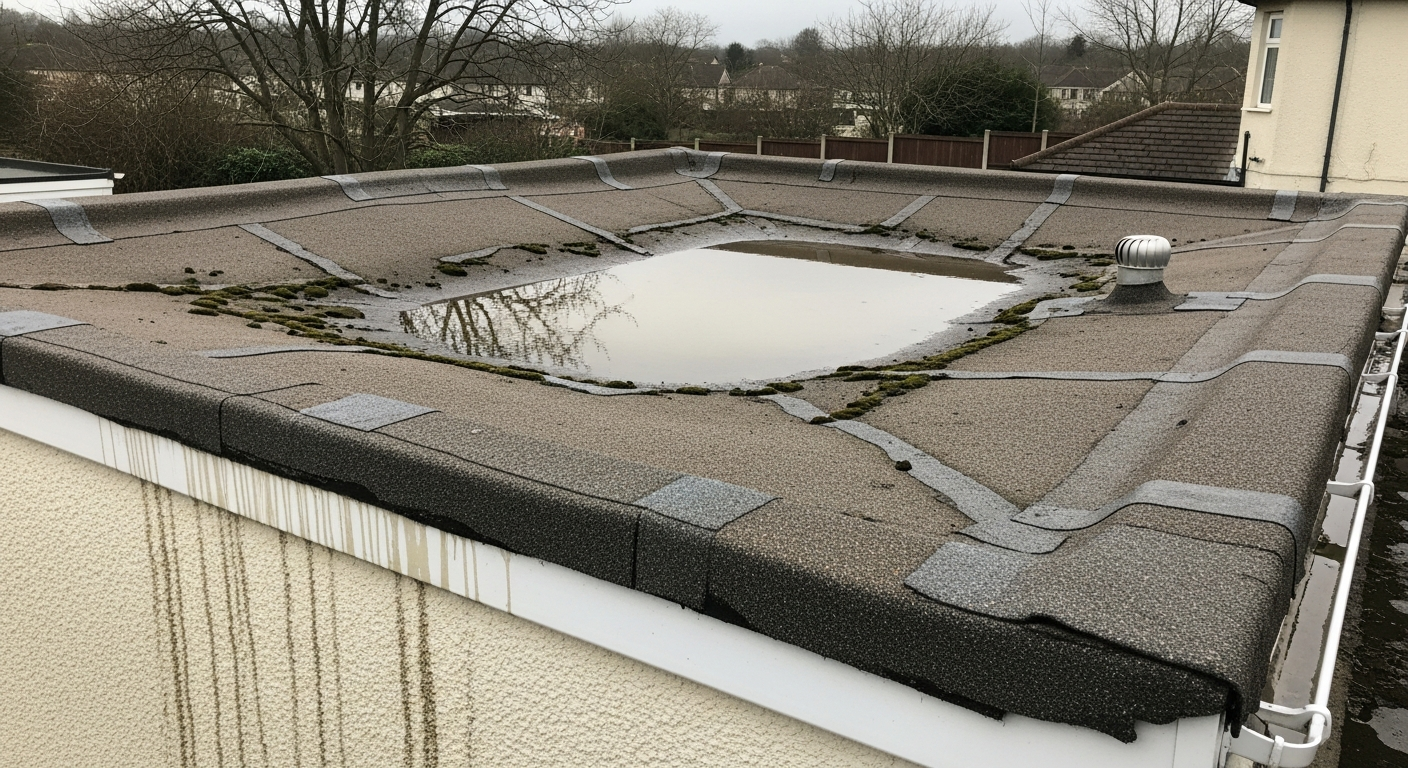
- Joints and seams are common failure points, leading to leaks
- Torch-on application carries a fire risk if done incorrectly
- Vulnerable to UV degradation and thermal cracking in UK freeze-thaw cycles
- Ongoing repair costs can exceed the initial saving over time
EPDM — Pros and Cons
Pros
- Lifespan of 30–50 years significantly reduces whole-life cost
- Single-ply seamless sheet minimises leak risk
- No open flame required during installation — safer on occupied properties
- Excellent resistance to UV, ozone, and ponding water
- Low maintenance once correctly fitted
Cons
- Higher upfront cost than felt
- Requires correct adhesive coverage — poor installation voids longevity benefits
- Dark colour absorbs heat, which can be a factor on roof terraces
- Fewer contractors carry EPDM experience, though this is improving
Which Is Better For…?
- A garage or outbuilding roof: Felt is adequate if budget is tight and the building is not heavily used. EPDM is still worth considering if you want to avoid replacing it within a decade. Verdict: Felt (budget) or EPDM (long-term).
- A house extension flat roof: This is a permanent part of your home. EPDM’s longer lifespan and lower leak risk make it the clear choice, especially where it sits above habitable space. Verdict: EPDM.
- A bay window roof: Small surface area makes EPDM very affordable in absolute terms, and the single-sheet installation with no joints is ideal for this awkward shape. Verdict: EPDM.
- A rented property requiring quick turnaround: If a fast, cost-effective repair is needed and the roof is otherwise sound, a torch-on felt overlay can be a practical short-term fix. Always check the flat roof materials guide before deciding. Verdict: Felt.
- A roof terrace or walkable flat roof: Neither standard felt nor standard EPDM is designed for foot traffic without a protective overlay. However, EPDM is more robust as a base layer. Consult a specialist. Verdict: EPDM with protection boards.
UK Cost Comparison
For felt flat roofing, expect to pay roughly £30–£60 per m² for supply and professional installation of a three-layer torch-on system. A standard 20 m² garage roof would therefore cost approximately £600–£1,200 installed. EPDM supply and installation typically runs from £50–£90 per m², putting the same 20 m² garage roof at roughly £1,000–£1,800. DIY EPDM kits are available and can reduce material-only costs to approximately £15–£30 per m², but correct adhesive application is critical — a poorly bonded membrane will lift and leak. If your current roof is leaking before you replace it, read our advice on fixing a roof leak to manage the problem short-term. For broader context on roofing work and costs, the DIYnut Roofing Guide covers the full range of roof types and repairs.
Frequently Asked Questions
How long does a felt flat roof last in the UK?
A standard three-layer torch-on felt flat roof typically lasts 10–15 years in the UK. High-performance polyester-based felts can extend this to around 20 years, but exposure to UV and frost-thaw cycles will degrade joints and seams over time.
Can I install EPDM myself?
Yes, EPDM can be a DIY project on smaller roofs using cold-bond adhesive kits. However, the critical steps are thorough surface preparation and achieving full adhesive coverage — any voids will allow the membrane to lift and water to pool underneath.
Is EPDM better than felt for a flat roof?
For most permanent structures, yes. EPDM lasts significantly longer, has fewer joints where leaks can develop, and requires less ongoing maintenance. The higher upfront cost is generally recovered through reduced repair and replacement spend over the roof’s life.
Do I need planning permission to replace a flat roof with EPDM?
Like-for-like roof replacement using EPDM on an existing flat roof does not usually require planning permission in England or Wales under permitted development rights. However, if the work materially alters the roof’s appearance on a listed building or in a conservation area, you should check with your local planning authority first.
What causes felt flat roofs to blister and crack?
Blistering occurs when trapped moisture or air beneath the felt layers expands in warm weather. Cracking is usually caused by UV degradation and repeated thermal movement during UK freeze-thaw cycles. Both faults accelerate water ingress and indicate the roof is approaching end of life.
When fitting EPDM, apply the bonding adhesive to both the membrane and the roof deck, then allow both surfaces to become touch-dry before mating them — this is contact adhesive, not wet-lay, and rushing this step is the single most common cause of premature bond failure. On roofs over 30 m², fit a central membrane anchor strip first to prevent the sheet sliding during lay-down.
Sources
- Which? — Flat roof costs and materials advice — which.co.uk
- HSE — Hot works and torch-on felt roofing fire safety guidance — hse.gov.uk
- Checkatrade — Average flat roof replacement costs UK 2024 — checkatrade.com
This guide is for general information only. Always work safely and follow manufacturer instructions. DIYnut accepts no liability for injury or damage arising from DIY work.