How to Do an Emergency Roof Repair – DIY Guide
How to Do an Emergency Roof Repair
Stop water ingress fast and protect your home until a permanent fix is in place.
Emergency roof repair means making your roof watertight as quickly as possible to prevent further water damage. Identify the breach, apply temporary weatherproofing — such as a tarpaulin or roof repair tape — and address the internal leak before calling a roofer for a permanent repair.


- Extension ladder
- Pry bar
- Hammer
- Utility knife
- Stiff brush
- Measuring tape
- Torch
- Safety harness
- Heavy-duty polyethylene tarpaulin
- Roof repair tape (self-adhesive butyl)
- Roofing felt adhesive
- Galvanised nails
- Timber battens
- Waterproof sealant
- Replacement roof tile or slate
- Flashing repair tape
Step-by-Step Guide
Assess the damage safely from inside first
Before going anywhere near a ladder, inspect your loft space with a torch during or just after rainfall — water trails on the rafters and wet insulation will point you towards the breach. Mark the area with chalk so you can locate it from outside. Only access the roof once the rain has stopped and the surface is dry; wet tiles and felt are extremely slippery. If you have any doubt about roof access, limit your work to the temporary internal measures in the next step. You can read more about how to fix a roof leak once the emergency is contained.
Contain the internal water ingress immediately
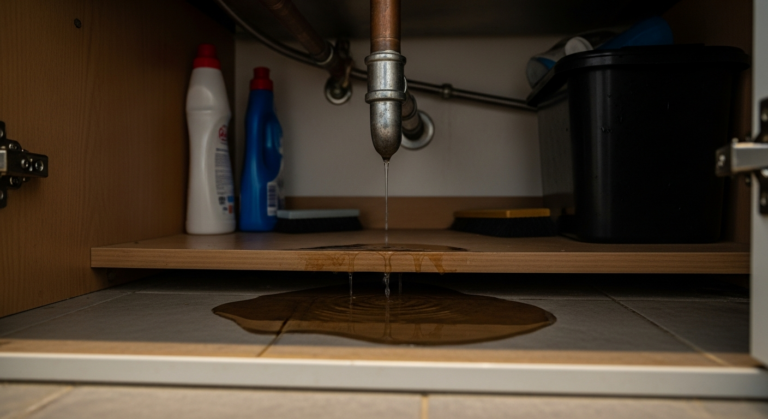
Place buckets or trays under any active drips and lay down plastic sheeting to protect ceilings, flooring, and contents below. If the ceiling is visibly bulging with trapped water, carefully pierce it at the lowest point with a screwdriver — releasing it in a controlled stream prevents a sudden collapse that can bring down a large section of plasterboard. Dry out any saturated insulation and set it aside; wet insulation loses all thermal value and accelerates timber rot if left in contact with structural members.
Secure a tarpaulin over the damaged area
A heavy-duty polyethylene tarpaulin is your fastest route to a watertight roof while you source materials or await a roofer. Drape it over the ridge so it covers at least 600 mm beyond the damaged area on all sides, with a good overlap on the downslope side to shed water away from the breach. Weight or nail timber battens along the edges over the tarpaulin — never nail directly through a tile or into the felt alone — and secure the ridge end with lengths of rope tied to weights on the opposite pitch. Do not attempt this step in high winds.
Replace or re-seat displaced tiles or slates
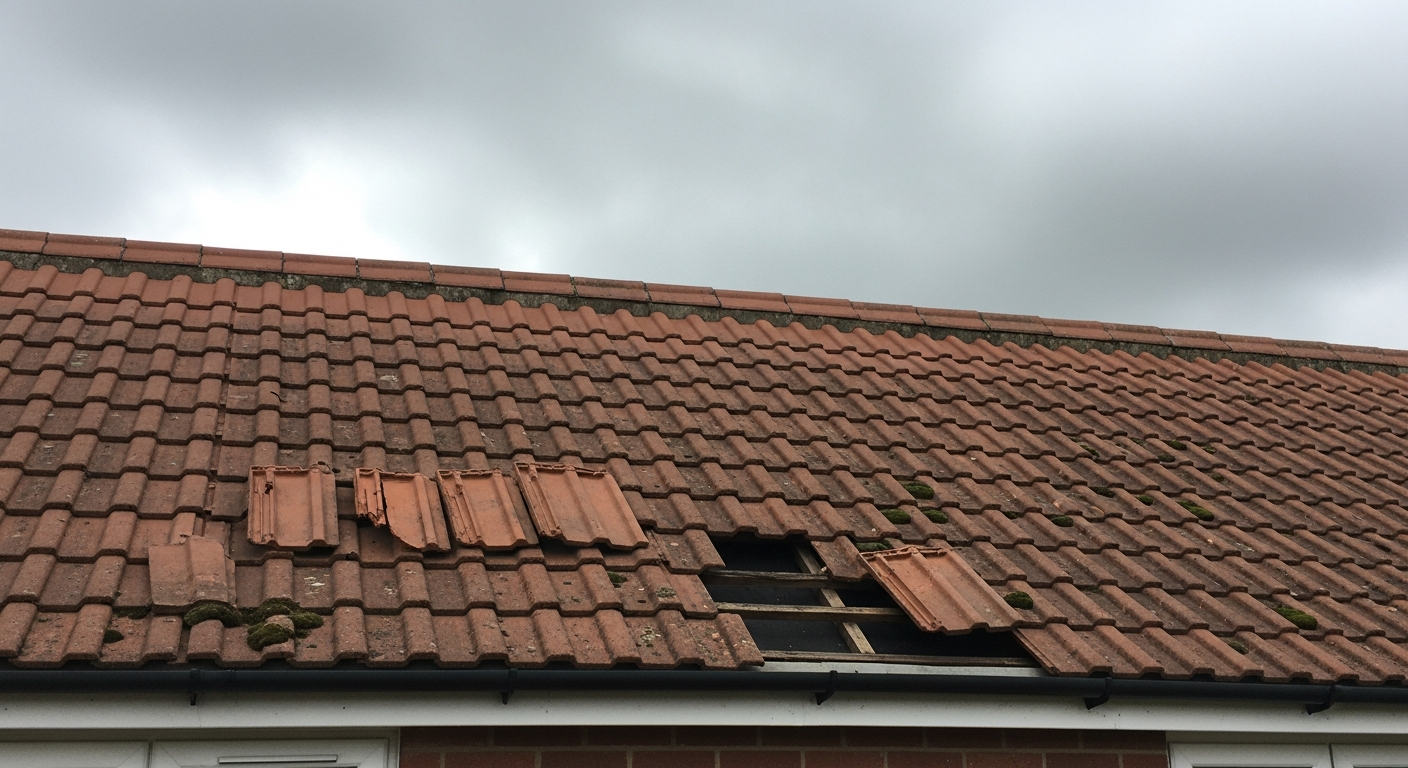
If the emergency is caused by one or two displaced tiles rather than felt failure, re-seating them may be sufficient as a temporary measure. Use a pry bar to lift the tiles above the damaged ones, slide the broken tile out, and slot a replacement tile of the same profile in at the same gauge. Replacing a broken roof tile properly requires matching the profile and fixing method — nibs, clips, or mortar — so check what your existing roof uses before purchasing replacements. Reposition the tiles above and check they sit flat with no rocking.
Apply roof repair tape or sealant to small breaches
For cracks in flashing, small splits in felt, or failed mortar joints around a chimney, self-adhesive butyl repair tape gives a rapid, durable temporary seal. Clean the surface thoroughly with a stiff brush and dry it — tape will not bond to dirt, moss, or wet surfaces. Cut the tape to overlap the crack by at least 75 mm on each side, press it firmly from the centre outward, and run a roller or the back of a spoon along every edge to eliminate air pockets. For chimney flashing failures, sealing roof flashing correctly is a separate process that should follow once the emergency is stabilised.
Document the damage and arrange a permanent repair
Photograph everything — the breach, the surrounding area, and any internal water damage — before you make any temporary repairs. This evidence is essential for insurance claims and gives a roofer an accurate picture before they attend. Emergency measures are not a substitute for a permanent fix: repair tape and tarpaulins will degrade, and a bodged repair can mask worsening structural damage. Contact a registered roofer as soon as possible; for ongoing maintenance, our complete roofing guide covers the full range of repair options available to homeowners.
Frequently Asked Questions
Is emergency roof repair something I can do myself?
Basic measures — containing internal leaks, securing a tarpaulin, or re-seating a displaced tile — are within reach of a capable DIYer with safe ladder access. Structural felt replacement, ridge work, or chimney flashing repairs should be carried out by a registered roofer.
What is the fastest way to stop a roof leak in heavy rain?
From inside, pierce any bulging ceiling to release trapped water and place buckets below active drips. Once the rain stops, securing a heavy-duty tarpaulin over the breach from the outside is the single fastest way to make the roof temporarily watertight.
Will my home insurance cover emergency roof repair?
Most buildings insurance policies cover sudden storm damage but may exclude gradual deterioration or lack of maintenance. Document all damage with photographs before carrying out any temporary repairs, and contact your insurer as soon as possible — many have a 24-hour emergency claims line.
How do I find where my roof is leaking from?
Inspect the loft with a torch during or immediately after rain — follow the water trail on the rafters back uphill to its entry point, as water often travels along a rafter before dripping. Finding a roof leak from inside is often more reliable than searching from the roof surface, where the visible damage may be several tiles away from the actual breach.
How long will temporary roof repair materials last?
A well-secured polyethylene tarpaulin can last several weeks in mild weather but will degrade rapidly in UV and high winds. Self-adhesive butyl tape typically holds for one to three months. Neither should be relied upon over winter — arrange a permanent repair as quickly as possible. If the damage involves the chimney, fixing a roof leak around a chimney is a more involved repair that needs professional attention.
When securing a tarpaulin in an emergency, run the fixing battens over the tarpaulin and nail them into the timber fascia or barge board rather than into tiles or felt — tiles crack under point-loading and a nail through felt creates a second leak. Rope the opposite end of the tarpaulin to a sandbag or timber weight draped over the far pitch to stop wind getting underneath.
Sources
- HSE — Working at Height Regulations 2005: Guidance for the public — hse.gov.uk
- Which? — How to fix a leaking roof — which.co.uk
- GOV.UK — Make a home insurance claim — gov.uk
This guide is for general information only. Always work safely and follow manufacturer instructions. DIYnut accepts no liability for injury or damage arising from DIY work.