UK Roofing DIY Guide 2026: Roof Repairs, Tiles, Flat Roofs, Gutters & More
Roofing
A complete UK DIY roofing resource covering pitched roof repairs, tile replacement, flat roof systems, lead flashing, guttering, fascias and soffits — with safety at the forefront.
Most roofing DIY in the UK is achievable for a competent homeowner, but working at height demands proper scaffolding or roof ladders — never rely on a standard ladder alone. Pitched roofs in the UK are predominantly clay or concrete interlocking tiles over roofing felt, while flat roofs use either EPDM rubber or torch-on felt. Tackle small repairs yourself to save money, but know when a deteriorating roof deck, widespread tile failure, or structural issues call for a qualified roofer.

- Roof ladder (ridge hook type, rated for your weight)
- Scaffolding tower or hired scaffold (for extended work)
- Slate ripper / tile lifter
- Cold chisel and club hammer
- Caulking gun (for sealant and adhesive)
- Stiff-bristle brush and pointing trowel
- Tin snips (for lead and flashing work)
- Power drill with masonry bits
- Replacement clay or concrete roof tiles (matched to existing profile)
- EPDM rubber membrane or torch-on felt (flat roofs)
- Lead flashing or lead-free aluminium flashing (valleys, abutments, chimneys)
- Roofing mortar / ridge tile bedding compound
- Gutter sections, brackets, and union joints (UPVC or cast iron)
- Roofing nails (stainless steel or copper, not zinc-plated)
The Process Overview
Step 1 — Set up safe access before anything else
Hire scaffold towers or a full scaffold for any work lasting more than a few minutes at height; this is both a legal and practical requirement under the Work at Height Regulations 2005. For quick single-tile repairs, a purpose-built roof ladder hooked over the ridge is the minimum safe option — never use a domestic stepladder propped against guttering. Tell someone you are working at height, and never work alone or in wet, icy, or windy conditions.
Step 2 — Inspect and diagnose the roof from the inside and outside
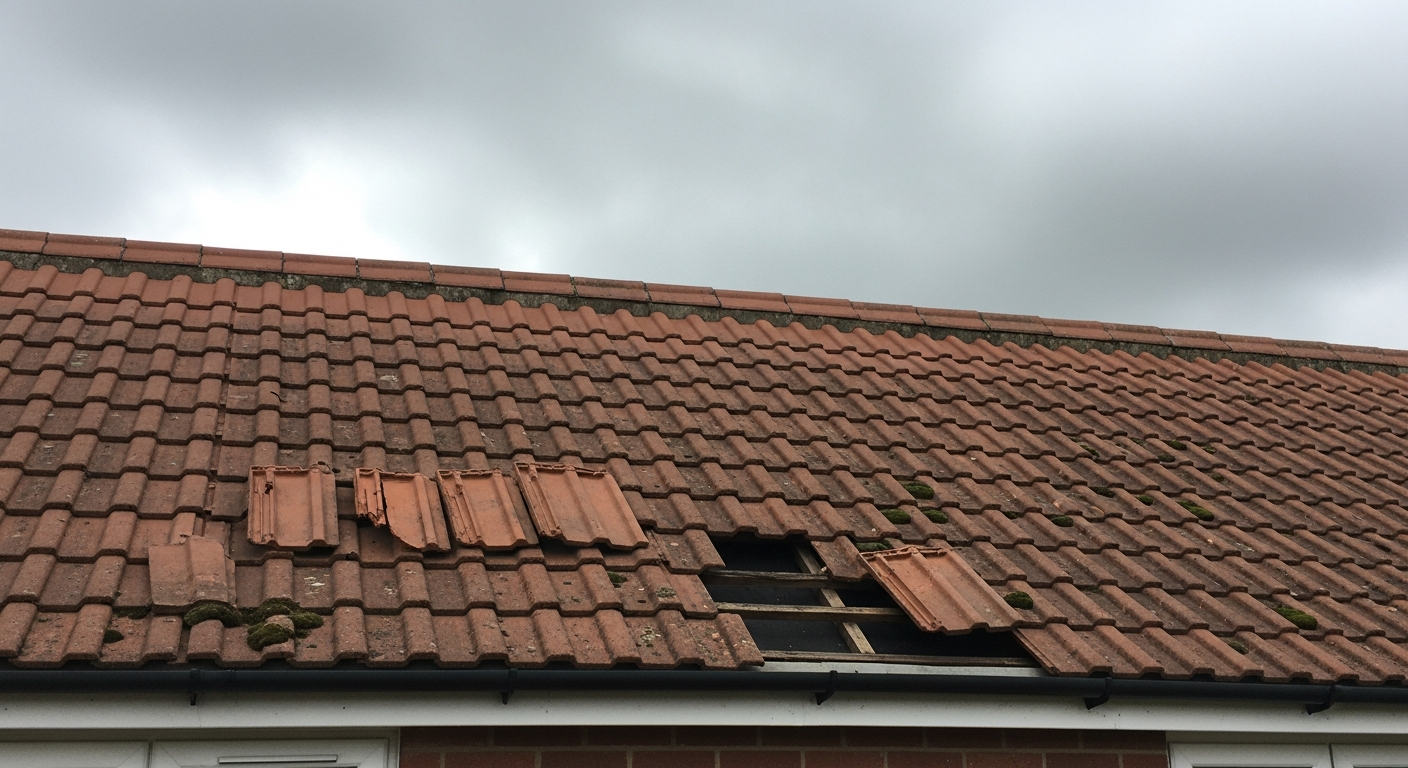
Before buying materials, inspect the loft with a torch on a bright day — daylight pinpricks indicate missing or cracked tiles, and water stains on rafters reveal the leak path, which is often several feet from the actual entry point. From the outside, look for slipped, cracked, or missing tiles, failed mortar on ridge and hip tiles, lifting flashing, and blocked or sagging gutters. Take photographs to help match replacement tiles and document the extent of work needed.
Step 3 — Replace broken or slipped tiles
Use a slate ripper to cut or hook out the fixing nails on the damaged tile, then slide it free without disturbing neighbours. Slot the replacement tile in from below, aligning nibs over the batten, and secure with a copper or stainless steel roofing nail driven through the headlap of the tile above where accessible. If the old felt beneath is torn, patch it with self-adhesive roofing tape as a temporary measure, but plan for a full felt replacement when the roof is next stripped.
Step 4 — Re-bed and repoint ridge and hip tiles
Failing mortar on ridge tiles is one of the most common UK roofing problems; loose ridges can fall and cause serious injury. Hack off the old mortar with a cold chisel, brush clean, dampen the surface, and re-bed each ridge tile in fresh roofing mortar or a proprietary bedding compound, ensuring each tile is level and butted tightly. Once set (24–48 hours), apply a coloured flexible pointing mortar along both sides; avoid bridging the tile face completely as this traps moisture.
Step 5 — Repair or replace flat roofing
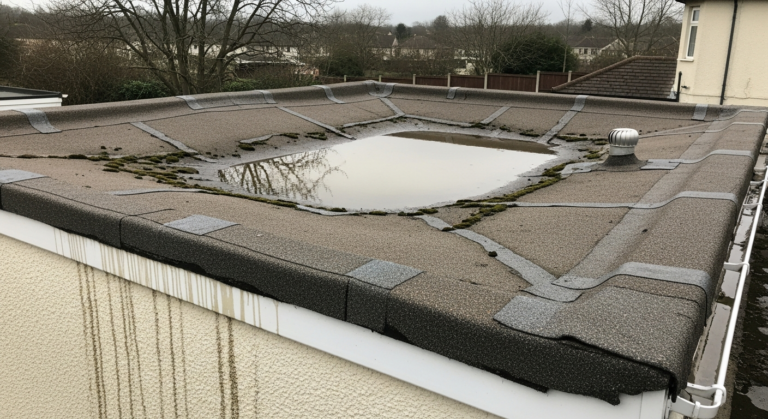
EPDM rubber is the most DIY-friendly flat roof material — clean the existing deck, prime it, and roll out the membrane in one piece where possible, bonding with contact adhesive and folding corners neatly. Torch-on felt requires a gas torch and more skill; if you are not confident with naked-flame work on a timber deck, use EPDM or cold-applied liquid rubber instead. Ensure a minimum 1:80 fall toward the outlet, and dress the membrane at least 150mm up any upstand or wall.
Step 6 — Clear, repair, and align gutters, fascias, and soffits
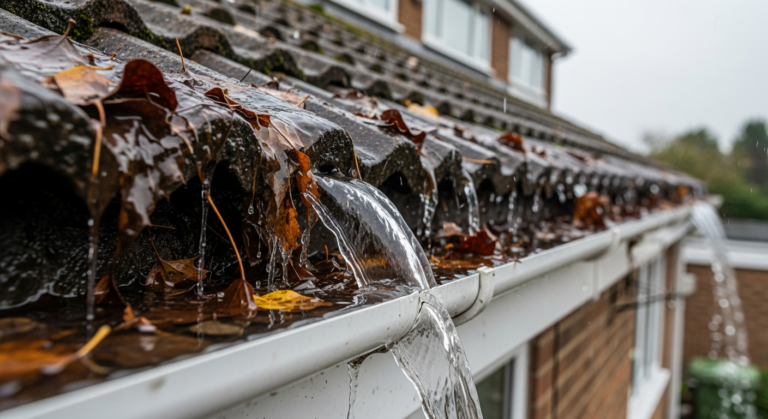
Blocked gutters are the single biggest cause of damp in UK homes; clear them at least twice a year using a gutter scoop and flush with a hose. Check all brackets are secure and that the gutter has a fall of roughly 1:600 towards the downpipe — a sagging run holds stagnant water and overflows during heavy rain. Fascia and soffit boards in UPVC can be replaced board by board once you have stripped back the gutter and any ventilation strips, cutting neatly around rafter feet and securing with stainless screws.
Frequently Asked Questions
Do I need planning permission to repair or replace my roof in the UK?
Like-for-like repairs — replacing broken tiles, re-felting, or fitting new gutters — do not require planning permission under permitted development rights. However, if you are changing the material significantly (for example, swapping clay tiles for concrete tiles on a listed building, or altering the roof’s appearance), you may need consent. Properties in conservation areas and all listed buildings have additional restrictions, so check with your local planning authority before proceeding. Building Regulations approval is required for structural work such as replacing roof timbers or re-roofing more than 25% of the roof area.
How can I tell if my flat roof needs a full replacement or just a repair?
A flat roof repair is viable if the membrane has one or two isolated splits or blisters but is otherwise sound and well bonded to the deck. If you find widespread crazing, multiple leaks, spongy or rotten decking underneath, or the felt is more than 15–20 years old and showing extensive shrinkage, a full replacement is almost always more cost-effective than repeated patching. Press gently on the surface — any ‘give’ or springiness suggests the deck itself is compromised and must be replaced before any new membrane is installed.
What is flashing and why does it keep failing?
Flashing is the weatherproofing seal at the junction between the roof surface and a vertical element — chimney stacks, dormer walls, and roof abutments are the most common locations in UK homes. Lead is the traditional material and lasts 50–80 years when correctly installed; it fails prematurely when it has been over-dressed into mortar joints without adequate movement allowance, causing it to crack and lift as it expands and contracts with temperature changes. Code 4 or Code 5 lead is appropriate for most domestic flashings; form steps at no more than 150mm intervals and secure with lead wedges rather than just mortar.
Can I use EPDM on a roof with very little fall?
EPDM is one of the most forgiving flat roof materials for minimal falls and will technically perform on a truly flat deck, though ponding water will shorten its life and any weakness in the membrane will be found quickly. The recommended minimum is 1:80 (roughly 12mm per metre), and if your existing deck is truly level, tapered insulation boards can be installed beneath the membrane to introduce a fall towards the outlet. Always ensure the outlet and any pipework are clear before laying a new membrane — a blocked outlet on a perfectly installed EPDM roof will still cause an eventual failure.
How do I find a leak that only appears during heavy rain?
Rain-only leaks are almost always driven by wind pushing water uphill under tile laps or through failed flashing rather than a straightforward hole. Start in the loft during or immediately after heavy rain with a torch and mark any wet spots on the rafters or felt with chalk — then measure horizontally from the gable wall and up from the eaves to translate the loft position to the roof surface. Check the corresponding area for lifted or cracked tiles, split felt visible between battens, and any flashing that has pulled away from its mortar chase. If the leak only occurs with rain from a specific direction, focus your inspection on the flashings and tile laps on that elevation first.
The biggest time and money saver in UK roofing DIY is getting the access right before you touch a single tile. Hire a scaffold tower for a weekend rather than wrestling with a roof ladder for two days — you will work faster, safer, and with both hands free, which makes the difference between a repair that lasts ten years and one that fails in twelve months because you rushed. While you have safe access, do a full condition check of every ridge tile, all the flashing, the felt visible between battens at the eaves, and the state of the fascia and soffits, then batch up every repair into one visit rather than returning to height five times over the next year. Good quality materials — Code 4 lead, stainless fixings, a reputable EPDM kit — cost marginally more upfront but last two to three times longer than the budget alternatives sold in some DIY sheds.
Sources
- HSE guidance on working at height for domestic and construction work, including the Work at Height Regulations 2005 and ladder and scaffold safety requirements — hse.gov.uk
- NFRC (National Federation of Roofing Contractors) — the UK roofing industry body providing technical guidance on pitched and flat roofing, tile standards, and finding approved contractors — nfrc.co.uk
- Planning Portal — official UK government resource for understanding permitted development rights, planning permission requirements, and Building Regulations for roofing work — planningportal.co.uk
This guide is for general information only. Always work safely and follow manufacturer instructions. DIYnut accepts no liability for injury or damage arising from DIY work.