UK Roofing DIY Guide 2026: Roof Repairs, Tiles, Flat Roofs, Flashing, Gutters & More
Roofing
A complete UK DIY roofing reference covering pitched roof tile replacement, flat roof repairs, lead flashing, guttering, fascias and soffits — with safety-first working at height guidance throughout.
Most roofing DIY in the UK is achievable by a competent homeowner, but working at height is the single biggest risk — never cut corners on access equipment, and know when a job exceeds safe DIY limits. Pitched roofs in the UK typically use concrete or clay plain tiles, interlocking tiles, or natural slate, while flat roofs are commonly finished with felt, EPDM rubber, or GRP fibreglass. Prioritise identifying the root cause of any leak before patching; a temporary fix over a failed flashing or cracked mortar ridge will fail again within months.

- Roof ladder with ridge hook (BS EN 131 rated)
- Tower scaffold or podium steps for eaves-level work
- Slate ripper / tingle plate for tile removal
- Caulking gun and pointing trowel
- Tin snips and lead dresser (bossing mallet) for flashing
- Hacksaw and mitre box for guttering cuts
- Cordless drill/driver with wood and masonry bits
- Safety harness, hard hat, and non-slip footwear
- Matching concrete or clay roof tiles / natural slate
- EPDM rubber membrane or torch-on felt (flat roofs)
- Code 4 or Code 5 lead sheet for flashing
- Roofing mortar (sand and cement, or pre-mixed roof repair mortar)
- uPVC fascia boards, soffit panels, and capping trim
- Half-round or ogee uPVC guttering, brackets, unions, and downpipe fittings
The Process Overview
1. Set Up Safe Access Before Touching the Roof
Never attempt any roofing work without proper access equipment — a roof ladder hooked securely over the ridge and a tower scaffold or podium platform at eaves level are the minimum for most pitched roof jobs. Under the Work at Height Regulations 2005, even DIY homeowners must take all reasonable precautions; a fall from a single-storey roof can be fatal. Inspect your ladder for damage, ensure the roof ladder hook is firmly seated on the opposite side of the ridge, and always have a second person present at ground level.
2. Diagnose the Problem Accurately From the Inside First
Before climbing up, inspect the loft space with a torch during or after heavy rain to identify exactly where water is entering — look for damp rafters, stained felt, or drip trails that track back to their source. Common culprits in UK homes are failed lead flashing around chimney stacks or dormers, cracked or slipped tiles, failed mortar on ridge or hip cappings, and blocked or overflowing gutters causing water to back up under the eaves. A precise internal diagnosis saves you unnecessary time on the roof and prevents you replacing the wrong thing.
3. Replace Slipped or Broken Tiles
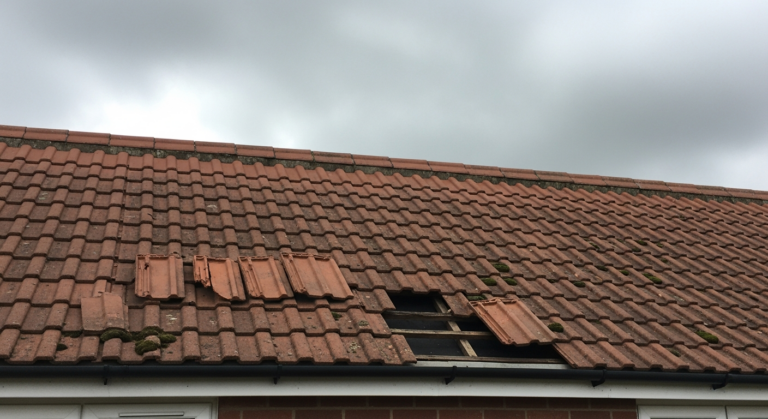
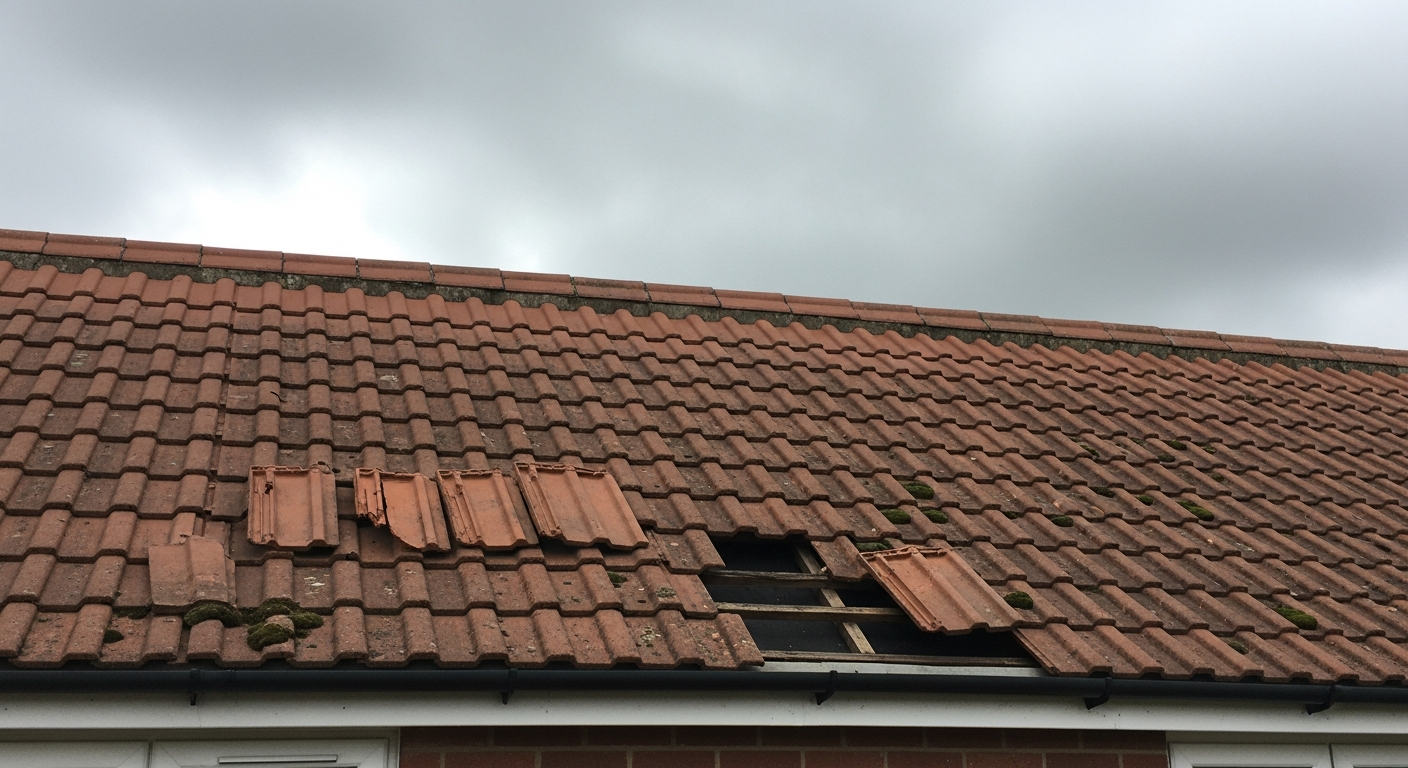
Use a slate ripper to cut the nibs or nails holding a broken tile and slide it out without disturbing neighbouring tiles; a tingle plate (lead clip) can secure a replacement tile where re-nailing is not possible. Always source matching tiles — clay, concrete, or slate — since mismatched profiles allow wind-driven rain to penetrate; take a sample to a roofing merchant or use a specialist like Tile Giant to identify the correct profile. Bed any ridge or hip tiles in fresh roofing mortar mixed at 3:1 sharp sand to cement, and point the joints neatly to shed water.
4. Repair or Replace Lead Flashing
Lead flashing around chimneys, dormers, and abutment walls is one of the most common sources of leaks in UK pitched roofs, typically failing through fatigue cracking, mortar joint failure, or thermal movement pulling it free. To re-dress existing lead, rake out the old mortar chase with a cold chisel, clean the lead, re-dress it firmly against the masonry, and repoint the chase with 1:3 mortar or a specialist lead sealant such as Flashband as a temporary measure. For new lead, use Code 4 lead (1.8mm) for step and cover flashings and Code 5 (2.24mm) for soakers, keeping individual pieces under 1.5 metres to allow thermal movement.
5. Repair or Overlay a Flat Roof
UK flat roofs on garages, extensions, and bay windows are most commonly finished with mineral felt, EPDM rubber, or GRP, and they typically last 10–25 years depending on the system and maintenance. For small splits or blisters in felt, cut a cross through the blister, peel back the flaps, dry the area thoroughly with a heat gun, apply bitumen primer, and bond a patch of self-adhesive torch-on felt at least 100mm beyond the repair. For a full re-cover, EPDM is the best DIY-friendly option: the single-ply membrane is cold-bonded with contact adhesive, requires no open flame, and a typical garage roof can be completed in a day using a kit from a supplier such as Rubber4Roofs.
6. Renew Guttering, Fascias, and Soffits
Working from a tower scaffold or podium at eaves level, remove old cast-iron or failing uPVC guttering by unscrewing brackets and pulling the sections apart at the union joints; take the opportunity to inspect fascia boards for rot before fitting new guttering. Replace any soft or rotten fascia timber with pre-primed treated softwood or substitute with uPVC fascia capping boards, ensuring the roof felt drapes at least 50mm into the gutter to prevent water tracking back onto the fascia. When rehinging guttering, set a slight fall of 1:600 (roughly 6mm per metre) towards the downpipe using a chalk line and adjustable brackets, and always seal union joints with the manufacturer’s gasket or silicone rather than relying on a friction fit.
Frequently Asked Questions
Do I need planning permission to repair or replace my roof in the UK?
In most cases, like-for-like roof repairs and replacements are considered permitted development and do not require planning permission, provided the materials are similar in appearance to the existing roof. However, if your property is in a Conservation Area, is a Listed Building, or the work involves a material change in the roof’s appearance (such as adding a rooflight or changing from slate to concrete tiles), you must check with your local planning authority first. Rooflight installations must also comply with Building Regulations Part L (energy efficiency) and Part A (structural), so always verify before starting significant work.
How do I find a matching roof tile for a repair?
Take a single intact tile to a specialist roofing merchant rather than a general DIY shed — merchants such as Tile Giant, Roofing Superstore, or a local builders’ merchant with a roofing counter will be able to identify the profile, manufacturer, and colour match. Photograph the roof from a distance in good light as well, and note the tile’s dimensions and whether it has a single or double nib. For older clay plain tiles, reclamation yards are often the best source of a genuine match, and sites like Salvo (salvo.co.uk) list reclamation dealers by region across the UK.
What is the best DIY flat roof system for a UK garage?
EPDM rubber membrane is widely regarded as the most DIY-friendly flat roof system currently available in the UK. It comes in large seamless sheets that eliminate most joints (the main failure point of traditional felt), is cold-applied using contact adhesive so there is no need for a roofing torch or open flame, and typically carries a 20-year manufacturer guarantee when correctly installed. GRP (fibreglass) is equally durable but requires careful mixing of resin and catalyst and is less forgiving of errors; it is better suited to those with some previous composites experience. Avoid simply overlaying new felt on top of old layers — remove back to the deck, check for rot, and start clean.
How do I stop my gutters overflowing in heavy rain?
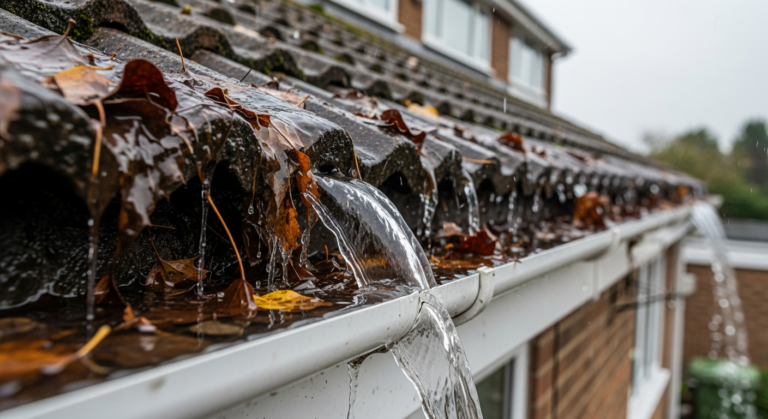
Overflowing gutters in heavy rain are almost always caused by one of four things: a blockage (leaves, moss, or debris), an insufficient fall towards the downpipe, undersized guttering for the roof catchment area, or a blocked downpipe. Start by clearing all debris and flushing the gutter with a hosepipe to check the flow direction; if water pools in the middle the fall is wrong and brackets need adjusting. If the gutter runs clear but still overflows during heavy downpours, the section may be undersized — a standard 112mm half-round gutter handles roughly 50 square metres of roof; larger roofs need 125mm or 150mm profiles. Also check that the downpipe is clear to ground level and that any underground drainage is not blocked.
Is it safe to walk on my roof tiles to carry out repairs?
You should never walk directly on roof tiles if it can be avoided — concrete and clay tiles are designed to shed water, not bear point loads, and even walking carefully can crack tiles, displace the ones beneath, and damage the roofing felt underneath. Always use a roof ladder, which spreads your weight over multiple tiles via its rungs and hooks over the ridge to prevent sliding. For any work on a fragile or aged roof — particularly old clay plain tiles, natural slate, or fibre cement sheets — use a crawling board (a wide board with timber bearers) to distribute your weight further. If you are unsure of the roof’s structural condition from the loft inspection, do not proceed without professional assessment.
The single best investment you can make before any roofing job is a thorough loft inspection on a wet day with a powerful torch — you can often pinpoint the exact entry point of a leak without spending a minute on the roof, which saves both time and risk. Once you are up there, always work systematically from the ridge down, checking mortar on ridge cappings and hips first (this is the most common failure point on UK pitched roofs), then flashings, then individual tiles. Keep a tub of pre-mixed roofing mortar and a bag of spare tiles in your van or garage — most emergency call-outs I have seen over the years boil down to two slipped tiles and a loose ridge capping that could have been sorted in under an hour by someone with the right materials to hand. Finally, photograph the roof in sections before you start and after you finish — it gives you a baseline for future inspections and is invaluable if you ever need to make an insurance claim.
Sources
- HSE Working at Height Regulations 2005 guidance — the definitive UK regulatory reference for safe access equipment, risk assessment, and legal duties when working at height in domestic and commercial settings. — hse.gov.uk
- Roofing Superstore UK — a leading UK specialist roofing merchant providing product specifications, installation guides, and technical data sheets for tiles, flat roof membranes, guttering, and flashings. — roofingsuperstore.co.uk
- Planning Portal (gov.uk) — the official UK government resource for permitted development rights, planning permission requirements, and Building Regulations compliance for roof repairs and alterations. — planningportal.co.uk
This guide is for general information only. Always work safely and follow manufacturer instructions. DIYnut accepts no liability for injury or damage arising from DIY work.
Step-by-Step Guides
Step-by-step guides for this category are being published now. Check back soon — or use the app to get an instant plan for your specific job.