Concrete vs Clay Roof Tiles
Concrete roof tiles cost less upfront but clay tiles last longer and suit period properties better. Concrete suits most modern homes on a tighter budget; clay is the premium choice for aesthetics, longevity, and conservation areas.

What Is a Concrete Roof Tile?
A concrete roof tile is made from a mixture of sand, cement, and water that is hydraulically pressed and kiln-cured into shape. Introduced widely in the UK during the 1950s and 1960s, concrete tiles are now the most commonly installed tile type on modern British housing. They are available in interlocking and plain formats, and come in a broad range of profiles and surface colours. For hands-on guidance on fitting them, see our Replace a Broken Roof Tile guide.
What Is a Clay Roof Tile?
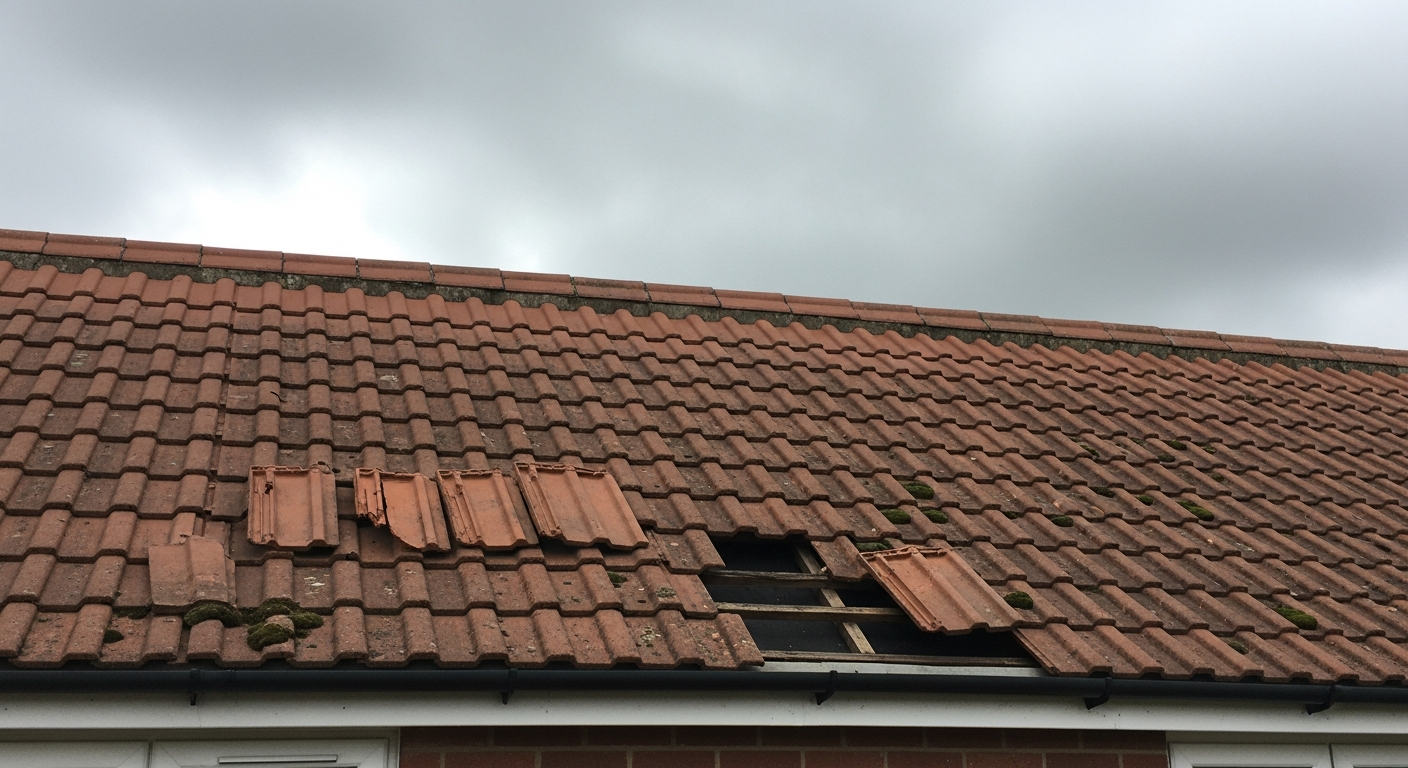
A clay roof tile is formed from natural clay that is shaped — either by hand or machine — and fired at high temperature in a kiln. Clay tiles have been used on British roofs for centuries and are the traditional choice on Georgian, Victorian, Edwardian, and Arts and Crafts properties. They are available in plain, pantile, and roman profiles, and develop a natural weathered patina over time. If you need to work on an existing clay roof, our Roof Tile Types Guide UK covers identification and compatibility.
Side-by-Side Comparison
| Factor | Concrete Tiles | Clay Tiles |
|---|---|---|
| Cost per m² | £20–£45 | £45–£120+ |
| Durability | Good — can fade and become porous with age | Excellent — resistant to frost and UV fade |
| Appearance | Uniform; wide colour range but can look utilitarian | Natural, varied patina; highly attractive on period homes |
| Install Difficulty | Moderate — heavier per tile but widely understood | Moderate to high — plain tiles require precise double-lap technique |
| Maintenance | Periodic moss treatment; surface colour fades after 20–30 years | Low — moss treatment and occasional ridge repointing |
| Lifespan | 30–60 years | 60–100+ years |
Concrete Tiles — Pros and Cons
- Lower upfront cost — typically half the price of clay per m²
- Wide availability — replacement tiles are easy to source across the UK
- Broad profile choice — interlocking formats suit modern and post-war housing
- Roofer familiarity — most contractors work with concrete daily, keeping labour costs down
- Colour fade — surface pigment can bleach within 20–30 years
- Heavier weight — may require structural checks on older roof timbers
- Porosity increases with age — older tiles absorb more water, increasing moss and algae growth
- Shorter lifespan — rarely exceeds 60 years; clay often outlasts the building
Clay Tiles — Pros and Cons
- Exceptional longevity — well-fired clay tiles can last over a century with minimal intervention
- Natural appearance — develops an authentic patina that suits period and conservation-area properties
- Frost and UV resistant — the fired clay matrix does not degrade in the same way as concrete
- Low maintenance — less prone to surface porosity; moss and algae growth is slower
- Added property value — original or period-appropriate clay tiling is a selling point
- Higher material cost — premium profiles can exceed £120 per m²
- Specialist labour needed — especially for plain tiles requiring a proper double-lap installation
- Matching difficulties — sourcing matching replacements for old or unusual profiles can be challenging
- Brittle if walked on — clay plain tiles crack more easily under foot traffic during repairs
Which Is Better For…?
- A 1970s semi-detached on a tight budget: Concrete tiles. Most post-war housing was built with concrete tiles in mind; the roof structure is designed for the weight, and matching profiles are inexpensive and widely available.
- A Victorian or Edwardian terraced house: Clay tiles. Original plain clay tiles are standard on Victorian roofs. Using concrete would look incongruous and may cause issues with conservation officers. If a tile fails, see our guide to replacing a broken roof tile to source a matching clay replacement.
- A property in a conservation area or with listed status: Clay tiles. Local planning authorities typically require like-for-like replacement. Using concrete where clay was specified can result in enforcement action. Check requirements on GOV.UK planning guidance before reroofing.
- A new-build with a steep-pitch roof: Either, but clay preferred for aesthetics. Both materials perform well on pitches above 35°. Clay will better complement brickwork and age more gracefully.
- A homeowner planning to sell within 5–10 years: Clay tiles (if budget allows). A clay-tiled roof is a genuine selling point, particularly on older properties, and can recoup some of the additional outlay in sale price. Our Roofing Guide covers the broader decisions around full or partial reroof projects.
UK Cost Comparison
Concrete roof tiles typically cost between £20 and £45 per m² for materials alone. Plain interlocking concrete tiles sit at the lower end; profiled decorative formats push towards £45. Clay tiles range from approximately £45 to £120+ per m² depending on profile, manufacturer region, and whether handmade or machine-made. Specialist handmade clay plain tiles for conservation or heritage work can exceed £120 per m². Labour costs for installation are broadly similar — expect £40–£70 per m² for either material when hiring a competent roofer — though clay plain tiles (which require a double-lap technique with more tiles per m²) often run slightly higher. A complete reroof on a typical three-bed semi of around 50–70 m² of roof slope would therefore cost roughly £3,000–£8,000 for concrete and £5,500–£14,000+ for clay, all-in including labour, felt, battens, and ridge work. These are indicative ranges; always obtain at least three quotes from Checkatrade-listed roofers and check that contractors are members of the National Federation of Roofing Contractors (NFRC). If you encounter a leak during the decision process, our Fix a Roof Leak guide covers interim repairs.
Frequently Asked Questions
Can I mix concrete and clay tiles on the same roof?
It is not recommended. Different tile profiles, weights, and fixing spacings mean the two materials rarely align correctly at junctions, which can cause gaps, water ingress, and an uneven appearance. Always match like-for-like when replacing individual tiles.
Do I need planning permission to replace a roof with different tiles in the UK?
Most reroofing work is permitted development, but if your property is in a conservation area, an AONB, or is listed, you will likely need planning consent or listed building consent before changing tile type or material. Check with your local planning authority before starting.
Are concrete tiles too heavy for an old roof structure?
Older timber roof structures, particularly on pre-1900 properties originally tiled with lightweight clay plain tiles, may not be designed to carry the additional dead load of modern concrete interlocking tiles. A structural engineer or experienced roofer should check the rafters and purlins before switching material.
How long do concrete roof tiles last compared to clay?
Concrete tiles typically have a functional lifespan of 30–60 years; clay tiles commonly last 60–100+ years. The difference is largely due to clay’s fired, non-porous structure, which resists moisture absorption, frost damage, and UV degradation far better than concrete over time.
Do clay tiles add value to a UK property?
On period properties, original or period-appropriate clay tiling is viewed positively by surveyors and buyers. The uplift is not easily quantified, but retaining or reinstating clay tiles on a Victorian or Edwardian house is generally considered preferable to fitting concrete from a saleability and condition-report perspective.
When re-ridging a clay plain tile roof, use a lime-based mortar rather than a standard cement mix — it remains slightly flexible as the roof moves seasonally, which significantly reduces cracking and repointing frequency. Cement mortar on clay ridge tiles is one of the most common causes of premature ridge failure in the UK.
Sources
- NFRC — Guidance on roof tile selection and installation standards — nfrc.co.uk
- Historic England — Roofing: Traditional Materials and Maintenance — historicengland.org.uk
- GOV.UK — When is permission required for roofing work — gov.uk
This guide is for general information only. Always work safely and follow manufacturer instructions. DIYnut accepts no liability for injury or damage arising from DIY work.