Roof Tiles Slipping
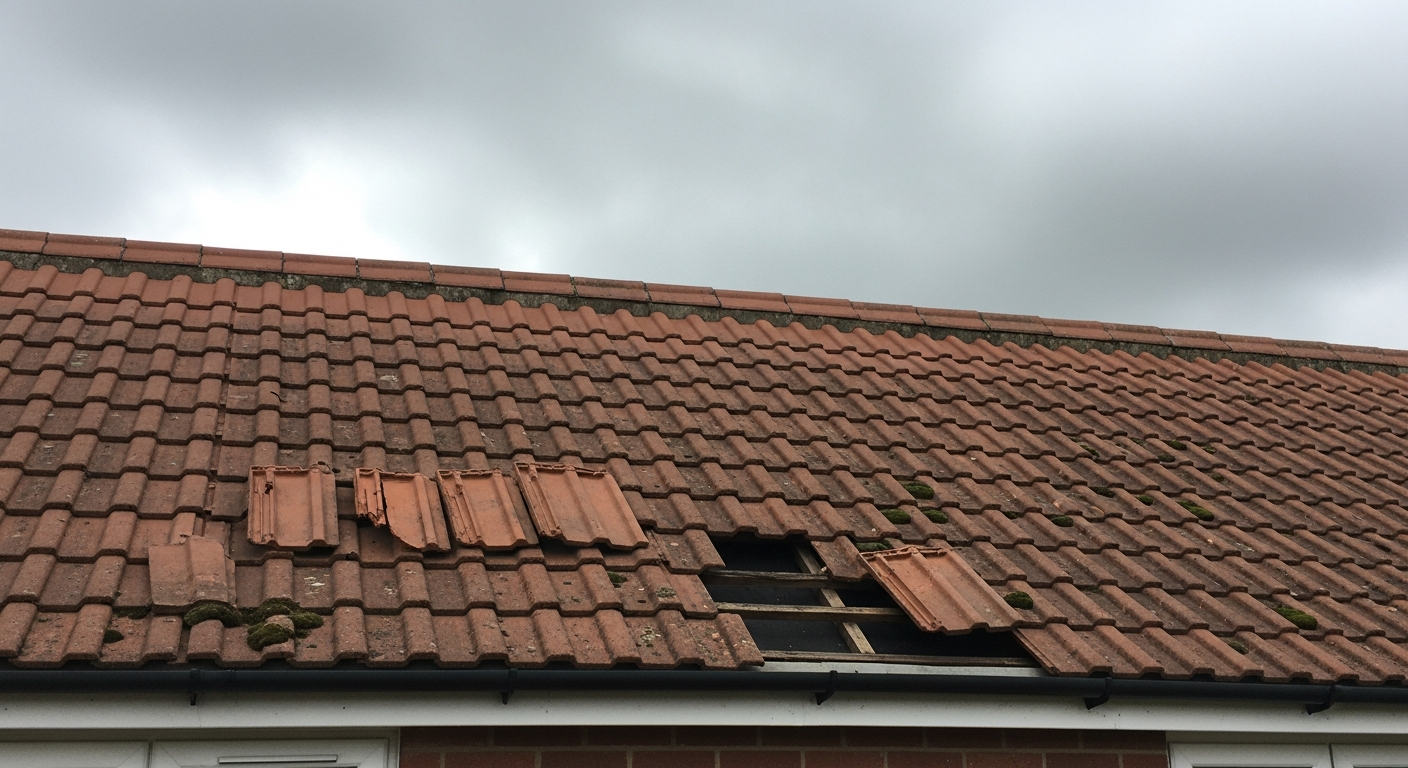
Roof tiles slip most often because the nibs or nails holding them have failed due to age or corrosion. Inspect from the loft first, then the roof surface. Single tiles can be a DIY fix; widespread slippage or ridge tiles need a professional roofer.

What’s Causing This?
Corroded or failed nail fixings. Most plain clay and concrete tiles are nailed to the battens at intervals. Over time — typically after 40–60 years — galvanised nails corrode and snap, leaving tiles held only by their nibs. Once the nib chips or the tile shifts, it slides down the roof. This is the most common cause on pre-1970s properties. See our Replace a Broken Roof Tile guide for the repair method.
Rotten or damaged battens. Timber battens sit between the rafters and the tiles. When battens rot — often due to a slow leak or poor ventilation — the nib has nothing solid to rest on and tiles creep downward. Check for soft, dark or crumbling timber when inspecting from the loft.
Frost damage to the tile itself. Porous tiles absorb water; repeated freeze-thaw cycles cause the leading edge or the nib to spall off. Once the nib breaks, there is nothing to stop the tile sliding. Frost-damaged tiles typically show surface flaking as well as movement. See the Roof Tile Types Guide UK to identify whether your tiles are frost-resistant.
Mortar failure on ridge or hip tiles. Ridge tiles are bedded in mortar rather than mechanically fixed. As mortar carbonates and shrinks over decades it cracks, allowing ridge tiles to shift and the courses below to lose support. Our Re-Ridge a Roof guide covers this repair in full.
Structural movement or sagging rafters. If a rafter or purlin has deflected, the roof pitch changes slightly and tiles can begin to migrate down the slope. This is less common but serious — look for a visible dip or wave across the roof plane when viewed from ground level.
How to Diagnose the Exact Cause
- Inspect from inside the loft. On a bright day, look for pinpricks of daylight coming through the roof deck — these indicate displaced or missing tiles. Shine a torch along the underside of the battens and check for soft, discoloured or crumbling timber. Use our Find a Roof Leak From Inside guide to work methodically.
- Survey the roof from ground level. Stand back and look along the roof slope. Slipped tiles will be visibly lower than the surrounding courses or will show an irregular shadow line. A sagging ridge or a wave in the roof plane suggests structural movement rather than individual tile failure.
- Check the age of the roof covering. Clay plain tiles typically last 60–100 years; concrete interlocking tiles 40–60 years. If the roof is at or beyond its expected service life, widespread nail corrosion is likely across the whole roof, not just one or two tiles.
- Examine individual tiles (safely). If you can safely access the roof edge with a ladder footed on firm ground, look at the bottom few courses. Try to slide a tile gently — if it moves easily with no resistance, the fixing has failed. Do not walk on an aged roof without specialist equipment and training.
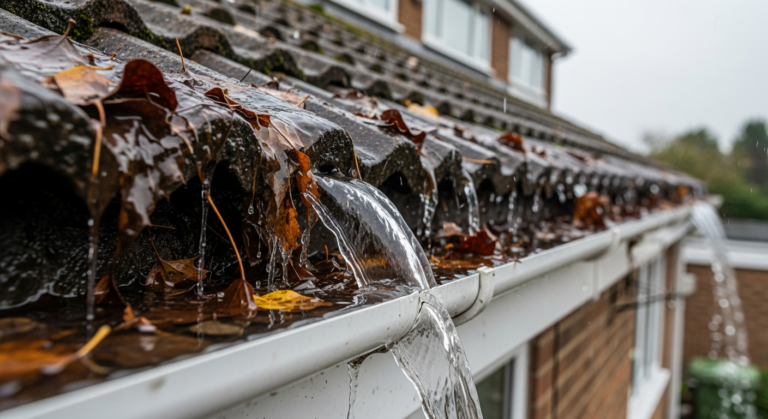
- Look for mortar debris in the gutters. Fragments of grey mortar in the gutters are a strong indicator that ridge or hip mortar is breaking down, which can destabilise the tiles below. Also check for gutter sagging caused by debris accumulation.
- Check for interior water staining. Damp patches on ceilings or loft timbers confirm that slipped tiles are already allowing water ingress. Act promptly — even a small gap can cause significant damage during a single rain event.
How to Fix It
Failed nail fixings — one or two tiles: Carefully lift the tile above, remove the slipped tile, re-nail or use a tile clip to secure it to the batten, and re-bed with fresh mortar at the tail if required. Full step-by-step instructions are in our Replace a Broken Roof Tile guide.
Rotten battens: The affected section of tiles must be stripped, the rotten batten cut out and a new treated timber batten fixed to the rafters before re-tiling. This is a significant job and usually requires scaffold; consider a roofer unless you are confident working at height.
Frost-damaged tiles: Replace individual cracked or spalled tiles with matching replacements. Source reclaimed tiles from a salvage yard if your roof uses non-standard or discontinued profiles. See the Roof Tile Types Guide UK to match the profile correctly before buying.
Failed ridge mortar: Rake out loose mortar to a depth of at least 20 mm, dampen the tile surfaces, and re-bed using a 3:1 sharp sand–cement mix with a plasticiser. The full method is covered in our Re-Ridge a Roof guide. Modern practice uses dry-fix mechanical systems which are more durable than mortar.
Structural movement: Do not attempt to re-fix tiles if the rafters or purlins have deflected — this requires a structural assessment. Call a qualified roofer or structural engineer before any work begins.
When to Call a Tradesman
Call a qualified roofer if more than a handful of tiles have slipped across the roof, as widespread movement indicates systemic fixing failure or batten deterioration that requires a full or partial re-roof. Working at eaves height on a ladder is manageable for confident DIYers, but any work above the eaves on a pitched roof should use a scaffolding tower or erected scaffold — the HSE’s Working at Height Regulations 2005 require that work at height is properly planned and that falls are prevented (HSE — Working at Height). If you suspect a rafter, purlin or wall plate has failed, you must get a structural engineer’s assessment before re-tiling. Also call a pro if the roof is steeply pitched (above 35°), if it is a heritage or listed building, or if you are uncomfortable on a roof at any height. For emergency water ingress while you wait for a roofer, see our Emergency Roof Repair Guide.
How to Prevent It Happening Again
- Annual visual inspection. Walk the perimeter of your property each spring and autumn and look along the roof slope for any uneven tile lines, gaps, or debris in the gutters. Early detection of one or two loose tiles prevents a cascade failure.
- Use dry-fix systems on re-tiling work. When replacing ridge, hip or verge tiles, use mechanical dry-fix systems rather than mortar. These are more durable, more wind-resistant, and do not require periodic re-bedding.
- Ensure adequate roof ventilation. Poor ventilation causes condensation in the loft, which accelerates batten rot. Check that ridge ventilation and soffit ventilation are unobstructed — refer to our Replace Fascia and Soffit Boards guide if you are upgrading the eaves zone.
- Keep gutters clear. Blocked gutters overflow behind the fascia and saturate the top batten course, accelerating rot and nail corrosion at the most vulnerable part of the roof. Fit a gutter guard and clear gutters twice yearly.
Frequently Asked Questions
Can I fix a slipped roof tile myself?
Yes, if only one or two tiles have slipped and you can access the area safely from a footed ladder at eaves level. Widespread slippage, ridge tiles, or any work above the eaves generally requires scaffold and a professional roofer.
How do I know if my roof needs a full re-tile rather than spot repairs?
If tiles are slipping across multiple areas of the roof, if the nails are visibly corroded throughout, or if battens are rotten in more than one location, a full or partial re-tile is usually more cost-effective than repeated spot repairs. A roofer’s survey will confirm this.
Will a slipped tile definitely cause a leak?
Not immediately — the underlay beneath the tiles provides temporary weather protection. However, most underlays degrade over time and are not designed as a permanent waterproof barrier, so a slipped tile should be refixed promptly to avoid water ingress.
Do I need planning permission to replace slipped roof tiles?
Like-for-like tile replacement on a standard pitched roof does not require planning permission in England. However, if your property is in a conservation area or is listed, you must check with your local planning authority before changing tile type, colour or profile.
What type of nail should I use when re-fixing roof tiles?
Use 3.35 mm diameter stainless steel or aluminium alloy nails of sufficient length to penetrate the batten by at least 15 mm. Galvanised nails are acceptable but have a shorter service life; avoid plain steel nails entirely as they corrode rapidly.
When re-fixing plain clay tiles on a roof over 40 years old, clip every tile rather than nailing only the specified courses — the battens will likely be near end-of-life too, and the marginal cost of extra clips far outweighs the labour of returning to finish the job. A full tile count and batten condition report before ordering materials will save a second visit.
Sources
- HSE — Working at Height Regulations 2005: employer and worker duties — hse.gov.uk
- Which? — Roof repairs: how much does it cost? — which.co.uk
- NHBC — Standards Chapter 7.2: Pitched roofs (tile fixing and batten specification) — nhbc-standards.co.uk
This guide is for general information only. Always work safely and follow manufacturer instructions. DIYnut accepts no liability for injury or damage arising from DIY work.