Repair a Flat Roof: Trade vs DIY
Flat roof repair is DIY-able for minor patch jobs on felt or EPDM surfaces. However, full membrane replacement, structural deck issues, or repairs near party walls typically require a qualified roofer to meet building regulations and protect your home insurance.

The DIY Option
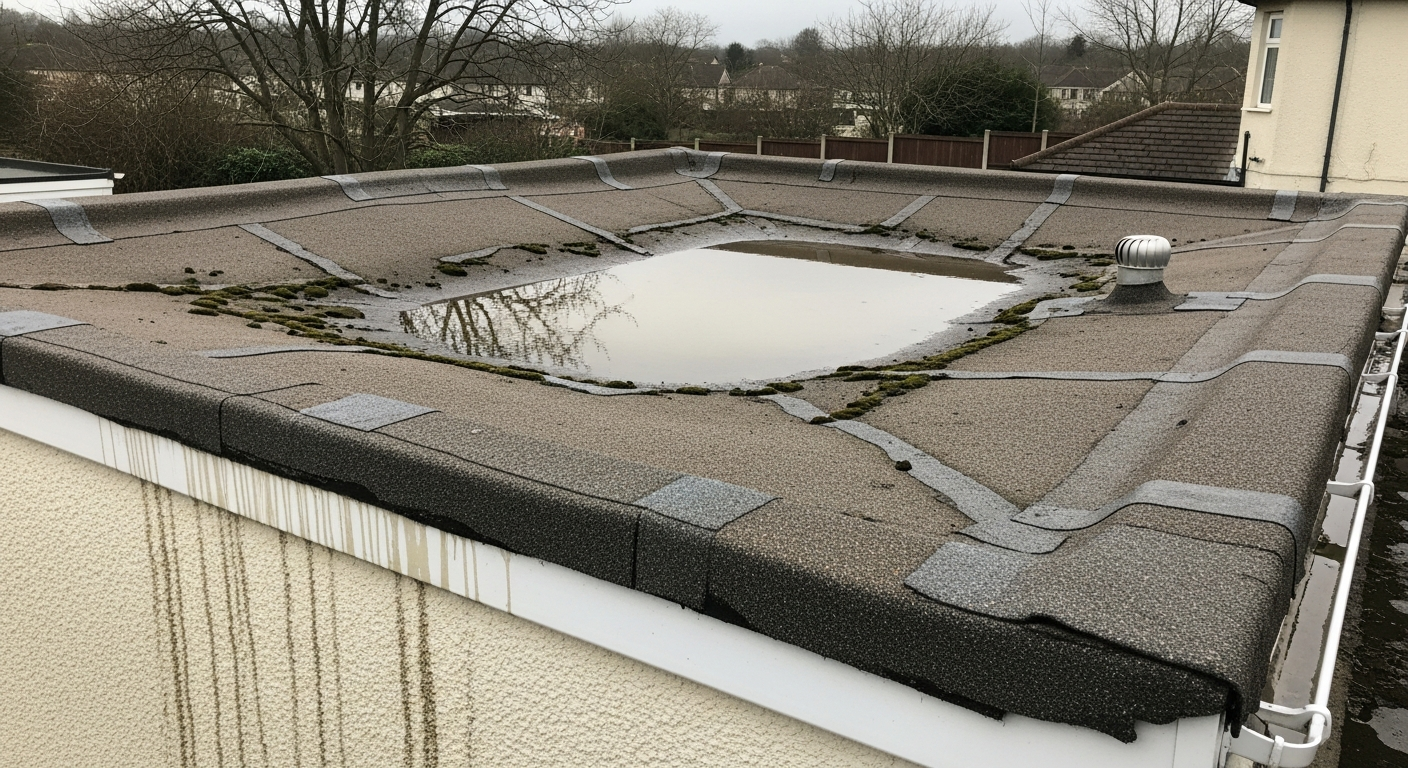
Repairing a flat roof yourself is realistic for confident DIYers tackling small, localised damage — think a split felt seam, a minor EPDM tear, or a patch of bubbling around a flashing edge. Skill level required is intermediate: you need to be comfortable working at height safely, identifying the membrane type, and applying compatible repair materials correctly. Budget roughly £50–£300 for materials depending on the area affected and the system (felt, EPDM, GRP fibreglass, or liquid coating). Essential tools include a stiff brush, sharp knife, heat gun or blowtorch (for felt only), roller, and appropriate primer and patch material. The main risks are misidentifying the membrane type and applying an incompatible product, failing to locate the true source of a leak before patching over it, and working unsafely at height without proper edge protection. Falls from flat roofs cause serious injuries every year — the HSE guidance on working at height is mandatory reading before you start. For a full walkthrough of the repair process, see our Fix a Leaking Flat Roof guide.
The Trade Option
A professional flat roofing contractor will survey the entire roof surface — not just the visible damage — and assess the deck, insulation, drainage falls, and membrane integrity before recommending a repair or full replacement. For a patch repair on a felt or EPDM roof, expect to pay roughly £400–£900. A full single-ply or GRP membrane replacement on a typical garage or kitchen extension flat roof typically costs £1,200–£2,500 or more depending on area and system chosen. Look for contractors who are members of the National Federation of Roofing Contractors (NFRC), as members are vetted and carry appropriate insurance. Always get at least three written quotes, check reviews on an independent platform, and confirm the contractor will provide a written guarantee for both materials and workmanship. Building regulations may apply if the deck or insulation is being upgraded — your contractor should advise you and submit any necessary notifications.
Side-by-Side Comparison
| Factor | DIY | Trade |
|---|---|---|
| Cost | £50–£300 (materials) | £400–£2,500 (labour + materials) |
| Time | Half a day to a full day | Half a day to 2 days |
| Skill Required | Intermediate | Trade-qualified roofer |
| Risk Level | Medium–High (working at height, incorrect repair) | Low (managed by professional) |
| End Quality | Variable — patch may not last if root cause missed | High — full diagnosis, guaranteed work |
| Legal Requirements | Building regs may apply if upgrading insulation or deck | Contractor should manage all notifications |
When DIY Makes Sense
- The damage is a small, clearly defined area — a split seam, minor blister, or a localised puncture — and you can confirm the membrane type before buying repair materials.
- You are confident working at height safely and can set up appropriate edge protection or scaffolding in line with HSE guidance.
- The roof deck is sound — no soft spots, bounce, or signs of rot — meaning the structural element does not need attention.
- You want a temporary weatherproof patch while awaiting a trade quote, using a compatible liquid repair product or self-adhesive flashing tape rated for external roofing use.
When You Must Use a Tradesman
- Full membrane replacement: Stripping and re-covering an entire flat roof surface, particularly with GRP fibreglass or hot-melt systems, requires specialist equipment and skills — an improper installation will void any material warranty and can cause long-term water ingress.
- Structural deck replacement: If the timber deck has rotted or is structurally compromised, this is building work that may require a building regulations application under Part C (site preparation and resistance to contaminants and moisture) or Part L (conservation of fuel and power) if thermal insulation is being upgraded.
- Party wall or shared roof: Any work affecting a shared roof or structure adjoining a neighbour’s property may trigger the Party Wall etc. Act 1996, requiring formal notices — use a qualified professional who understands these obligations.
- Insurance requirements: Many home insurance policies require roof repairs to be carried out by a qualified contractor to maintain cover — check your policy wording before attempting DIY on a primary roof covering.
- Heritage or listed buildings: Any flat roof repair on a listed building or in a conservation area may require listed building consent; always consult your local planning authority first.
If You DIY — Where to Start
Before buying any materials, identify your membrane type — felt (built-up), EPDM rubber, GRP fibreglass, or liquid-applied — as each requires a different repair approach and incompatible products will fail quickly. Probe the deck with light foot pressure to check for soft spots, and trace the actual source of any leak rather than patching the most obvious wet area. For a step-by-step guide covering diagnosis, material selection, and repair technique, start with our Repair Felt on a Flat Roof guide. If your roof is leaking but you’re not yet sure where the water is entering, our Find a Roof Leak From Inside guide will help you locate it before you work on the outside. You can also browse the full Roofing Guide for related tasks including gutters, flashing, and tiles.
Frequently Asked Questions
Can I repair a flat roof myself without building regulations approval?
A like-for-like patch repair to an existing membrane generally does not require building regulations approval. However, if you are replacing the deck or upgrading the insulation, building regulations under Part L or Part C may apply — check with your local authority before starting.
What is the cheapest way to fix a leaking flat roof temporarily?
A self-adhesive flashing tape or a liquid waterproofing repair product compatible with your membrane type can provide a temporary weatherproof patch at low cost. This is a short-term measure only — the underlying cause still needs to be properly addressed.
How do I know if my flat roof needs a patch repair or full replacement?
If the membrane has widespread cracking, multiple leak points, significant blistering, or the deck beneath is soft or rotted, a full replacement is likely more cost-effective. A single localised failure on an otherwise sound roof is usually worth patching.
Will a DIY flat roof repair affect my home insurance?
It may. Some policies require roof work to be carried out by a qualified contractor — check your policy terms before proceeding. If in doubt, contact your insurer directly before carrying out any repair.
How long does a professional flat roof repair last?
A properly installed patch repair by a qualified roofer can last 5–10 years or more depending on the material used and the condition of the surrounding membrane. A full GRP or single-ply replacement can carry a 20-year or longer guarantee from the contractor.
When patching felt, roofers prime the repair area with bitumen primer and allow it to tack off before applying the patch — skipping this step is the most common reason DIY felt repairs lift within a season. On EPDM roofs, always clean the surface with the manufacturer’s specified cleaner before applying any adhesive, as residual dirt or oxidation will prevent a proper bond.
Sources
- NFRC — Finding a Qualified Roofing Contractor — nfrc.co.uk
- HSE — Working at Height: A Brief Guide — hse.gov.uk
- gov.uk — Building regulations: when you need approval — gov.uk
This guide is for general information only. Always work safely and follow manufacturer instructions. DIYnut accepts no liability for injury or damage arising from DIY work.