Build a Stud Wall: Trade vs DIY
Timber & Joinery › Timber & Joinery
Build a Stud Wall: Trade vs DIY
Find out whether building a stud wall is a realistic DIY project or a job for a professional.
Building a stud wall is a realistic DIY project for a competent homeowner. Expect to spend £150–£400 on materials and a weekend of work. Hire a tradesman if the wall needs to support loadbearing elements, incorporate electrical work, or divide a habitable room requiring building regulations approval.

The DIY Option
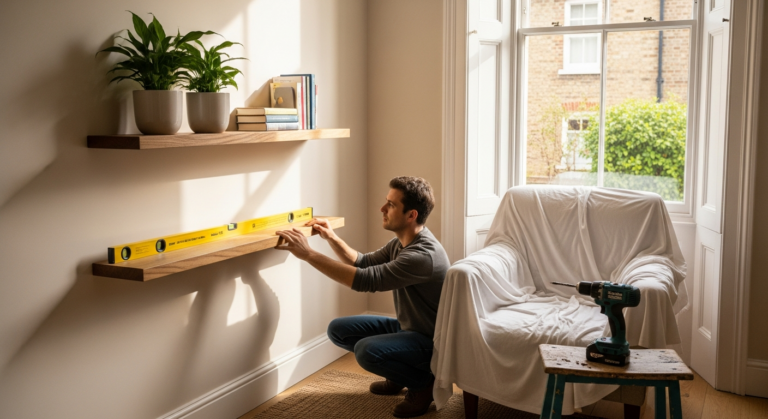
Building a non-loadbearing stud wall is well within reach for a competent DIYer with basic carpentry skills. You’ll need a weekend — roughly 6–10 hours across two days — to frame, fix, board, and tape a standard partition wall in a typical room. Essential tools include a spirit level, tape measure, circular saw or hand saw, cordless drill/driver, and a plasterboard rasp. Materials — timber studwork (typically 75 mm x 50 mm CLS), plasterboard sheets, plasterboard screws, joists hangers or angle brackets, and acoustic insulation if sound reduction matters — will cost in the region of £150–£400 depending on wall size and finish quality. The main risks are framing out of plumb (leading to finishing problems), cutting into hidden cables or pipes when fixing the sole plate and head plate, and failing to check whether building regulations approval is required before you start. Always use a pipe and cable detector before drilling or screwing into floors, ceilings, or existing walls. For context on follow-on finishing tasks, see the Timber & Joinery Guide for related skills. If your new wall will need skirting fitted once plastered, the guide on how to Fit Skirting Boards covers everything you’ll need.
The Trade Option
A professional carpenter or general builder will survey the space, confirm whether the project requires building regulations approval, frame the wall accurately in timber or metal stud, fix and tape plasterboard, and leave a wall ready for skimming or dry-lining. Some contractors quote supply and fit as a single package; others charge labour only. Typical trade costs for a standard non-loadbearing stud wall (supply and fit, ready for skim) range from £600 to £1,800 depending on wall size, room access, and your location — rates are higher in London and the South East. If you also need a door opening formed, integrated electrical sockets, or the wall to be skimmed and decorated, expect additional costs on top. To find a vetted tradesperson, use a trades directory such as Checkatrade or the Federation of Master Builders’ ‘Find a Builder’ tool, both of which carry independent reviews and allow you to verify whether a firm carries public liability insurance.
Side-by-Side Comparison
| Factor | DIY | Tradesman |
|---|---|---|
| Cost | £150–£400 (materials) | £600–£1,800 (supply & fit) |
| Time | 1–2 days | Half day to 1 full day |
| Skill Required | Intermediate — basic carpentry and plasterboarding | Qualified carpenter or builder |
| Risk Level | Low–Medium (hidden services, out-of-plumb framing) | Low (professional accountability) |
| End Quality | Good if care is taken; visible joints if skim finish is skipped | Consistent, trade-standard finish |
| Legal Requirements | Building regs may apply (see below); electrical work in new wall requires compliance with Part P | Professional will advise on and manage any notifications |
When DIY Makes Sense
- The wall is non-loadbearing and simply divides an existing room — no structural changes are involved.
- You are not adding new electrical circuits; any sockets or switches in the new wall will be run as a spur from an existing circuit by a Part P-compliant electrician, or you are comfortable self-certifying under Part P as a competent person.
- You have basic carpentry experience — you can cut timber accurately, work plumb and square, and fix plasterboard without causing blowouts.
- The project does not require a building regulations application (check with your local authority Building Control if in doubt — some room subdivisions do trigger a notification requirement).
When You Must Use a Tradesman
- Loadbearing walls: If there is any possibility the wall is loadbearing, or if you are removing an existing wall, a structural engineer’s assessment and building regulations approval are required before work starts. This is not DIY territory.
- Electrical work: Installing new circuits, consumer unit modifications, or any fixed electrical work inside the new wall is notifiable under Part P of the Building Regulations in England and Wales. It must be carried out by a competent person registered with an approved scheme (such as NICEIC or NAPIT) or notified to Building Control.
- Fire-compartmentation walls: Walls that form part of a fire barrier between flats, between a garage and a habitable room, or in a HMO must meet specific fire-resistance standards set out in Approved Document B. Incorrect construction can create a serious safety risk and invalidate building insurance.
- Listed buildings or conservation areas: Internal alterations may require listed building consent or prior consultation with the local planning authority — always check before proceeding.
If You DIY — Where to Start
Before buying materials, confirm the wall is non-loadbearing and check whether building regulations notification is needed for your specific project. Once that’s clear, gather your tools and mark out the sole plate and head plate positions carefully — getting these plumb and square is the foundation of a good result. For finishing the wall once it’s boarded, you may want to brush up on related joinery skills: the guide on how to Fit Architrave is useful if you’re forming a door opening, and if you plan to paint the finished wall you’ll find practical advice throughout the Painting & Decorating Guide. For heavy items you plan to hang on the new wall, read the guide on how to Fit Heavy Duty Shelving so you plan nogging positions into the frame before you board up.
Frequently Asked Questions
Do I need building regulations approval to build a stud wall?
Not always — a simple non-loadbearing partition in a house generally does not require approval. However, if the wall affects means of escape, forms a fire compartment (e.g. between a garage and habitable room), or creates a new habitable room, building regulations may apply. Check with your local authority Building Control before starting.
Can I run electrical cables inside a DIY stud wall?
You can run cables inside the wall, but installing new circuits or making changes to the consumer unit is notifiable work under Part P of the Building Regulations in England and Wales. Use a registered competent-person electrician or notify Building Control — do not carry out notifiable electrical work without proper certification.
What size timber should I use for a stud wall?
75 mm x 50 mm CLS (regularised) timber is the most common choice for a domestic partition wall. Use 100 mm x 50 mm if you need to accommodate thicker insulation or if the wall is taller than about 2.4 m. Space studs at 400 mm or 600 mm centres to suit standard plasterboard sheet widths.
How do I soundproof a stud wall?
Fill the stud cavities with acoustic mineral wool insulation and use two layers of plasterboard on at least one face, staggering the joints. Sealing the perimeter with acoustic sealant before fixing the sole and head plates also significantly reduces flanking sound transmission.
How long does it take to build a stud wall yourself?
A typical wall in a standard room takes a competent DIYer roughly 6–10 hours spread across one to two days, including framing, plasterboarding, and taping joints. The wall will then need at least 24 hours drying time before skimming or painting.
Fix the sole plate to the floor before the head plate, and use a plumb bob or laser level to transfer its exact position up to the ceiling — don’t rely solely on measuring from walls, which are rarely truly square. Marking the stud positions on both the sole plate and head plate before lifting and fixing the head plate saves significant time and avoids misaligned fixings.
Sources
- Which? — How much does it cost to build a partition wall? — which.co.uk
- GOV.UK — Building regulations: when you need approval — gov.uk
- HSE — Electricity at work: safe working practices (HSG85) — hse.gov.uk
This guide is for general information only. Always work safely and follow manufacturer instructions. DIYnut accepts no liability for injury or damage arising from DIY work.