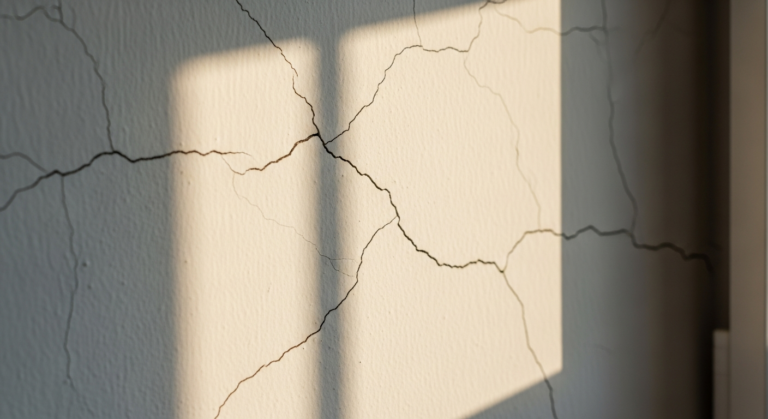
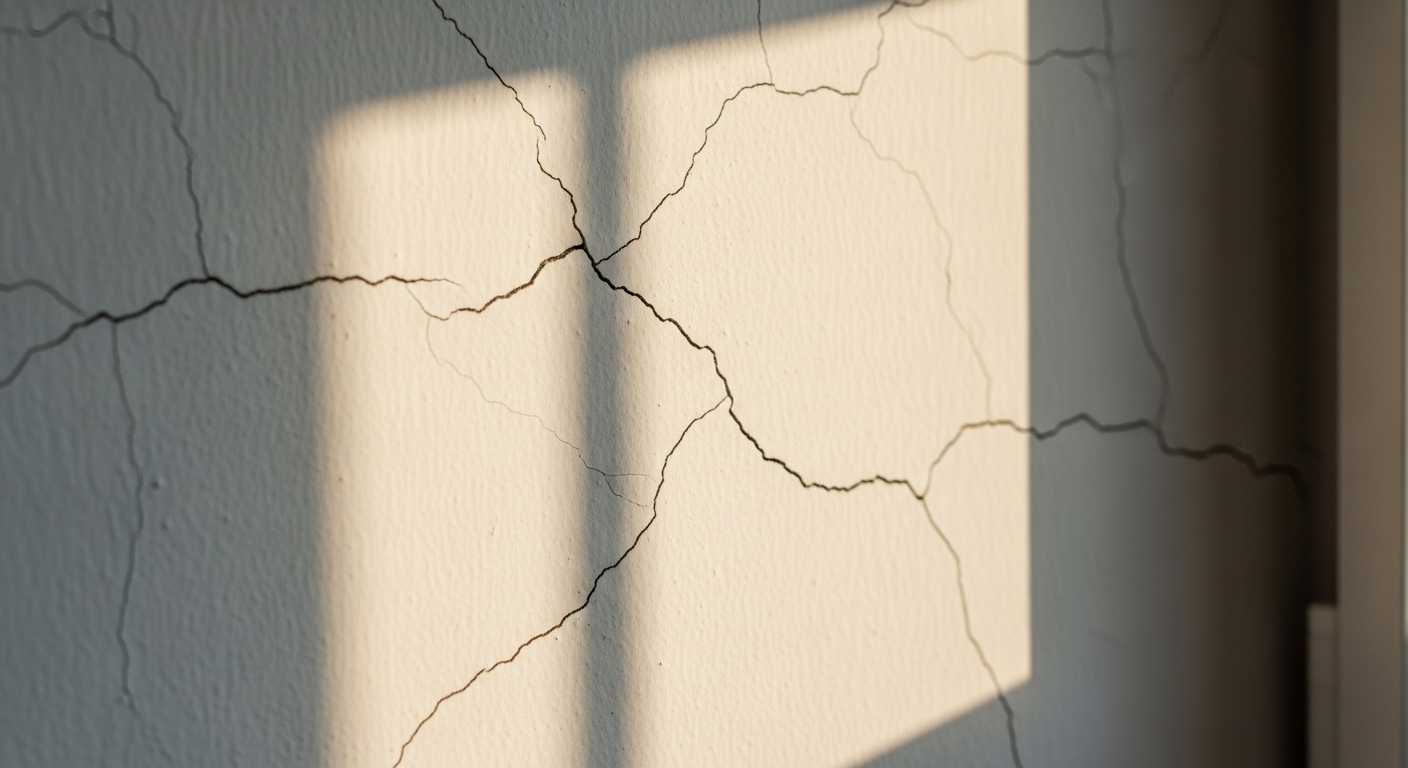
How to Fix Cracks in Ceiling – DIY Guide
How to Fix Cracks in Ceiling
Repair ceiling cracks cleanly and paint over them for a flawless finish.
Fix cracks in a ceiling by raking out loose material, applying jointing tape over wider cracks, filling with flexible filler, sanding smooth once dry, then priming and painting. Most ceiling cracks are cosmetic and straightforward to repair in a few hours.


Rake Out the Crack and Remove Loose Material
Use the edge of a scraper or an old chisel to open the crack slightly — work along its length with a gentle raking motion. This removes loose, crumbling plaster and creates a slightly undercut key for the filler to grip. Don’t be shy about it; filler applied over dusty, flaking edges will fail within months. Brush out all debris with a dry paintbrush, then vacuum the area. Wear safety goggles and an FFP2 dust mask throughout this step — ceiling debris falls directly towards your face.
Apply Jointing Tape to Cracks Wider Than 2 mm
For cracks wider than 2 mm, or for any crack along a plasterboard joint, bed in a strip of self-adhesive mesh jointing tape directly over the crack before filling. Press it firmly into place with your fingers, running it at least 50 mm beyond each end of the crack. The tape bridges the gap and prevents the crack from reflecting back through the filler as the ceiling flexes. For hairline cracks only, you can skip the tape and go straight to filling — see our guide to fixing hairline cracks in walls for the same technique applied to vertical surfaces.
Fill the Crack in Two Thin Coats
Mix flexible decorators’ filler to a smooth, stiff paste — or use it straight from the tube. Load your filling knife and press the filler firmly into the crack at a slight angle, dragging it across to force the material in. Scrape off the excess so the surface is just proud of the ceiling. Flexible filler is essential overhead; standard filler is more rigid and more likely to crack again with normal ceiling movement. Allow the first coat to dry fully (check the manufacturer’s guidance, typically 2–4 hours), then apply a second thin skim coat of fine surface filler to level everything flush. You can learn more about the broader technique in our fill wall cracks guide .
Sand Smooth and Prime the Repair
Once the final coat is completely dry, sand with 120 grit on a sanding block to remove any ridges, then finish with 180 grit for a smooth surface. Feather the edges so the repair blends into the surrounding ceiling — run your hand over it to check for any high spots. Brush away all dust, then apply a coat of plaster primer or diluted ceiling paint (approximately 10% water) over the repair. Skipping this step causes the new paint to absorb unevenly, leaving a visible patch even after multiple topcoats. If the surrounding ceiling looks tired or stained, consider whether a full repaint is easier than trying to blend a patch — see fix damp on interior walls if you suspect discolouration has a moisture cause.
Paint the Ceiling and Check the Finish
Apply two coats of ceiling paint over the entire ceiling if you want a consistent result — spot-painting a repair almost always shows in raking light, no matter how carefully you match the paint. Use a roller for the field and cut in at the edges with a brush. Allow each coat to dry fully before applying the next. Once done, view the ceiling from a low angle with a side-on light source to check the finish is flat. A smooth, crack-free ceiling is the result — and it typically takes less than a day from start to finish.
Frequently Asked Questions
Are ceiling cracks a sign of structural damage?
Most ceiling cracks in UK homes are caused by normal settlement, seasonal timber movement, or shrinkage at plasterboard joints — they’re cosmetic, not structural. A crack that is wider than 5 mm, grows over time, runs diagonally from a corner, or is accompanied by sagging or bulging plaster should be assessed by a structural engineer before any repair work is attempted.
What is the best filler for ceiling cracks?
A flexible decorators’ filler is the correct choice for most ceiling cracks because it accommodates the movement overhead surfaces are subjected to. For very fine hairline cracks, a fine surface filler applied directly can be sufficient, but flexible filler is the safer option for anything you can see clearly with the naked eye.
How do I fix a crack between the ceiling and the wall?
Cracks at the ceiling-to-wall junction are extremely common and nearly always caused by differential movement between the ceiling and the wall surface. Rake out the crack, fill with flexible filler or a paintable flexible sealant, allow to dry, then sand and paint. Avoid filling this joint with rigid filler — it will crack again quickly at this movement point.
Can I plaster over a cracked ceiling myself?
Skimming an entire ceiling is a skilled task that takes experience to get right and is generally considered intermediate to advanced. For localised cracks, filling and sanding is the appropriate DIY approach. If the plaster is extensively cracked, hollow, or failing across a large area, repair blown plaster or consider calling a plasterer for a full skim.
Why does my ceiling crack keep coming back?
Recurring cracks are almost always caused by ongoing movement — usually seasonal timber expansion and contraction in the joists above, or a plasterboard joint that was never taped. Use a flexible filler and bed in mesh jointing tape over the crack before filling; this combination bridges the movement and is far less likely to fail than filler alone.
When feathering filler on a ceiling, dampen the surrounding plaster with a wet brush before you sand — this slightly softens the edge of the old paint and lets you blend the repair so the transition is invisible once primed. Dry sanding alone almost always leaves a visible halo in raking light.
Sources
- HSE — Plastering and ceiling work: health risks — hse.gov.uk
- Which? — How to fill cracks in walls and ceilings — which.co.uk
- Historic England — Maintenance and repair of plasterwork — historicengland.org.uk
This guide is for general information only. Always work safely and follow manufacturer instructions. DIYnut accepts no liability for injury or damage arising from DIY work.