Why Do Walls Crack – DIY Guide
Why Do Walls Crack
Understand the real causes of wall cracks so you can fix them for good.
Walls crack due to natural movement, thermal expansion, settlement, moisture changes, or structural stress. Most cracks are cosmetic and easily repaired. Diagonal cracks above doors or windows, or cracks wider than 5mm, may indicate structural movement and should be assessed by a professional.


- Torch
- Steel rule or calliper
- Screwdriver
- Pencil
- Magnifying glass
- Notepad
- Crack monitoring gauge (tell-tale)
- Masking tape
- Permanent marker
- Filler
- Sandpaper
- Decorator’s caulk
Step-by-Step Guide
Identify the crack type
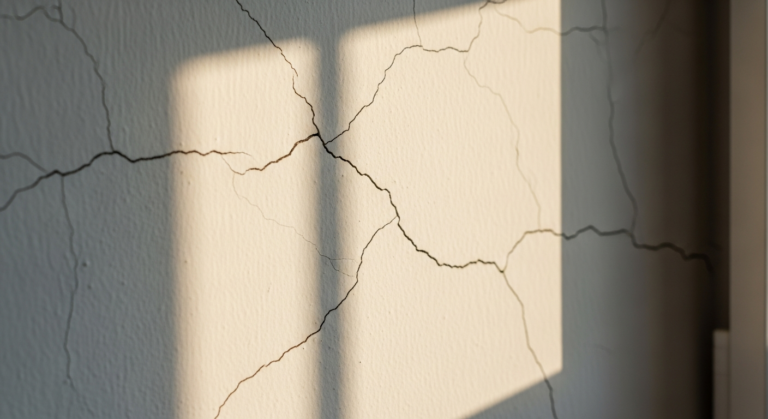
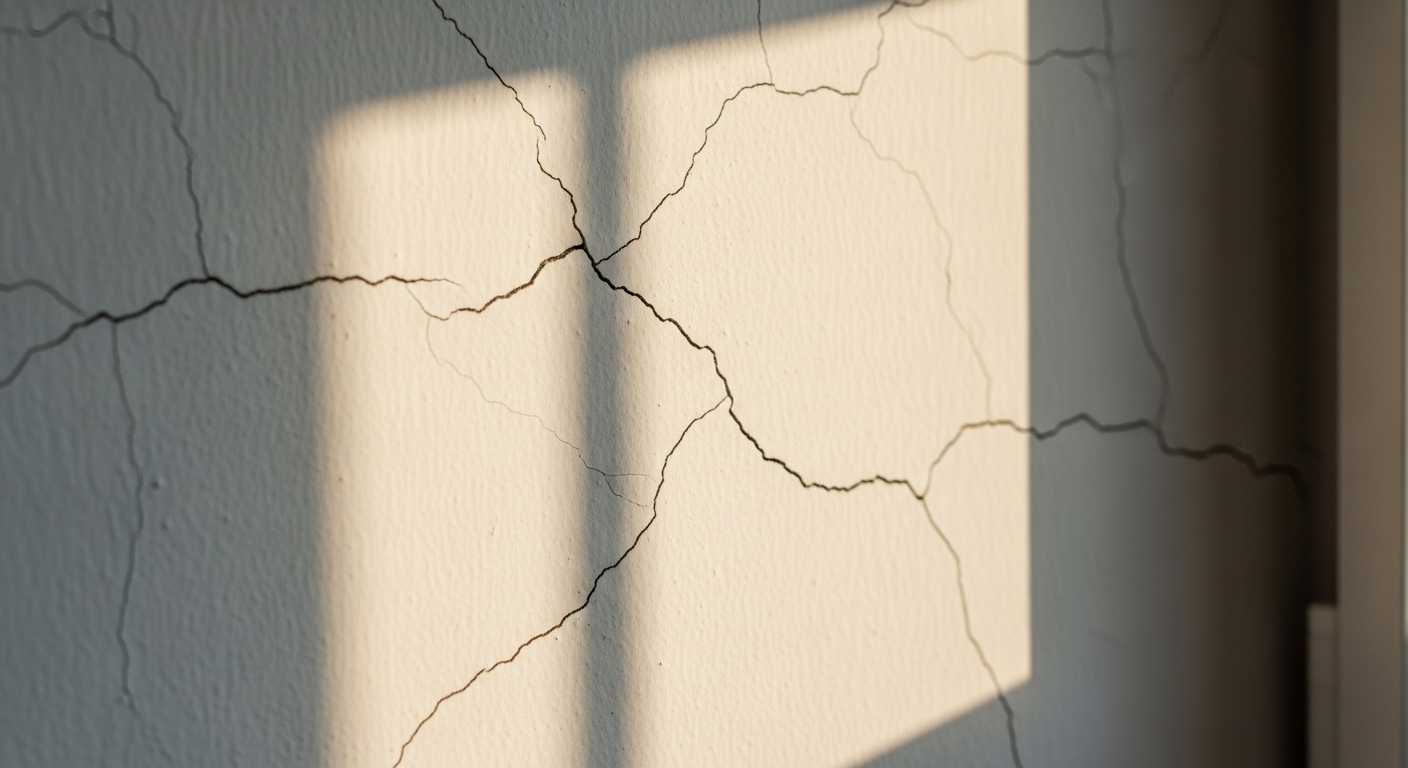
Look at the crack’s width, direction, and location. Hairline cracks (under 1mm) in plaster are almost always cosmetic. Diagonal cracks running at 45° from the corners of door and window frames can indicate structural movement. Horizontal cracks in external walls may point to wall tie failure or moisture ingress. Map out what you’re dealing with before touching anything — this diagnosis determines every decision that follows. For detailed guidance on common crack patterns, see our Walls & Plastering Guide.
Measure the crack width
Use a steel rule or calliper to measure the widest point of the crack. The Building Research Establishment (BRE) classifies cracks under 0.1mm as negligible, 0.1–1mm as very slight, 1–5mm as slight to moderate, and above 5mm as severe. A crack over 5mm wide, especially combined with displacement between the two sides, warrants professional structural assessment before any repair work begins.
Monitor the crack before repairing
If you are unsure whether a crack is still moving, fix a tell-tale crack monitor (or a strip of masking tape marked with the date and a pencil line across the crack) across the full width. Check it after two weeks, then again at four weeks. A crack that is not widening is stable and safe to repair yourself. A crack that continues to grow needs a structural engineer’s opinion — repairing it cosmetically will only mask an active problem.
Understand the underlying cause
Thermal movement causes plaster and render to expand and contract with temperature changes, producing fine hairline cracks — especially in newly plastered walls or after central heating is first switched on. Settlement cracks appear in newer properties as the structure beds in over the first one to two years. Moisture changes in timber studwork cause seasonal cracking as wood swells and shrinks. Damp on interior walls can also degrade plaster and open up cracks over time. Identifying the root cause stops the same crack coming back.
Determine whether the crack is cosmetic or structural
A cosmetic crack is stable, shallow, and shows no displacement between the two edges. These are routine DIY repairs — fill, sand, and redecorate. A structural crack is active, wide, or accompanied by doors and windows sticking, floors sloping, or bulging walls. The Royal Institution of Chartered Surveyors (RICS) recommends a professional survey for any crack showing signs of structural movement. Do not attempt to fill a structural crack without resolving the cause first — you are wasting your time and potentially hiding a serious defect. If the crack is in blown or detached plaster, that area will need cutting back and replastering before any surface filling.
Plan your repair approach
Once you have confirmed a crack is stable and cosmetic, choose the right repair method. Hairline cracks in plaster respond well to fine surface filler or flexible decorator’s caulk applied with a finger. Wider cracks need raking out, undercutting slightly with a screwdriver to create a key, and filling in layers. Cracks at plasterboard joints are best treated with jointing tape before filling. If you need to go further, our guide on how to fill wall cracks covers the full repair process step by step.
Frequently Asked Questions
Are cracks in walls normal in a new build?
Yes — fine hairline cracks in the first one to two years are expected as a new property settles and dries out. Developers typically address these under the standard defects liability period, so report them in writing rather than filling them yourself immediately.
What does a diagonal crack above a door mean?
A diagonal crack running at roughly 45° from the corner of a door or window frame is a classic indicator of differential settlement — where one part of the structure is moving at a different rate to another. Monitor it and seek a structural engineer’s opinion if it continues to widen or if you notice other signs such as sticking doors or sloping floors.
How do I tell the difference between a cosmetic and structural crack?
Cosmetic cracks are stable, shallow (under 1mm), show no displacement, and don’t recur quickly after filling. Structural cracks are typically wider than 5mm, show one edge higher than the other, are accompanied by other symptoms such as sticking doors, and continue to grow over time. If in doubt, monitor with a tell-tale gauge before doing anything.
Can damp cause wall cracks?
Yes — moisture changes cause timber to swell and shrink, opening cracks in plaster along stud lines. Persistent damp can also cause plaster to soften, delaminate, and crack. Hairline cracks in walls that keep returning despite filling are often a sign of an underlying damp or moisture problem rather than a purely cosmetic issue.
When should I call a structural engineer about wall cracks?
Call a structural engineer if a crack is wider than 5mm, shows displacement between the two edges, is growing despite monitoring, or is accompanied by sticking doors and windows, sloping floors, or bulging walls. RICS-registered surveyors and structural engineers can assess severity and advise on remedial action.
When monitoring a crack, photograph it with a ruler in frame and date the image — this gives you a reliable visual record that’s far more accurate than memory alone if you later need to demonstrate progression to a surveyor or insurer. A tell-tale gauge is ideal, but a dated photo works just as well for most domestic situations.
Sources
- HSE — Structural safety in buildings — hse.gov.uk
- RICS — Building survey and structural inspection guidance — rics.org
- Which? — Cracks in walls: what do they mean? — which.co.uk
This guide is for general information only. Always work safely and follow manufacturer instructions. DIYnut accepts no liability for injury or damage arising from DIY work.