
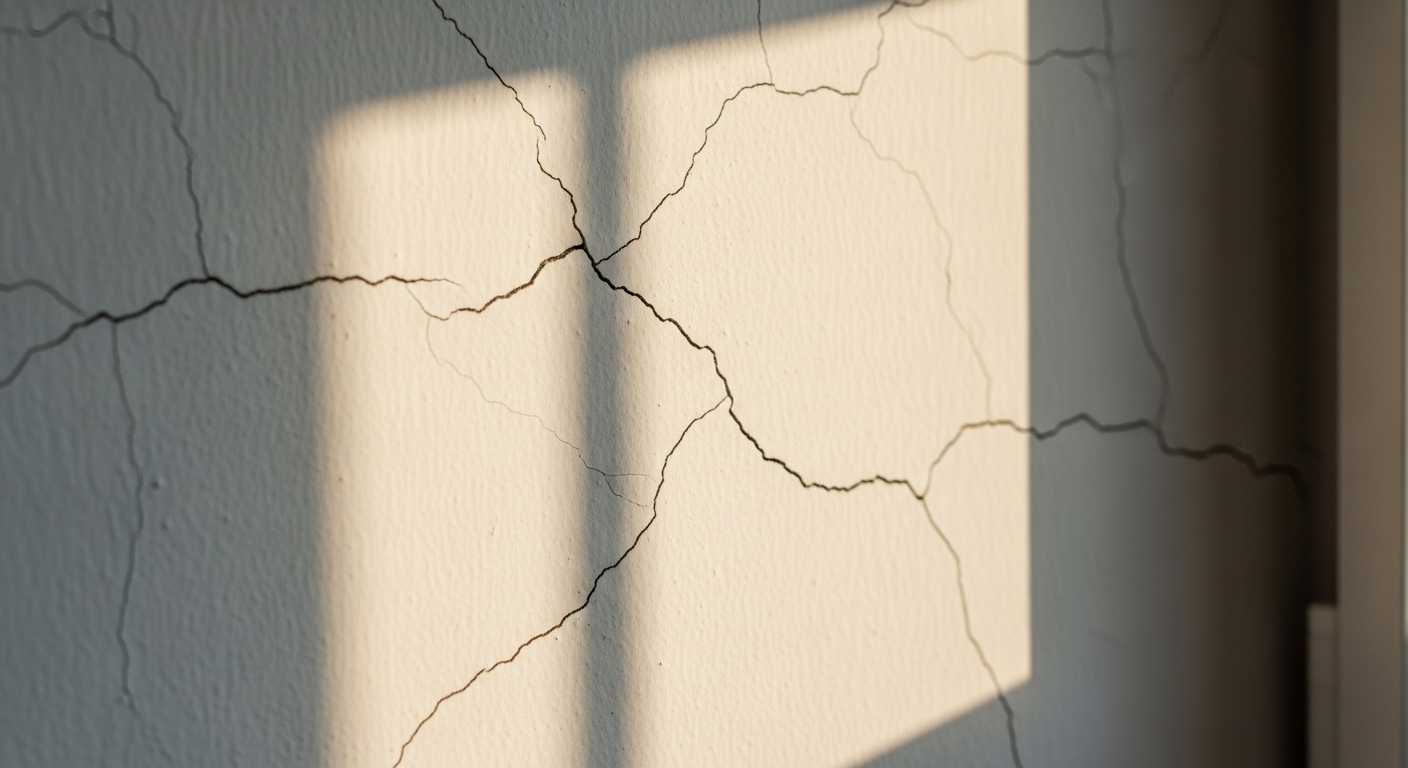
How to Repair Blown Plaster – DIY Guide
How to Repair Blown Plaster
Fix hollow, detached plaster properly and get a solid, paintable finish.
Repair blown plaster by chiselling out all loose and hollow sections, brushing clean, applying a bonding coat, then finishing with a thin skim coat. Allow each layer to dry fully before sanding and decorating. A small area takes 2–4 hours plus drying time.

- Club hammer
- Cold chisel
- Stiff-bristle brush
- Plasterer’s trowel
- Hawk
- Mixing bucket
- Mixing paddle or stick
- Fine sanding block
- Bonding coat plaster
- Finishing coat plaster
- Plaster bonding adhesive (PVA or acrylic bonding agent)
- Clean water
- Plasterer’s scrim tape (for cracks at edges)
- Fine-grain sandpaper (120 grit)
- Dust sheets
Step-by-Step Guide
Test the Wall and Mark All Blown Areas
Tap firmly across the wall surface with your knuckles or the handle of a screwdriver — a hollow, drumming sound confirms the plaster has detached from the substrate beneath. Mark every hollow area with a pencil so you know the full extent before you start cutting. Do not skip this step: leaving partially blown plaster at the edges of your repair will cause the new work to fail within months.
Cut Out and Remove the Blown Plaster
Using a cold chisel and club hammer, work carefully around the perimeter of each marked area and lever the blown plaster away from the wall. Undercut the edges of the surrounding sound plaster at a slight angle — this gives the new material a mechanical key to grip. Remove all loose debris until you are left with a firm, solid edge all the way round. If you find damp or staining beneath the plaster, address the source before replastering — our guide to fixing damp on interior walls covers the most common causes.
Prepare the Substrate and Prime the Surface
Brush all dust and debris from the exposed area using a stiff-bristle brush. Dilute a bonding adhesive (typically 1 part adhesive to 4 parts water — check the product instructions) and apply a generous, even coat to the bare brick, block, or old plaster background. Also coat the back edge of the surrounding plaster. Allow the priming coat to become tacky rather than fully dry before applying plaster — this is the stage at which it grips best. On very absorbent backgrounds, a second coat may be needed.
Apply the Bonding Coat
Mix your bonding coat plaster to a firm, smooth consistency — it should hold a peak without slumping. Apply it to the primed area using your trowel and hawk, pressing firmly to ensure full contact with the background. Build up in layers no more than 10–12 mm thick per coat; deep repairs may need two bonding applications. Scratch the surface with a comb or the edge of your trowel to create a key for the finishing coat, then allow to firm up — typically 1.5 to 2 hours depending on temperature. For a full walkthrough of the skimming process, see our guide on how to skim coat a wall.
Apply the Finishing Coat and Trowel Smooth
Mix your finishing plaster to a creamy, lump-free consistency. Apply a 2–3 mm coat over the firmed bonding coat, feathering the edges out onto the surrounding wall so the repair blends flush. Work in confident, sweeping arcs with the trowel. Once the surface begins to stiffen (the sheen will just start to fade), go back over it with a damp trowel using light pressure to close the surface and bring up a smooth, tight finish. Plastering a wall for beginners has a detailed breakdown of trowel technique if this is your first time skimming.
Sand, Prime, and Redecorate
Once fully dry — 24 hours minimum, longer in cold or humid conditions — lightly sand the repair with 120-grit paper to remove any trowel marks or ridges. Mist the new plaster with diluted bonding adhesive or a dedicated mist coat (diluted emulsion paint) before applying your final paint, otherwise the fresh plaster will suck moisture from the topcoat unevenly and leave patchy results. If you are patching before painting the whole wall, read our guide on how to paint a room for the correct priming and painting sequence.
Frequently Asked Questions
What causes plaster to blow?
Blown plaster is almost always caused by moisture getting behind the plaster — either from a leak, penetrating damp, or condensation — which breaks down the bond between the plaster and the wall background. Thermal movement and original poor adhesion can also cause it over time. Always identify and fix the moisture source before repairing, or the new plaster will blow again.
Can I just fill blown plaster instead of hacking it out?
No. Filling over hollow plaster traps the problem underneath and the repair will crack and drop away. You must remove all the blown material back to a firm substrate before applying new plaster — there is no shortcut that gives a lasting result.
How do I know how deep my plaster is?
Traditional lime plaster on older properties is typically 15–20 mm deep in two or three coats, while modern gypsum plaster on brick or block is usually 10–13 mm. Once you have chiselled out the blown area, measure the depth of the surrounding plaster at the edge — this tells you exactly how much you need to build up before skimming. For more on filling large cracks in plaster, see our dedicated guide.
How long does repaired plaster take to dry fully?
Allow at least 24 hours for a thin repair in a warm, well-ventilated room. Deeper, multi-coat repairs can take 3–5 days to dry completely — the plaster will turn from a darker pink to a uniform pale cream when dry. Do not rush the drying with a heat gun or fan heater, as rapid drying causes shrinkage cracks.
Is blown plaster a sign of serious structural problems?
Isolated patches of blown plaster are usually a cosmetic or moisture issue rather than a structural one. However, large areas of blown plaster across multiple walls, or plaster failing repeatedly in the same spot, can indicate ongoing damp penetration that needs investigating — particularly in older properties. If in doubt, have the wall assessed before repairing.
When feathering the finishing coat into the surrounding wall, wet the edge of the existing plaster with a damp brush just before you trowel over it — this prevents the old plaster from pulling moisture out of your new skim at the junction and leaving a visible tide mark or crack line at the repair edge.
Sources
- HSE — Construction: Plastering health and safety — hse.gov.uk
- Which? — How to repair plaster — which.co.uk
- Historic England — Practical Building Conservation: Plaster and renders — historicengland.org.uk
This guide is for general information only. Always work safely and follow manufacturer instructions. DIYnut accepts no liability for injury or damage arising from DIY work.



