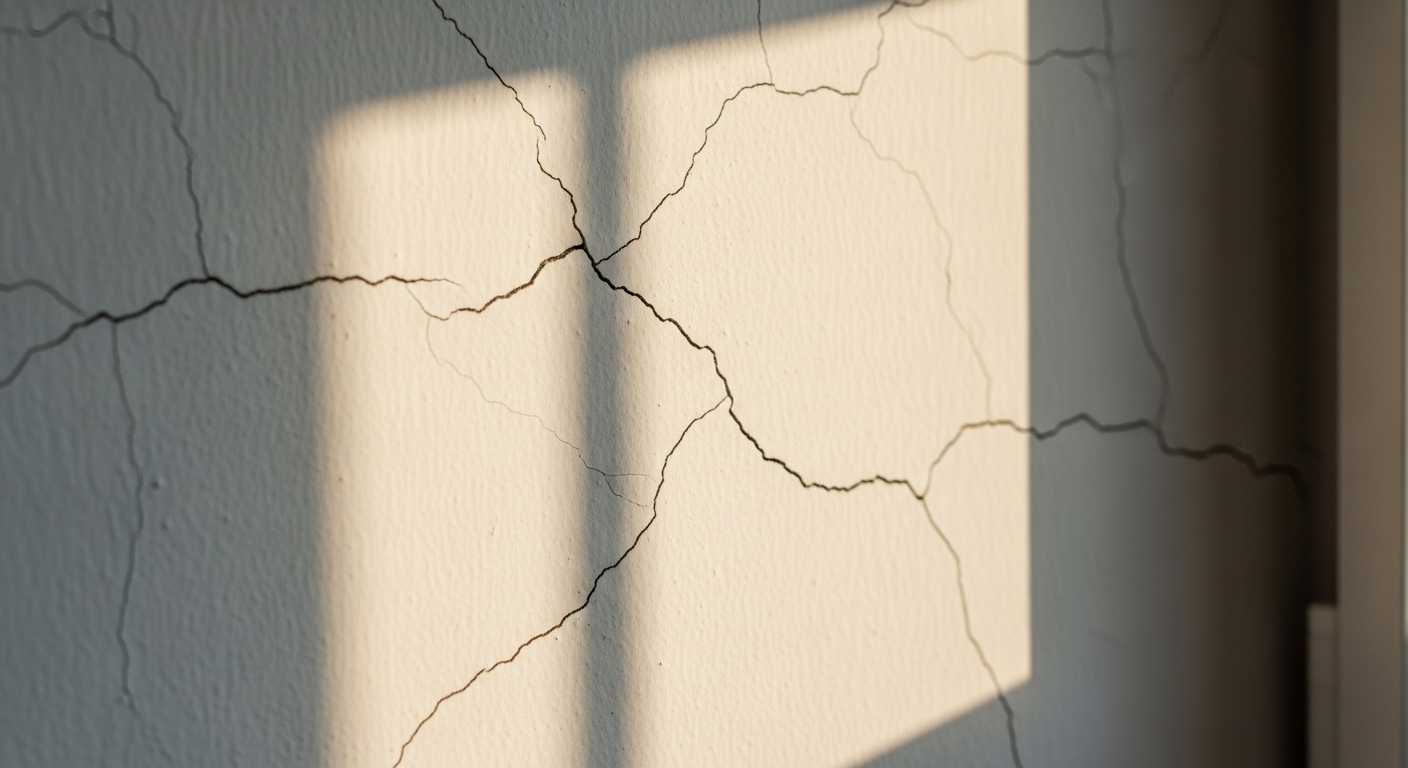
How to Dot and Dab Plasterboard – DIY Guide
Walls & Plastering › Plasterboard
How to Dot and Dab Plasterboard
Fix plasterboard directly to masonry walls without a timber frame — fast and clean.
Dot and dab plasterboard means bonding plasterboard sheets to a masonry wall using dabs of bonding compound. Apply dabs in a grid pattern, press boards into position, check for plumb, and leave to cure before finishing. No timber frame required.

Mark Out the Board Positions
Measure the wall height and cut your plasterboard sheets to length, leaving a 10–15 mm gap at the floor and a 10 mm gap at the ceiling to allow for movement and moisture protection. Mark the wall with a pencil to show where each board edge will fall, working from a plumb vertical line struck at one corner. Check the line with a spirit level — starting plumb means every subsequent board lines up correctly.
Mix and Apply the Bonding Compound
Mix the plasterboard bonding compound to a firm, peanut-butter consistency — too wet and the boards will slide; too stiff and you lose working time. Apply dabs roughly 50–75 mm in diameter and 25 mm proud of the wall surface in a grid pattern: three vertical columns per board (two edges, one centre) with dabs spaced approximately 300 mm apart vertically. Add a continuous band of compound around the full perimeter of each board position to seal the edges and prevent cold bridging. For more on cutting and fitting plasterboard cleanly, see our dedicated guide.
Fix the Plasterboard to the Wall
Lift each board into position — use timber offcuts as foot levers to hold the board at the correct height off the floor. Press the board firmly and evenly onto the dabs so the compound spreads and keys to the board. Immediately check for plumb and flat using your spirit level, tapping the board with the heel of your hand or a rubber mallet to adjust. The perimeter band of compound will compress and form a sealed edge. Work board by board across the wall, butting edges tightly together with a 2–3 mm paper gap at the joint for taping later.
Tape and Fill the Joints
Once the bonding compound has cured — typically 24 hours minimum — apply joint tape to all board seams and internal corners. Bed the tape into a thin skim of joint finish compound, allow it to dry, then apply a second coat feathered out to approximately 200 mm wide. Sand back lightly between coats for a flush finish. Fit angle bead to any external corners using bonding compound, check for plumb, and fill over once set. If you plan to skim the entire surface, refer to our guide on repairing and preparing plaster surfaces for advice on priming before skim coat.
Prime and Finish the Surface
Before painting or wallpapering, seal the entire board surface with a diluted PVA solution or a dedicated plasterboard primer to even out suction. New plasterboard is highly absorbent and will pull paint unevenly if left unsealed. Once the primer is dry, the wall is ready for your chosen finish. If you’re painting directly onto the taped and filled surface rather than skimming, apply two coats of mist coat (diluted emulsion) first to avoid adhesion issues common on freshly boarded walls. For a professional, painted finish, see how to cut in paint neatly.
Frequently Asked Questions
How long does dot and dab bonding compound take to set?
Most plasterboard bonding compounds are firm within 2–4 hours but require a full 24 hours before you tape joints or apply any load. In cold or damp conditions, allow longer — applying tape too early is the most common cause of cracked joints.
Can I dot and dab plasterboard on an external wall?
Do I need to screw dot-dabbed plasterboard to the wall as well?
On standard internal walls up to standard ceiling height, the adhesive bond alone is sufficient once cured. Mechanical fixings (plasterboard screws into plugged masonry) are recommended at door openings, around window reveals, and on very tall walls where the board weight is significant.
What thickness of plasterboard should I use for dot and dab?
12.5 mm standard plasterboard is the correct choice for dot and dab on internal walls. 9.5 mm board is too flexible and can bow between dabs. Use moisture-resistant board (often pink or green faced) in kitchens and bathrooms.
Can I hang things on a dot-dabbed plasterboard wall?
Light items (up to around 10 kg) can be fixed with plasterboard-rated hollow-wall anchors. For anything heavier — shelves, radiators, cabinets — you must locate the dab positions or fix through the board into the masonry behind using a long masonry screw and plug. Never rely on plasterboard alone for heavy loads.
Before applying any compound, strike a chalk line across the wall at the height of your first row of dabs and use a long straight edge or feather edge to check whether the masonry has any significant bow. If the wall is out by more than 10 mm, build up low spots with additional compound dabs rather than trying to correct it in one go — overloaded dabs slump before they set and you’ll spend hours re-fixing dropped boards.
Sources
- British Gypsum — White Book: Site Application Guide for Bonding Compound — british-gypsum.com
- HSE — Dust in the Construction Industry: Plasterboard and Dry Lining — hse.gov.uk
- Which? — How to plasterboard a wall — which.co.uk
This guide is for general information only. Always work safely and follow manufacturer instructions. DIYnut accepts no liability for injury or damage arising from DIY work.